
- News
- World News
- Middle East News
- Israel launches another operation in Gaza's Al-Shifa hospital amid accusations of sheltering Hamas militants
Trending
This story is from March 18, 2024
Israel launches another operation in Gaza's Al-Shifa hospital amid accusations of sheltering Hamas militants
Israeli forces raided Gaza's largest hospital, Al-Shifa Hospital, alleging Hamas militants were regrouping inside. Palestinian officials reported thousands seeking shelter. Criticism arose over obstructed aid delivery to Gaza, causing a man-made famine. The ongoing conflict led to casualties, with efforts for a ceasefire and humanitarian aid ongoing.
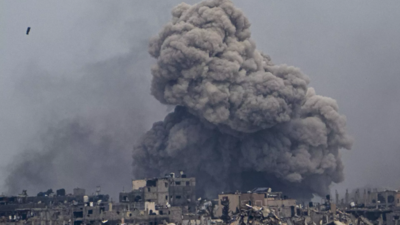
Israel launches operation in Gaza's Al-Shifa hospital (AP)
The European Union's top diplomat, Josep Borrell, criticized Israel for obstructing aid delivery to Gaza, leading to a man-made famine in the region where starvation is being used as a weapon of war.
Israeli army previously raided Shifa Hospital in November, claiming Hamas had a command centre within the facility. However, the evidence presented did not fully support these claims, with critics accusing the army of endangering civilians. People inside the hospital reported that Israeli forces, supported by tanks and artillery, surrounded the complex and conducted raids, leading to the detention of numerous individuals.
Gaza's health ministry reported that around 30,000 people, including patients, medical staff, and displaced individuals, were taking refuge at the hospital. Rear adm. Daniel Hagari, the chief Israeli military spokesperson, stated that a 'high-precision operation' was carried out targeting senior Hamas militants directing attacks from the medical complex.
Israel has accused Hamas of using hospitals to shield fighters, resulting in the closure of several medical facilities due to fuel and medical shortages. The ongoing conflict has caused a significant toll on Gaza's population, with thousands of Palestinians killed and injured in Israeli strikes.
The Gaza health ministry disclosed that the war has claimed the lives of at least 31,726 Palestinians, with 81 fatalities in the past 24 hours. The ministry highlighted that a majority of the casualties were women and children. The conflict was initiated by Hamas' attack into southern Israel, which led to a series of hostilities and hostage situations.
Efforts to negotiate a cease-fire and secure the release of captives have been ongoing, with the United States, Qatar, and Egypt involved in mediation. However, the gap between the two sides remains wide, as Hamas seeks guarantees for ending the war while Israel vows to continue its offensive until the militant group is dismantled.
The humanitarian crisis in northern Gaza, particularly in Gaza City, has been severe, with residents facing food shortages and limited access to essential resources. Malnutrition and dehydration have led to the deaths of at least 20 individuals, mostly children, in the region.
International aid, including airdrops and sea deliveries, has been initiated to address the growing humanitarian needs. EU foreign policy chief Josep Borrell emphasized the urgency of providing aid and called on Israel to facilitate the transportation of essential supplies through additional border crossings.
Borrell criticized the delays in aid distribution, attributing them to inspection processes and logistical challenges. Aid organizations underscored the difficulties in delivering assistance amid ongoing conflict and security concerns in Gaza.
Despite assertions from Israeli authorities that aid entry is unrestricted, aid groups highlighted obstacles in distributing aid effectively within Gaza. The situation remains critical, with challenges in coordinating shipments and ensuring timely distribution to those in need.

About the Author
TOI World DeskEnd of Article
FOLLOW US ON SOCIAL MEDIA








Photostories

Hot Picks
TOP TRENDING
Popular Categories
Hot on the Web
Top Trends
IND vs BAN Live ScoreIsrael Hezbollah WarMost Runs in International CricketShan MasoodAbdullah ShafiqueIndian Team Fastest Test FiftyIND vs BAN HighlightsUGC NET Result 2024GovindaWomen T20 World Cup Points TableWomen T20 World Cup ScheduleEarth Two MoonsKerala Lottery ResultAsteroid 2024 PT5DiddyTop Management Colleges of IndiaLive Cricket Score
Trending Topics
GovindaMithun ChakrabortyDeadpool and Wolverine OTT ReleaseNavratri WishesGandhi Jayanti WishesDevara CollectionGOAT OTT ReleaseGandhi Jayanti 2024Rajinikanth Health UpdateNavratri HistoryDevaraGovinda NewsDevara Movie ReviewHealthy RaitasSwatantrya Veer SavarkarColdplay India tour 2025Upcoming Smartphones In OctoberiPhone 15 ScamBest Coffee MachinesWordle Answer
Living and entertainment
Latest News
Gunther finally accepts Sami Zayn’s challenge for the World Championship on WWE RAWCGPSC SSE Mains 2023 result declared: Check direct link hereMan orders iPhone with CoD option on Flipkart, kills delivery agentWhen Rishi Kapoor slammed Deepika Padukone and Sonam Kapoor for making immature remarks about Ranbir KapoorShark Tank India 4: Sharks begin shooting for the new season; Sahiba Bali and Ashish Solanki join as new hostsFestivals in October 2024: From Navratri, Dussehra to Diwali, check complete list hereShannon Sharpe compares Patrick Mahomes' current situation to Tom Brady's past as Chiefs adjust to roster changesIndia's factory growth cooled to eight-month low in September, PMI showsUCEED 2025 registration begins at uceed.iitb.ac.in, direct link to apply here: Check detailed admission scheduleReport: By 2035, EVs Expected to Use 6% to 8.7% of India's ElectricityKolkata hospital rape-murder: West Bengal junior doctors resume 'total cease work'Vijay's 'GOAT' gets an OTT release; official date announced!Haryana polls: Brick thrown at car in Dushyant Chautala's convoy in Jind; case filedMumbai vs Rest Of India: Irani Cup tie offers chance for hopefuls and rejects to impress selectorsHow to use charcoal powder to whiten teethAnil Kapoor, Aditya Roy Kapur, Sobhita Dhulipala and other team of The Night Manager turn up in style for International Emmy Award nomination celebrationStree 2 Box Office Collection day 47: Shraddha Kapoor starrer falls below Rs 1 crore for the first timeUnion minister Nitin Gadkari invites Sachin Tendulkar for coffee at newly inaugurated bird park in Maharashtra's Jamtha
Copyright © 2024 Bennett, Coleman & Co. Ltd. All rights reserved. For reprint rights: Times Syndication Service