
- News
- World News
- Europe News
- Quake shakes Italy's volcanic Campi Flegrei
Trending
This story is from September 27, 2023
Quake shakes Italy's volcanic Campi Flegrei
A 4.2-magnitude earthquake hit Italy's Campi Flegrei region without causing any injuries or damage. Campi Flegrei is a flat volcano located west of Naples. Although less known than Vesuvius, recent increased activity has raised concerns. The earthquake occurred at a depth of three kilometers and was felt across Naples. The mayor of Bacoli, a town near Naples, assured residents that they must learn to live with the volcanic activity and stay calm. The spike in activity is believed to be caused by gas bubbling up, making the probability of an eruption relatively low.
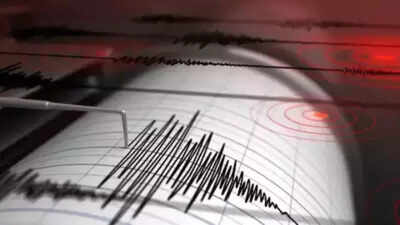
Representative Image
ROME: A 4.2-magnitude earthquake shook Italy's Campi Flegrei region west of Naples in the early hours Wednesday, scaring residents but causing no injuries or damage, according to the civil protection agency.
The Campi Flegrei (Phlegraean Fields) is a vast volcano, though it is flat rather than cone-shaped. While less well-known than nearby Vesuvius, a recent increase in activity has rattled nerves.
The quake struck at 3:35 am (0135 GMT) at a depth of around three kilometres (nearly two miles), and was felt across much of Naples.
Josi Gerardo Della Ragione, mayor of Bacoli, a coastal town on the outskirts of the southern Italian city, said it had been "the strongest of this long earthquake swarm... and among the longest".
"We have to learn to live with this phase. Stay calm," Della Ragione told locals in a social media message.
Half a million people live on the Campi Flegrei, which last spewed lava, ashes and rocks in 1538.
The volcano's eruption 30,000 years ago is reported to have contributed to the extinction of Neanderthal man.
But Italy's National Institute of Geophysics and Volcanology (INGV) said earlier this month that it believes the spike in activity could be caused by gas bubbling up, rather than magma, making "the probability of an eruption relatively low".
The Campi Flegrei (Phlegraean Fields) is a vast volcano, though it is flat rather than cone-shaped. While less well-known than nearby Vesuvius, a recent increase in activity has rattled nerves.
The quake struck at 3:35 am (0135 GMT) at a depth of around three kilometres (nearly two miles), and was felt across much of Naples.
Josi Gerardo Della Ragione, mayor of Bacoli, a coastal town on the outskirts of the southern Italian city, said it had been "the strongest of this long earthquake swarm... and among the longest".
"We have always been living on a volcanic caldera," he said, using the term for a large, cauldron-like hollow that forms after an eruption.
"We have to learn to live with this phase. Stay calm," Della Ragione told locals in a social media message.
Half a million people live on the Campi Flegrei, which last spewed lava, ashes and rocks in 1538.
The volcano's eruption 30,000 years ago is reported to have contributed to the extinction of Neanderthal man.
But Italy's National Institute of Geophysics and Volcanology (INGV) said earlier this month that it believes the spike in activity could be caused by gas bubbling up, rather than magma, making "the probability of an eruption relatively low".
End of Article
FOLLOW US ON SOCIAL MEDIA





Hot Picks
TOP TRENDING
Trending Stories
In World
Entire Website
- Breathtaking cosmic catwalk! SpaceX makes history with first-ever private spacewalk
- 2 Army officers thrashed, their female friend gang-raped in Madhya Pradesh
- Bangladesh announce Test squad for India tour
- Top fastest trains in the world: From China's CR Harmony to Germany's ICE
- Amid Shannon Sharpe Viral Video, Former ESPN Host Michelle Beadle Reacts Claiming It Was Not Her
- Ayushman Bharat insurance scheme expanded to cover elderly above 70
- 'Will be demolished if... ': Himachal minister's assurance amid Shimla mosque row
- Mumbai's Haji Ali and Mahim dargahs cancel Eid shamiana
- Garena Free Fire MAX redeem codes for September 11, 2024: Win free room cards, skins, diamonds, pet skins, and more rewards today
- GK for students: Top 8 Largest Mammals in the World
- India needs to know why China disturbed peace: EAM Jaishankar
- Patient, 11, raped in Agra medical college, doctor held
- Why India is now insisting on an immediate ceasefire in Gaza
- 'Deal with it': Oppn vs BJP over PM Modi attending Ganpati Puja at CJI's house
- India, China to work urgently for disengagement in Ladakh
- Putin invites 'great friend' PM Modi for talks on sidelines of BRICS summit
- How life froze near Delhi as a tiger walked and decided to stay
- Planning to buy iPhone 16? How much Apple will give for iPhone 12 & others
- Adani Group rejects Hindenburg claim of $310 mn asset freeze in Swiss banks
- Leading light of Left, effective parliamentarian: PM Modi on Yechury

Popular Categories
Hot on the Web
Top Trends
Trending Topics
Alia BhattMalaika Arora Father DeathArbaaz KhanNatasa StankovicMr Bachchan OTT ReleaseNational Parks In IndiaSelena GomezGOAT CollectionVikas Sethi DeathMalayalam ProducersIndia's Best Dancer 4Simi GarewalDilli BabuIndian National ParksLaung BenefitsVikas SethiiPhone 16Microsoft 365 OutageCsir Ugc Net 2024Wordle Answer
Living and entertainment
Latest News
India successfully flight tests surface-to-air missileFintech Moneyview turns unicorn, 6th one this yearDigest this: Unhealthy gut may be linked to Parkinson’s diseaseCSIR UGC NET 2024 result declared: Steps to download scorecards at csirnet.nta.ac.inAadhaar card update: Do you have to compulsorily update details on your Aadhaar every 10 years?Single Indians are now choosing slow, meaningful dates over-elaborate outings, reveals an online dating platform’s surveyWho was Illia 'Golem' Yefimchyk, the Belarusian bodybuilder who consumed 2.5 kg of meat and 108 sushi pieces daily before his death at 36?Vijay Varma reveals he was DROPPED from 'Sacred Games' at the last minuteWWE Star Discusses Why Sid Vicious Deserves a Hall of Fame SpotCatching up with sports stars in DelhiSalman Khan surrounded by bodyguards as he arrives at Malaika Arora's mother's house to offer his condolences - WATCHCMF Buds Pro 2 by Nothing review: Big delivery on a budgetMallika Sherawat makes big screen comeback in Rajkummar Rao's 'Vicky Vidya Ka Woh Wala Video'; director reveals why he cast herArbaaz Khan spotted outside Malaika Arora's house along with police after the tragic news of her father's demise by alleged suicide - WATCH VIDEOHarvey Weinstein charged with additional crimes during hearing on rape chargesMitchell Schwartz's Cryptic Tweet Stirs Debate About Mahomes' ContractSiddhant Chaturvedi reveals he rejected Ranbir Kapoor, Alia Bhatt and Amitabh Bachchan starrer Brahmastra after father’s advice: 'He asked me, ‘Tujhe kaun dekhega?''EcoR unloads 100 million tons of goods in just 160 days
Copyright © 2024 Bennett, Coleman & Co. Ltd. All rights reserved. For reprint rights: Times Syndication Service