
- News
- World News
- Europe News
- Hungarian parliament to vote on Swedish Nato bid to end year-long impasse
Trending
This story is from February 26, 2024
Hungarian parliament to vote on Swedish Nato bid to end year-long impasse
Hungary's parliament is expected to give its approval for Sweden's Nato bid on Monday, after more than a year of delay. Other Nato partners have expressed frustration over Hungary's slow approval process, especially given the ongoing conflict between Ukraine and Russian troops. Turkey already ratified Sweden's request for Nato membership in January, making Hungary the final hurdle. Both Sweden and Finland applied to join Nato in May 2022.
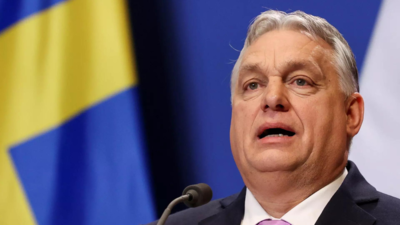
Hungarian Prime Minister Viktor Orban (Reuters photo)
NEW DELHI: Hungary's parliament is expected to approve Sweden's Nato bid on Monday, putting an end to over a year of delay.
The voting comes amid frustration among other Nato partners over delay in Hungary's approval for Sweden, especially as Ukraine has been battling Russian troops. Turkey ratified Sweden's request for Nato membership in January, leaving Hungary as the last hurdle.
After Russia's invasion of Ukraine, both Sweden and Finland applied to join the Nato in May 2022.
Finland was accepted as the 31st member of the US-led defence alliance in April last year.
However, after a recent meeting between Hungarian Prime Minister Viktor Orban and his Swedish counterpart Ulf Kristersson, progress has been made.
Orban announced that they have clarified their intentions and signed a deal to acquire four Swedish-made fighter jets.
Orban's Fidesz party, which holds a majority in parliament, has already indicated its support for Sweden's bid.
All opposition parties, except for the far-right Our Homeland movement, are in favor of ratification. Lawmakers are expected to approve Sweden's bid in a parliamentary vote on Monday.
The delay in approving Finland and Sweden's Nato bids was caused by Hungary and Turkey. While Turkey cited security concerns, Hungary had various reasons for the delay.
Some experts believe it was a strategy to gain concessions from Brussels, while others think it highlighted Orban's close relationship with the presidents of Russia and Turkey. Analyst Mate Szalai believes Orban was simply catering to his domestic audience.
For analyst Mate Szalai of Venice's Ca' Foscari University, Orban was simply playing to his domestic audience.
"Orban wanted to go as far as he could without causing serious problems to the Transatlantic community while proving that Hungary is a power to be reckoned with," he told AFP.
While Hungary's "confrontational behaviour" did not reap any tangible results, it might have "been beneficial domestically for the ruling Fidesz party", he added.
"Many initiatives of the Hungarian government are designed to provoke a backlash in Europe," said Szalai.
"And most criticism expressed towards the Orban government actually helps Fidesz to maintain its popularity in the country."
(With AFP input)
The voting comes amid frustration among other Nato partners over delay in Hungary's approval for Sweden, especially as Ukraine has been battling Russian troops. Turkey ratified Sweden's request for Nato membership in January, leaving Hungary as the last hurdle.
After Russia's invasion of Ukraine, both Sweden and Finland applied to join the Nato in May 2022.
Finland was accepted as the 31st member of the US-led defence alliance in April last year.
Hungary has repeatedly expressed support for Sweden's membership but has been prolonging the process by asking Sweden to stop criticizing the Hungarian government. Swedish officials have been accused of unfairly targeting Hungary on rule-of-law matters.
However, after a recent meeting between Hungarian Prime Minister Viktor Orban and his Swedish counterpart Ulf Kristersson, progress has been made.
Orban announced that they have clarified their intentions and signed a deal to acquire four Swedish-made fighter jets.
Orban's Fidesz party, which holds a majority in parliament, has already indicated its support for Sweden's bid.
All opposition parties, except for the far-right Our Homeland movement, are in favor of ratification. Lawmakers are expected to approve Sweden's bid in a parliamentary vote on Monday.
The delay in approving Finland and Sweden's Nato bids was caused by Hungary and Turkey. While Turkey cited security concerns, Hungary had various reasons for the delay.
Some experts believe it was a strategy to gain concessions from Brussels, while others think it highlighted Orban's close relationship with the presidents of Russia and Turkey. Analyst Mate Szalai believes Orban was simply catering to his domestic audience.
For analyst Mate Szalai of Venice's Ca' Foscari University, Orban was simply playing to his domestic audience.
"Orban wanted to go as far as he could without causing serious problems to the Transatlantic community while proving that Hungary is a power to be reckoned with," he told AFP.
While Hungary's "confrontational behaviour" did not reap any tangible results, it might have "been beneficial domestically for the ruling Fidesz party", he added.
"Many initiatives of the Hungarian government are designed to provoke a backlash in Europe," said Szalai.
"And most criticism expressed towards the Orban government actually helps Fidesz to maintain its popularity in the country."
(With AFP input)

About the Author
TOI World DeskEnd of Article
FOLLOW US ON SOCIAL MEDIA






Hot Picks
TOP TRENDING
Trending Stories
In World
Entire Website
- 'We were treated like slaves, made to work for 15 hours a day': Tricked into Ukraine war, 3 from Karnataka return home
- 'My father was on the flight': Jaishankar opens up about 1984 Air India hijack
- Airtel CEO Gopal Vittal sends letter to Reliance Jio, Vodafone-Idea, Tata Tele and BSNL CEOs; here's what he said
- Prince Harry to celebrate 40th birthday away from Meghan Markle
- Haitian immigrant pet-eating row: Ohio woman accused of eating cat is US citizen, video is not from Springfield
- Kejriwal out of jail; 'CBI arrest only to frustrate ED case bail': SC judge
- Donald Trump reveals what Laura Loomer is to his campaign: 'I don't control her'
- Hamster Kombat Daily Cipher Codes and Combo Cards for September 14, 2024: Unlock up to 1 million coins
- Laura Loomer's photo with Donald Trump viral. People ask where's Melania, where's wedding ring
- Garena Free Fire MAX redeem codes for September 13: Win in-game goodies and rewards
- Trump defends 'loony' Laura Loomer amid MAGA meltdown
- Neeraj finishes 2nd, misses title by 0.01 meters at DL Final
- Can Sebi chief Madhabi Puri Buch survive this storm of allegations?
- Kolkata horror: Ex-principal, policeman arrested for destruction of evidence
- Omar Abdullah says If BJP gets fewer seats tomorrow, it will...
- Mamata's olive branch to doctors fails to end RG Kar impasse - Top developments
- Will Germany’s suspension of Schengen entry end the Europe dream?
- Bengaluru woman sparks controversy with comments about Swiggy delivery executive
- Congress sticks to Jatavs in Haryana, BJP list shows sub-caste tilt
- Meerut building collapse: 3 dead; rescue ops continue

Popular Categories
Hot on the Web
Top Trends
Trending Topics
World Largest HorseEID WishesGreen Apple BenefitsPriyanka Chopra TattooKottukkaali OTT ReleaseNarendra ModiGhaziabad Juice SellerHair LossSudha MurtyMalayalam ProducersIndia's Best Dancer 4Simi GarewalDilli BabuIndian National ParksLaung BenefitsVikas SethiApple iPhone 16Donald TrumpAadhar Card UpdateWordle Answer
Living and entertainment
Latest News
WWE NXT Star Reunites With Father At TNA Victory Road‘There is no affordable transport currently, the biggest problem in Goa is taxis’IIM Jammu hosts 'Fostering Academia and Industry Partnerships' event at BengalaruMP Bharat, TDP Andhra President Srinivas promise action to safeguard protection of steel plant workersLiverpool slump to shock 1-0 home defeat by Nottingham ForestVinith Venkatesh scores in ISL debut as Bengaluru FC edge past East BengalJitendra Jorwal takes charge as new Ludhiana deputy commissioner, vows seamless delivery of servicesAnanya Panday urges all industries to form Hema Committee': 'Clearly, no one else is doing it but women'Nine arrested on charges of assaulting a Dalit woman at Kallukunta village in Kurnool district'Calling all Swifties for Trump': Donald's new campaign merch imitates Eras Tour shirtsWWE Hall of Famer Watches 15 Hours Of Wrestling Each WeekDallas Cowboys Set to Defend AT&T Stadium in Week 2 Clash with New Orleans SaintsDelhi Police Files FIR for Firecracker Celebration Outside CM Kejriwal's ResidenceIndia's T20I captain Suryakumar Yadav turns 34: A glimpse into his stellar T20 careerThe 3 Strongest Zodiac Signs: Powerhouses of the Zodiac WheelCong holds protests on second anniversary of MLA defections7 benefits of drinking lemon water with black salt dailyMaoist killed in encounter in Bastar
Copyright © 2024 Bennett, Coleman & Co. Ltd. All rights reserved. For reprint rights: Times Syndication Service