
- News
- World News
- China News
- China needs India's participation more than it needs US's: Xi on Belt and Road Initiative
Trending
This story is from May 14, 2017
China needs India's participation more than it needs US's: Xi on Belt and Road Initiative
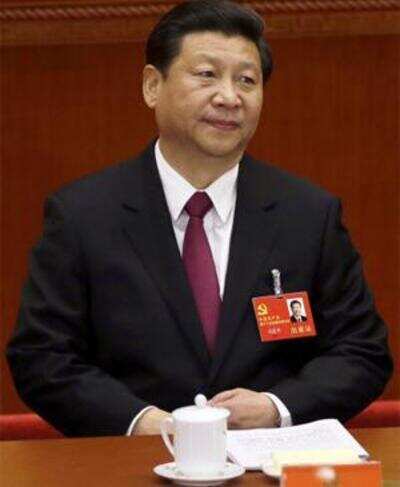
Chinese President Xi Jingping
BEIJING: Chinese President Xi Jinping promised to respect the sovereignty and territorial integrity of different countries while implementing the Belt and Road Initiative (BRI). At the same time, he praised the China Pakistan Economic Corridor (CPEC), which violates Indian sovereignty as a "flagship" project of BRI.
"All countries should respect each other's sovereignty, dignity and territorial integrity, each other;s development paths and social systems, and each other's core interests and major concerns," Xi said while inaugurated the Belt and Road Forum in Beijing on Sunday.
India is the only major country that did not participate in the BRI event. But that will not stop China from trying to persuade India to join the program to build connectivity infrastructure.
"China needs India's participation more than it needs the United States'. It does not serve China's image and strategic interests to establish linkages in distant places while being unable to mend fences in its neighborhood," David Kelly, director of geopolitics at the Beijing-based consulting firm, China Policy, told VOA.
In his opening speech, Xi pledged $124 billion in financial assistance, which is double of what the World Bank lent in 2016, for the Belt and Road program. The plan involves the creation of six economic corridors including CPEC crisscrossing different parts of Asia and Europe.
Pakistan prime minister Nawaz Sharif, who was one of the speakers at the BRI, could not resist the temptation to take a dig at India without naming it.
"Let me make it very clear that CPEC is an economic undertaking open to all countries in the region. It has no geographical boundaries. It must not be politicized," Sharif said.
Representatives of the United States and Germany did some plain speaking reminding China of the need for maintaining transparency in project planning and giving equal opportunities to all stakeholders in the allocation of finance and purchase of machinery. China has been blamed for supporting projects that provide business to Chinese companies and banks while sidelining other competitors.
Sunday's event showed China's eagerness to expand BRI into a major trade and development initiative instead of restricting it to infrastructure construction. He offered funds for poverty eradication and health centers in developing countries besides allocating money for infrastructure construction.
Analysts said a major part of the assistance would go to projects that provide construction and machinery supply opportunities to Chinese companies. BRI is at once an economic stimulus for China's domestic economy as it is a quest for raising its international standing.
"We should jointly create an environment that will facilitate opening up and development, establish a fair, equitable and transparent system of international trade and investment rules," Xi said in his inaugural address to the Belt and Road Forum in Beijing on Sunday
China will sign trade agreements with 30 countries during the two-day Forum, and gradually expand it to cover 60 countries who are connected to the Belt and Road plan, he said.
The event was attended by heads of the International Monetary Fund, the World Bank, the World Economic Forum and the World Trade Organization besides leaders from different countries including Germany, Britain, France and Italy. Russian president Vladimir Putin was the most important foreign leader on the dias.
"U.S. firms have a long and successful track record in global infrastructure development, and are ready to participate in Belt and Road projects," Matt Pottinger, Special Assistant to the U.S. President said during one of the sessions at the Forum. He announced the creation of an American Belt and Road Working Group with representatives of the U.S. Embassy in Beijing and American companies.
"All countries should respect each other's sovereignty, dignity and territorial integrity, each other;s development paths and social systems, and each other's core interests and major concerns," Xi said while inaugurated the Belt and Road Forum in Beijing on Sunday.
India is the only major country that did not participate in the BRI event. But that will not stop China from trying to persuade India to join the program to build connectivity infrastructure.
"China needs India's participation more than it needs the United States'. It does not serve China's image and strategic interests to establish linkages in distant places while being unable to mend fences in its neighborhood," David Kelly, director of geopolitics at the Beijing-based consulting firm, China Policy, told VOA.
Kelly does not think India would lose much by not showing up. "India's development pattern follows an entirely different rhythm compared to China. India will continue to grow at its own pace regardless of whether it joins the BRI or not," he said.
In his opening speech, Xi pledged $124 billion in financial assistance, which is double of what the World Bank lent in 2016, for the Belt and Road program. The plan involves the creation of six economic corridors including CPEC crisscrossing different parts of Asia and Europe.
Pakistan prime minister Nawaz Sharif, who was one of the speakers at the BRI, could not resist the temptation to take a dig at India without naming it.
"Let me make it very clear that CPEC is an economic undertaking open to all countries in the region. It has no geographical boundaries. It must not be politicized," Sharif said.
Representatives of the United States and Germany did some plain speaking reminding China of the need for maintaining transparency in project planning and giving equal opportunities to all stakeholders in the allocation of finance and purchase of machinery. China has been blamed for supporting projects that provide business to Chinese companies and banks while sidelining other competitors.
Sunday's event showed China's eagerness to expand BRI into a major trade and development initiative instead of restricting it to infrastructure construction. He offered funds for poverty eradication and health centers in developing countries besides allocating money for infrastructure construction.
Analysts said a major part of the assistance would go to projects that provide construction and machinery supply opportunities to Chinese companies. BRI is at once an economic stimulus for China's domestic economy as it is a quest for raising its international standing.
"We should jointly create an environment that will facilitate opening up and development, establish a fair, equitable and transparent system of international trade and investment rules," Xi said in his inaugural address to the Belt and Road Forum in Beijing on Sunday
China will sign trade agreements with 30 countries during the two-day Forum, and gradually expand it to cover 60 countries who are connected to the Belt and Road plan, he said.
The event was attended by heads of the International Monetary Fund, the World Bank, the World Economic Forum and the World Trade Organization besides leaders from different countries including Germany, Britain, France and Italy. Russian president Vladimir Putin was the most important foreign leader on the dias.
"U.S. firms have a long and successful track record in global infrastructure development, and are ready to participate in Belt and Road projects," Matt Pottinger, Special Assistant to the U.S. President said during one of the sessions at the Forum. He announced the creation of an American Belt and Road Working Group with representatives of the U.S. Embassy in Beijing and American companies.

About the Author
Saibal DasguptaEnd of Article
FOLLOW US ON SOCIAL MEDIA






Hot Picks
TOP TRENDING
Trending Stories
In World
Entire Website
- Breathtaking cosmic catwalk! SpaceX makes history with first-ever private spacewalk
- 2 Army officers thrashed, their female friend gang-raped in Madhya Pradesh
- Bangladesh announce Test squad for India tour
- Top fastest trains in the world: From China's CR Harmony to Germany's ICE
- Amid Shannon Sharpe Viral Video, Former ESPN Host Michelle Beadle Reacts Claiming It Was Not Her
- Ayushman Bharat insurance scheme expanded to cover elderly above 70
- 'Will be demolished if... ': Himachal minister's assurance amid Shimla mosque row
- Mumbai's Haji Ali and Mahim dargahs cancel Eid shamiana
- Garena Free Fire MAX redeem codes for September 11, 2024: Win free room cards, skins, diamonds, pet skins, and more rewards today
- GK for students: Top 8 Largest Mammals in the World
- In the (y)ear of conspiracy theories, Trump hears insults galore
- On Mamata's 'ready to resign' offer, protesting docs say 'want justice'
- Why you should not be fooled by ‘20-year SIP crorepati’ dream
- Swiss authorities freeze more than $310mn linked to Adani Group: Hindenburg
- IAF wants Tejas jet production to be ramped up as US delays engines supply
- Haryana polls: Rebellion erupts after Congress leaders file independent nominations
- Your cousin’s poo can now cure your chronic stomach problems
- Planning to buy iPhone 16? How much Apple will give for iPhone 12 & others
- Pandya triggers speculation over his Test comeback
- 'Given many reasons ... ': Former FBI official says Trump could be Russian 'asset'

Popular Categories
Hot on the Web
Top Trends
Trending Topics
Alia BhattMalaika Arora Father DeathArbaaz KhanNatasa StankovicMr Bachchan OTT ReleaseNational Parks In IndiaSelena GomezGOAT CollectionVikas Sethi DeathMalayalam ProducersIndia's Best Dancer 4Simi GarewalDilli BabuIndian National ParksLaung BenefitsVikas SethiiPhone 16Microsoft 365 OutageCsir Ugc Net 2024Wordle Answer
Living and entertainment
Latest News
Epilepsy medication shows promise of treating sleep apnoea symptoms: StudyIndia successfully flight tests surface-to-air missileDigest this: Unhealthy gut may be linked to Parkinson’s diseaseCSIR UGC NET 2024 result declared: Steps to download scorecards at csirnet.nta.ac.in'Played a big role in turning the cricket around': Ricky Ponting applauds Virat Kohli’s brilliance as India’s former captainAadhaar card update: Do you have to compulsorily update details on your Aadhaar every 10 years?Single Indians are now choosing slow, meaningful dates over-elaborate outings, reveals an online dating platform’s surveyExclusive- Saurabh Gumber reveals joining a new show during Ganeshotsav says, "I consider it as Bappa's small gift and believe he has great plans for me ahead"Who was Illia 'Golem' Yefimchyk, the Belarusian bodybuilder who consumed 2.5 kg of meat and 108 sushi pieces daily before his death at 36?Pakistan: Bilawal cautions Shehbaz govt against political victimisation, points to Imran Khan's caseVijay Varma reveals he was DROPPED from 'Sacred Games' at the last minuteMahindra Thar Roxx with VIN 0001 to be auctiond for charity: How to registerWWE Star Discusses Why Sid Vicious Deserves a Hall of Fame SpotVijay Sathya-starrer 'Dhil Raja' to release in SeptemberHarvard University Sees Drop in Black Freshman Enrollment Post-Supreme Court Ruling on Affirmative ActionSalman Khan surrounded by bodyguards as he arrives at Malaika Arora's mother's house to offer his condolences - WATCHCMF Buds Pro 2 by Nothing review: Big delivery on a budgetMallika Sherawat makes big screen comeback in Rajkummar Rao's 'Vicky Vidya Ka Woh Wala Video'; director reveals why he cast her
Copyright © 2024 Bennett, Coleman & Co. Ltd. All rights reserved. For reprint rights: Times Syndication Service