
- News
- <arttitle>US elections: Clinton or Trump? America waits as suspense builds<b/></arttitle>
This story is from November 9, 2016
US elections: Clinton or Trump? America waits as suspense builds
The race to the White House has entered its final leg, and tallying of the popular vote has begun. Keep checking this page for the latest updates.
Americans line up at a polling station (AFP Photo)
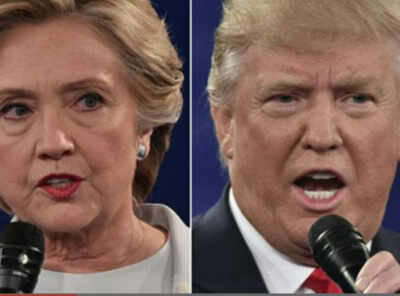
NEW DELHI: America's ugly and unpredictable presidential election barreled toward the finish Tuesday night, with Hillary Clinton and Donald Trump fighting for Florida, North Carolina and Ohio, three of the nation's most competitive states.
Republican Donald Trump held slight leads in the vital battleground states of Florida, Virginia, North Carolina and Ohio on Tuesday, clinging to a narrow advantage over Democrat Hillary Clinton in key states that could decide their race for the White House.
With voting completed in more than two-thirds of the 50 US states, the race was too close to call in Ohio, Florida, North Carolina, Pennsylvania, New Hampshire and Virginia, leaving the race for the White House on a knife's edge.
Both candidates scored victories in states where they were expected to win. Trump captured conservative states in the South and Midwest, while Clinton swept several states on the East Coast and Illinois in the Midwest.
Clinton had more options to reach 270, with Trump needing a virtual sweep of about six toss-up states to win. But a Trump win in those four states would make it nearly impossible for Clinton to clinch the White House.
As of 9.25 IST, Trump had 197 electoral votes to Clinton's 131, with US television networks projecting the winner in 25 of the 50 states and the District of Columbia.
Battle for Congress: Republicans projected to hold US House
Republicans will hold on to their majority in the US House of Representatives as expected, networks projected Tuesday, as attention shifts to the Senate where the battle for control is tighter.
With the US election in full swing, the party of populists presidential candidate Donald Trump was on track to take 235 seats to the Democrats' 200, according to NBC's House model.
That would be a 12-seat gain for Democrats, but still far short of what would be necessary to snatch the chamber back from Republican control.
By holding the House, Republicans secure a policy check on Hillary Clinton in the event she wins the presidency.
And, if Trump wins, it will be far easier for the chief executive to push through legislation that he or she wishes.
The Senate, where 34 of the 100 seats are in play Tuesday, is also in Republican hands, but under sharper threat of a Democratic takeover.
With that chamber currently 54 to 46 in the GOP's favor, Democrats need to gain five seats for a clean majority.
In the event the Senate is 50-50, control goes to the party that wins the White House, because the US vice president serves as the deciding vote in the event of a tie.
Democrats claimed a quick pick up Tuesday in Illinois, where two-term congresswoman and Iraq war veteran Tammy Duckworth defeated incumbent Senator Mark Kirk.
But Republicans bolstered their chances to hold the upper chamber when Senator Marco Rubio, a former Trump rival in the Republican primaries, fought off a challenge in Florida to keep his seat.
A handful of other Senate races with Republican incumbents, in states like Wisconsin, Pennsylvania, New Hampshire and North Carolina, are considered tossups.
What are electoral votes?
When Americans cast their votes during a general election, they do so for the Presidential candidate of their choice, but what really matters is the number of electors their state has. Each political party chooses its own set of potential electors for each state before Election Day, and the electors' votes are called electoral votes The electors from all 50 states make up an electoral college, which elects the US President. A candidate needs to get at least 270 out of 538 electoral votes to win.
In the vast majority of US states, if a candidate wins a majority of the public vote, he or she usually gets all the votes of his party’s electors. But here’s the catch: not all states are allowed the same number of electors. For example, California gets 55 electoral votes, and New York 28.
See the Associated Press' interactive map of the election results.
(With inputs from agencies)
Republican Donald Trump held slight leads in the vital battleground states of Florida, Virginia, North Carolina and Ohio on Tuesday, clinging to a narrow advantage over Democrat Hillary Clinton in key states that could decide their race for the White House.
With voting completed in more than two-thirds of the 50 US states, the race was too close to call in Ohio, Florida, North Carolina, Pennsylvania, New Hampshire and Virginia, leaving the race for the White House on a knife's edge.
Both candidates scored victories in states where they were expected to win. Trump captured conservative states in the South and Midwest, while Clinton swept several states on the East Coast and Illinois in the Midwest.
But Trump's slight edge in Florida, Virginia, North Carolina and Ohio gave him an early advantage in the state-by-state fight for 270 Electoral College votes needed to win.
Clinton had more options to reach 270, with Trump needing a virtual sweep of about six toss-up states to win. But a Trump win in those four states would make it nearly impossible for Clinton to clinch the White House.
As of 9.25 IST, Trump had 197 electoral votes to Clinton's 131, with US television networks projecting the winner in 25 of the 50 states and the District of Columbia.
Battle for Congress: Republicans projected to hold US House
Republicans will hold on to their majority in the US House of Representatives as expected, networks projected Tuesday, as attention shifts to the Senate where the battle for control is tighter.
With the US election in full swing, the party of populists presidential candidate Donald Trump was on track to take 235 seats to the Democrats' 200, according to NBC's House model.
That would be a 12-seat gain for Democrats, but still far short of what would be necessary to snatch the chamber back from Republican control.
By holding the House, Republicans secure a policy check on Hillary Clinton in the event she wins the presidency.
And, if Trump wins, it will be far easier for the chief executive to push through legislation that he or she wishes.
The Senate, where 34 of the 100 seats are in play Tuesday, is also in Republican hands, but under sharper threat of a Democratic takeover.
With that chamber currently 54 to 46 in the GOP's favor, Democrats need to gain five seats for a clean majority.
In the event the Senate is 50-50, control goes to the party that wins the White House, because the US vice president serves as the deciding vote in the event of a tie.
Democrats claimed a quick pick up Tuesday in Illinois, where two-term congresswoman and Iraq war veteran Tammy Duckworth defeated incumbent Senator Mark Kirk.
But Republicans bolstered their chances to hold the upper chamber when Senator Marco Rubio, a former Trump rival in the Republican primaries, fought off a challenge in Florida to keep his seat.
A handful of other Senate races with Republican incumbents, in states like Wisconsin, Pennsylvania, New Hampshire and North Carolina, are considered tossups.
What are electoral votes?
When Americans cast their votes during a general election, they do so for the Presidential candidate of their choice, but what really matters is the number of electors their state has. Each political party chooses its own set of potential electors for each state before Election Day, and the electors' votes are called electoral votes The electors from all 50 states make up an electoral college, which elects the US President. A candidate needs to get at least 270 out of 538 electoral votes to win.
In the vast majority of US states, if a candidate wins a majority of the public vote, he or she usually gets all the votes of his party’s electors. But here’s the catch: not all states are allowed the same number of electors. For example, California gets 55 electoral votes, and New York 28.
See the Associated Press' interactive map of the election results.
(With inputs from agencies)
End of Article
FOLLOW US ON SOCIAL MEDIA
Hot Picks
TOP TRENDING
Trending Stories
In Section
Entire Website
- Breathtaking cosmic catwalk! SpaceX makes history with first-ever private spacewalk
- 2 Army officers thrashed, their female friend gang-raped in Madhya Pradesh
- Bangladesh announce Test squad for India tour
- Top fastest trains in the world: From China's CR Harmony to Germany's ICE
- Amid Shannon Sharpe Viral Video, Former ESPN Host Michelle Beadle Reacts Claiming It Was Not Her
- Ayushman Bharat insurance scheme expanded to cover elderly above 70
- 'Will be demolished if... ': Himachal minister's assurance amid Shimla mosque row
- Mumbai's Haji Ali and Mahim dargahs cancel Eid shamiana
- Garena Free Fire MAX redeem codes for September 11, 2024: Win free room cards, skins, diamonds, pet skins, and more rewards today
- GK for students: Top 8 Largest Mammals in the World
- On Mamata's 'ready to resign' offer, protesting doctors say 'want solution to RG Kar stalemate'
- Putin invites 'great friend' PM Modi for talks on sidelines of BRICS summit
- Why are Bangladeshi Hindus in India for 50 yrs still not Indians?
- 'Leading light of the Left': Sitaram Yechury passes away; PM Modi, Rahul condole demise
- 'Deal with it': Oppn vs BJP over PM Modi attending Ganpati Puja at CJI's house
- Trump aide says 'White House will smell like curry' if Kamala wins
- Actor dies in his sleep. Why sudden heart attacks are killing Indians
- What Airtel CEO Gopal Vittal wrote in letter to Jio, Vi, Tata Tele and BSNL CEOs
- US Presidential Election Top 10: Is Donald Trump done as an orator?
- 'Air taxis to soon become a reality in India': PM Modi

Popular Categories
Hot on the Web
Top Trends
Trending Topics
Alia BhattMalaika Arora Father DeathArbaaz KhanNatasa StankovicMr Bachchan OTT ReleaseNational Parks In IndiaSelena GomezGOAT CollectionVikas Sethi DeathMalayalam ProducersIndia's Best Dancer 4Simi GarewalDilli BabuIndian National ParksLaung BenefitsVikas SethiiPhone 16Dubai Princess Sheikha MahraMG Windsor EvWordle Answer
Living and entertainment
Latest News
Epilepsy medication shows promise of treating sleep apnoea symptoms: StudyDigest this: Unhealthy gut may be linked to Parkinson’s disease'Played a big role in turning the cricket around': Ricky Ponting applauds Virat Kohli’s brilliance as India’s former captainAadhaar card update: Do you have to compulsorily update details on your Aadhaar every 10 years?Single Indians are now choosing slow, meaningful dates over-elaborate outings, reveals an online dating platform’s surveyExclusive- Saurabh Gumber reveals joining a new show during Ganeshotsav says, "I consider it as Bappa's small gift and believe he has great plans for me ahead"Pakistan: Bilawal cautions Shehbaz govt against political victimisation, points to Imran Khan's caseVijay Varma reveals he was DROPPED from 'Sacred Games' at the last minuteMahindra Thar Roxx with VIN 0001 to be auctiond for charity: How to registerVijay Sathya-starrer 'Dhil Raja' to release in SeptemberHarvard University Sees Drop in Black Freshman Enrollment Post-Supreme Court Ruling on Affirmative ActionArbaaz Khan spotted outside Malaika Arora's house along with police after the tragic news of her father's demise by alleged suicide - WATCH VIDEOHarvey Weinstein charged with additional crimes during hearing on rape chargesMitchell Schwartz's Cryptic Tweet Stirs Debate About Mahomes' ContractTovino Thomas praises Prithviraj Sukumaran as director: "One of the brilliant directors I have ever worked with"Border Gavaskar Trophy: When Sourav Ganguly's Brisbane heroics set the tone for an enlivening seriesBritain’s one of the largest mobile services providers BT Group raises cybersecurity alarm: “...every 90 seconds hackers are checking…”NTR Jr’s Devara crosses US $1 million mark for its premiere shows in USA with 15 days to release
Copyright © 2024 Bennett, Coleman & Co. Ltd. All rights reserved. For reprint rights: Times Syndication Service