
- News
- Unknown Tales from the City discussed with Partha Ranjan Das, Swarnali Chattopadhya and Shuvaprasanna
This story is from November 25, 2018
Unknown Tales from the City discussed with Partha Ranjan Das, Swarnali Chattopadhya and Shuvaprasanna
The heritage committee at Kolkata Municipal Corporation should be dissolved if the city's heritage is to be preserved, said Partha Ranjan Das at the inaugural Times Litfest Kolkata on Sunday.
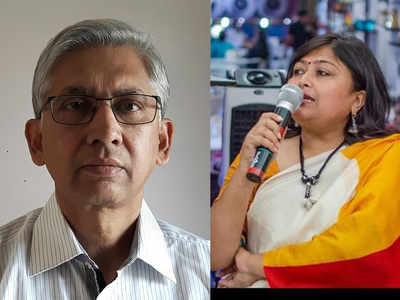
The heritage committee at Kolkata Municipal Corporation should be dissolved if the city's heritage is to be preserved, said Partha Ranjan Das at the inaugural Times Litfest Kolkata on Sunday.
"The manner in which the heritage committee has gone about quietly delisting buildings is suspect and detrimental to the city's built heritage.
This has allowed developers to demolish graded heritage buildings like Dunlop House and Kenilworth Hotel," Das commented at the session on 'Kolkata Heritage: Unknown Tales from the City'.
His reactions followed a scathing criticism of the heritage committee and its arbitrary manner of delisting heritage buildings by Swarnali Chattopadhyay, group admin of Purono Kolkatar Golpo, an online forum of citizens keen on the city's heritage and old tales. "It is scandalous. Buildings that are heritage beyond doubt are being torn down after they are surreptitiously removed from the heritage list," she pointed out.
Initially, a list of 2,500 buildings was drawn up for the heritage list. It was then whittled down to 800-odd. Now, buildings are being pulled off the list. "I personally believe Kolkata's heritage building list should contain much more than 2,500 buildings. Even the gradation is all wrong. There are architecturally wonderful buildings that are graded lower than those that have no such features. UNESCO has clear guidelines in heritage that should be followed when grading buildings," said Das.
WBHC chairman Suvaprasanna, who was also a panelist, admitted to being concerned over the arbitrary manner in which the heritage committee was functioning. "There is a way to go about listing or delisting a building. We advertise it, seeking objections or suggestions. It is in the public domain. I believe WBHC has an overarching responsibility to preserve the heritage of the entire state, including Kolkata. If owners of heritage buildings approach us, we will definitely take up the cause," said Suvaprasanna.
While WBHC is attempting to create awareness on heritage across the state and is also taking up conversation projects, either on its own or in conjunction with foreign universities and consulates, it is hamstrung in Kolkata where the Kolkata Municipal Corporation's heritage committee has enjoyed primacy over the city's built heritage.
Chatterjee, who is a member of the burgeoning group of heritage lovers in Kolkata, pointed to the lack of conservation architects in Kolkata. "There are owners of old houses who want to do something positive but are clueless as they don't have anyone to turn to for advice. At the most, there are five to six conservation architects in Kolkata and they are very busy," she said.
The reason behind the dearth of experts, Das explained, was that none of the institutes in Bengal -- IIT Kharagpur, IIEST or Jadavpur University -- offered a masters degree in conservation architecture. "We at WBHC do conduct sessions and talks on focused subjects like the use of brick and lime and get leading conservation architects to speak on their projects. But that is all we can do at the moment," said Das.
He identified another major impediment in conserving its heritage buildings, particularly in Chitpur and other parts of north Kolkata. Over half the population residing in these parts are migrants with no sense of belonging to the locality or the city.
"This is a problem peculiar to Kolkata that Mumbai, Chennai, Ahmedabad or even Delhi does not have to contend with. In these cities, it is locals who reside in the old sections. But in Kolkata, it is not so. The people who live in areas of north Kolkata make additions and alterations to buildings with no concern or awareness that they are actually destroying the architectural fabric of the neighborhood. Most of these buildings are tenanted. Rents are extremely low to allow the landlord to carry out any repairs. Add to that litigations and we have just about everything working against heritage," Das, who is also a member of the West Bengal Heritage Commission (WBHC),
Suvaprasanna, who is also a leading artist, felt art, literature and nearly all aspects of life were influenced by heritage. "That TOI incorporated a session on heritage in a literary festival is great. We need to create more awareness about heritage and how it can contribute to a city and state's uniqueness and economy," he added.

About the Author
Subhro NiyogiEnd of Article
FOLLOW US ON SOCIAL MEDIA
Hot Picks
TOP TRENDING
Popular Categories
Hot on the Web
Top Trends
Trending Topics
Devara CollectionBigg Boss Kannada 11 Launch Live UpdatePawan KalyanJungle SafariStree 2 OTT ReleaseRose GardenDevara CollectionOTT Release MovieMasala OmeletteEmergencyDevaraTaaza Khabar 2 Twitter ReviewDevara Movie ReviewHealthy RaitasSwatantrya Veer SavarkarColdplay India tour 2025Smartphone DealsApple Macbook Air M1Amazon SaleWordle Answer
Living and entertainment
Latest News
West Bengal CM Mamata Banerjee holds meeting to address flood situation in North BengalSetting them up to flourish: Why parents and school are a tag teamAir Arabia launches early bird promotion on 500,000 seats from INR 5,727!Diljit Dosanjh presents a gift to his Pakistani fan at his Manchester concert - WatchFormer Deputy Chief minister Alla Nani faces legal trouble after lift incident in EluruIndian wushu team creates history, bags seven medals at junior worldsWall collapse near Mahakal temple: Two cops, two civic staffers, temple official suspendedAishwarya Rai Bachchan touches Nandamuri Balakrishna's feet as a sign of respect, the Telugu star blesses herCovid lockdown on earth led to dip in Moon's temperature: StudyHost Kiccha Sudeep to Bigg Boss Kannada 11 contestant Aishwarya Shindogi: Come back as a stronger personManipur CM Biren accuses Kuki militants of abducting 2 Manipuri youthsKhatron Ke Khiladi 14 winner: Karan Veer Mehra lifts the trophy and Krishna Shroff becomes the first runner-upWhat to expect after a facelift procedure"It sounds like they really had to squeeze responses out of Vince": WWE Hall of Famer discusses Vince McMahon's reluctance in speaking during Netflix seriesColleagues remember braveheart Delhi Police constable Sandeep: 'Would rush to crime scene alone'10 desk exercises for 40-plus men for a healthy lifeBaloch Human Rights slam Pakistan and China, call it 'a failed state'A killing & a tipping point
Copyright © 2024 Bennett, Coleman & Co. Ltd. All rights reserved. For reprint rights: Times Syndication Service