
- News
- lifestyle
- travel
- things-to-do
- India’s rarest state birds – places you can still see them
India’s rarest state birds – places you can still see them
India’s rarest state birds – places you can still see them
India’s state birds are not just symbolic representations, but they are a reflection of India’s fragile ecosystems. While they are not necessarily classified as endangered species, they are becoming rarer in their natural habitats, found in shrinking spaces, in remote areas, or in very specific ecological zones. From the high-altitude wetlands of Ladakh to the Northeastern forests and Himalayan terrain, these birds are hard to spot, not just because they are becoming rarer, but also because they are found in specific zones, are elusive, and are found in hard-to-reach areas. This is a compilation of India’s rarest state birds, in the truest sense of the term, those which are endangered or simply hard to spot in their natural habitats.
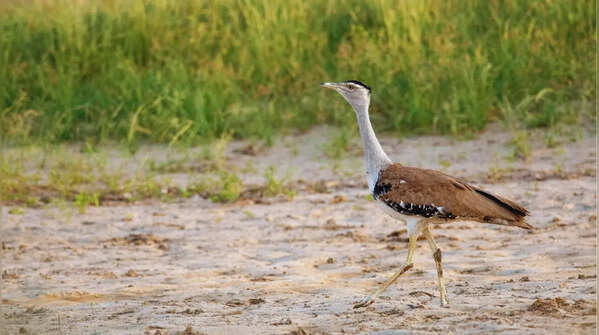
Great Indian Bustard - State bird of Rajasthan
Few species reflect India’s conservation crisis as starkly as the Great Indian Bustard. Once widespread across the country’s arid grasslands, it is now confined to a handful of fragmented pockets, with Rajasthan serving as its last major refuge. The bird’s decline has been driven by extensive habitat loss, compounded in recent years by fatal collisions with overhead power lines—now considered one of its most serious threats.
Today, the best chance of spotting this rare and majestic bird is within the vast, dry landscapes of Desert National Park. Alarmingly, estimates suggest that fewer than 10 individuals remain in the wild. However, ongoing captive breeding efforts have begun to offer a glimmer of hope for the species’ survival.
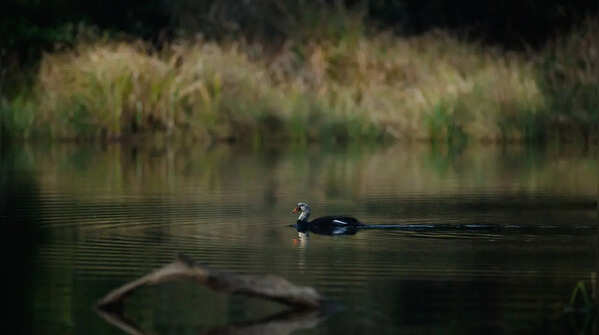
White-winged Wood Duck - State bird of Assam
Unlike most ducks, the White-winged Wood Duck avoids open wetlands. It prefers secluded forest pools, hidden within dense rainforest canopies, making it one of the most difficult waterbirds to observe in India. Its reliance on undisturbed forest habitats has made it extremely vulnerable to deforestation. Your best chances lie in the lowland rainforests of Dehing Patkai National Park or the remote wilderness of Namdapha National Park.
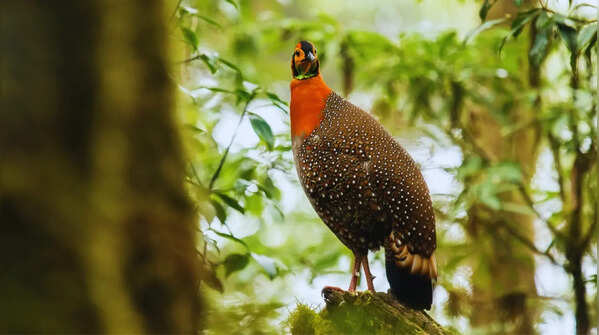
Blyth’s Tragopan - State bird of Nagaland
A bird that can only be described as mythical in its scarcity, Blyth’s Tragopan can be found in the high-altitude forests of Northeast India. Once threatened by hunting to the point of near extinction in the wild, conservation efforts have ensured that small populations exist in specific areas. Among the few places where the Blyth’s Tragopan can still be found is the Khonoma Nature Conservation and Tragopan Sanctuary
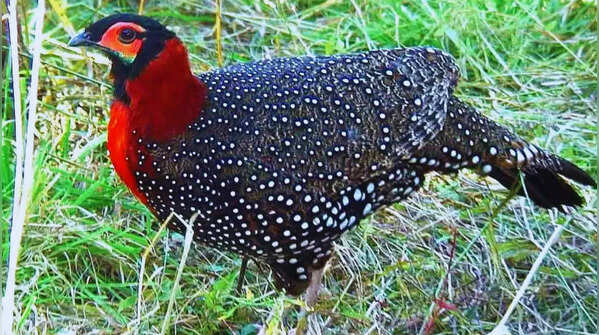
Western Tragopan - State bird of Himachal Pradesh
Photo courtesy: Great Himalayan National Park
Considered one of the rarest pheasants in the world, the Western Tragopan can be found in isolated areas of temperate forests in the western Himalayas. Their population is low, and the areas they live in are remote and inaccessible. The temperate forests in the Great Himalayan National Park are among the important habitats for the Western Tragopan. Even the most experienced birders may take days without spotting one. It is not so much the bird one expects to see as the one one hopes to catch a glimpse of, if the circumstances permit.
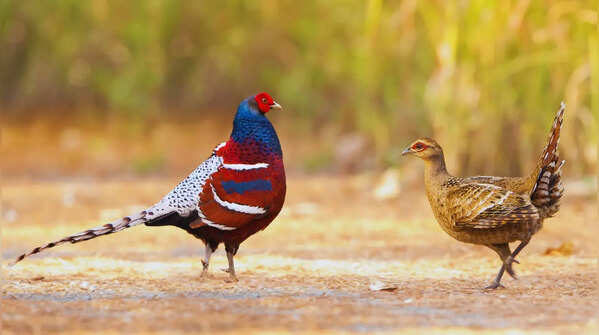
Mrs Hume’s Pheasant - State bird of Mizoram and Manipur
This beautiful pheasant, with its long tail and subdued plumage, is found in the forested hills of Northeast India. It is under constant threat from the degradation of its habitats and hunting, and its population is considerably diminished. It can still be seen in parts of Mizoram, and occasionally in the vicinity of the Keibul Lamjao National Park in Manipur. Its appearance is sporadic, and much of its territory remains to be explored in terms of birding, which adds to its mysterious aura.
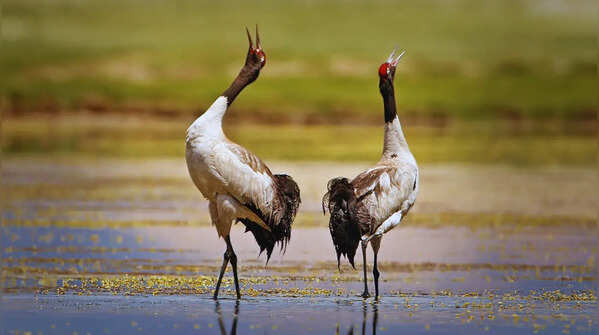
Black-necked Crane - State bird of Ladakh
The UT of Ladakh has adopted the Black-necked Crane as its state bird in September 2021. Unlike other cranes, the Black-necked Crane is a high-altitude breeding bird, which makes it one of the most restricted-range birds in India, with a small and sensitive population, especially vulnerable to disturbances due to infrastructure development and changes in water in this cold desert landscape. The only realistic place to see this bird is in and around Tso Moriri Lake in the Changthang region, and this too is seasonal, restricted to breeding times.
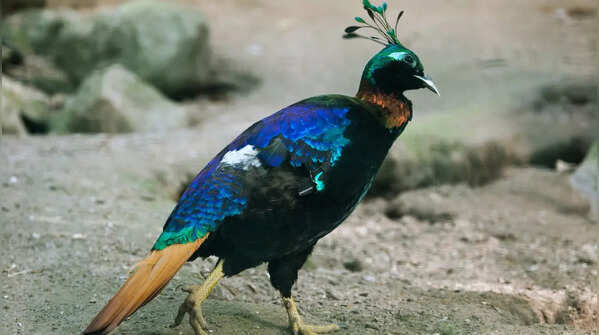
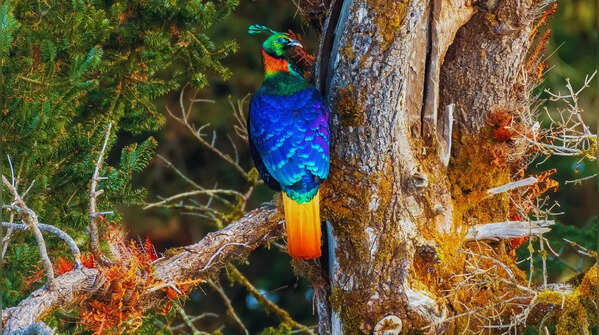
Himalayan Monal - State bird of Uttarakhand
While considered one of the most beautiful birds in the Himalayas, spotting a Himalayan Monal in the wild is quite difficult. Once a target of hunting, coupled with the loss of alpine habitats, these birds are not as commonly spotted as expected by their popularity. You may try spotting one in the high reaches of Kedarnath Wildlife Sanctuary or in alpine meadows around Chopta. However, there is no guarantee of spotting one as these birds are quite particular about their habitats and can be spotted early in the morning on steep slopes in areas with minimal human intervention.
Featured In lifestyle

MORE FROM ETIMES
life & style