
- News
- lifestyle
- travel
- things-to-do
- 7 unbelievable bird migrations around the world that travellers need to bookmark
7 unbelievable bird migrations around the world that travellers need to bookmark
7 unbelievable bird migrations around the world that travellers need to bookmark
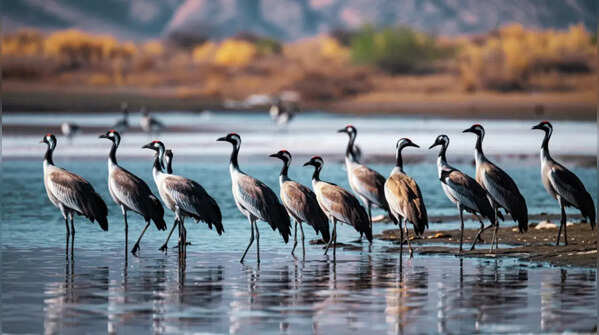
Each year, billions of birds take part in migrations that seem almost unbelievable. With the help of instincts, stars, Earth's magnetism, and ancestral migration paths, the birds traverse oceans, deserts, mountains, and even whole continents in their quests for better living conditions, feeding grounds, and warmer climates. Some birds migrate non-stop for several days, relying only on stored fat from weeks before. And many birds always come back to their old nesting places with remarkable precision.
For travellers, these migrations mean the greatest wildlife shows out there. They convert quiet wetlands into hotbeds of activities for birds, they fill the sky with flocks of flying creatures. These migrations prove how interrelated the different ecosystems in our world actually are. For travellers, migrations are definitely an event that needs to be seen and experienced at least once in a lifetime.
The Arctic tern's pole-to-pole journey
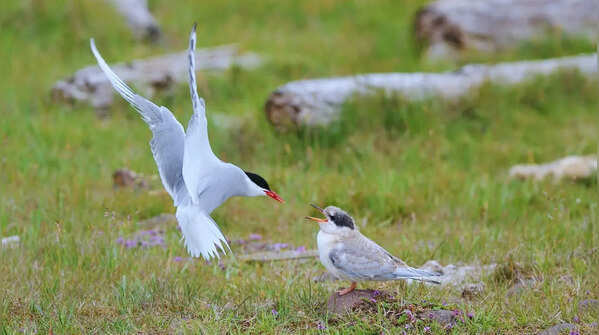
The Arctic Tern migrates and travels in what is arguably the longest migration in the animal world. Migrating north during the summer months from June to September, this bird breeds in the Arctic zones of North America, Europe, and Asia, after which it migrates to Antarctica to take advantage of the summer there before once again travelling northwards. It accomplishes this incredible feat each year by flying over 70,000 km. During a life span, the Arctic Tern could end up flying hundreds of thousands of kilometers – more than a few trips to the moon and back.
Bird watchers looking to observe this unique species would do well to make their way to spots like Iceland, the Faroe Islands, and other parts of Norway where these magnificent birds breed.
The red knot's race against time
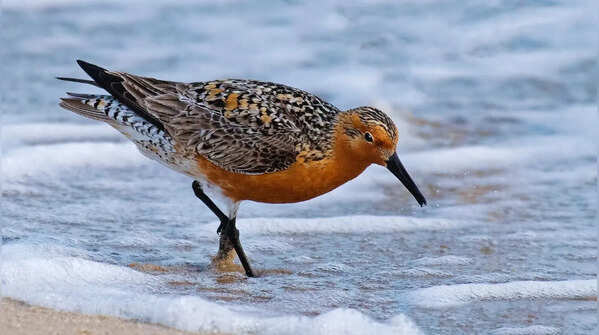
The modest red knot carries out one of the most strenuous migration events in birds. In some cases, populations will breed within the Arctic regions of Canada before making their way south to the tip of Argentina and Chile, a journey of up to 15,000 kilometres each way. What makes the migration of the red knot interesting is the dependence of the bird upon several key locations for rest along the way. The most famous location, perhaps, is the Delaware Bay region within the United States. Each year, horseshoe crabs converge upon the beaches to lay their millions of eggs, which provide an abundant food source for the hungry birds.
The bar-tailed godwit's impossible non-stop flight
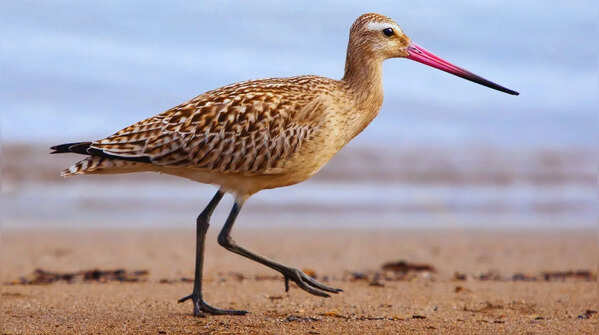
On first impression, the Bar-tailed Godwit seems like an ordinary wading bird. But did you know that some bar-tailed godwits migrate from breeding grounds in Alaska, fly for over 13,000 kilometers across the Pacific Ocean, and land at sites in New Zealand and eastern Australia without stopping? Now you do. The birds do not rest, feed, or drink water throughout this journey but rather stay in the air for up to a week. Prior to migration, bar-tailed godwits accumulate large amounts of body fat and reduce some internal organs in size for the purpose of maximizing flight performance. Flight across such enormous distances is an interesting phenomenon for scientists to study. Travellers who visit New Zealand during arrival season will see the phenomenon as one of the most exceptional in nature.
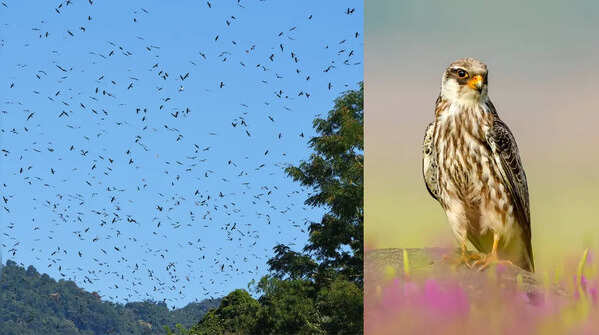
The Amur falcon's African adventure through India
One of the most amazing wildlife migrations witnessed in India involves the movement of the Amur Falcon. Breeding within the regions of Eastern Russia and North China, these slender birds migrate all the way from East Asia to Northeastern India and then fly across the Indian Ocean, ending up in Southern Africa for wintering. This bird travels an astounding 20,000 kilometers every year and is known to undertake one of the longest ocean journeys in the world by any bird of prey. Some of the best places in the world to observe this migration are the villages of Pangti in Nagaland, and Tamenglong in Manipur. When autumn comes around, thousands of these Amur Falcons come down to roost in the region.
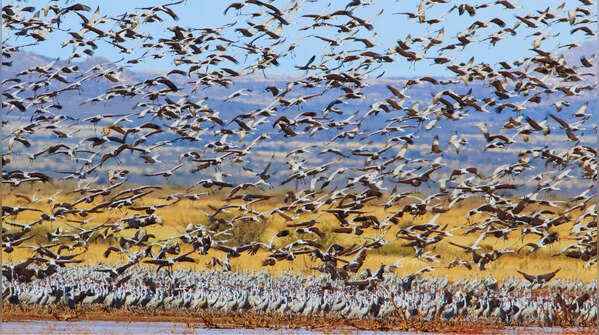
The sandhill crane gathering that transforms the desert
Every year, the deserts of New Mexico become the home of the sounds of many thousands of Sandhill Cranes. These magnificent birds move south from breeding grounds located in Alaska, Canada, and northern parts of the USA. Perhaps the most popular site for seeing such birds is Bosque del Apache National Wildlife Refuge. Early morning and late afternoon become the time when vast flocks fly out from the wetlands with their trumpeting sounds. Sandhill Cranes grow up to 4 feet in height, having a wingspan larger than 2 meters.
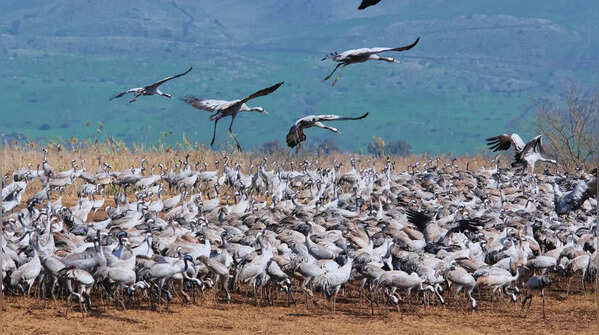
Europe's majestic crane highways
The migration of Common Cranes has fascinated the European continent for centuries. With autumn comes the sight of massive flocks leaving their breeding areas in Scandinavia, Baltics, and Northern Europe to fly towards their winter quarters in Southern Europe and North Africa. It is a spectacle that cannot go unnoticed. Massive V-formation of the flying cranes fill the skies along with their loud trumpeting calls, which can be heard from miles away below. One of the best places to experience this phenomenon is the Extremadura region in Spain.
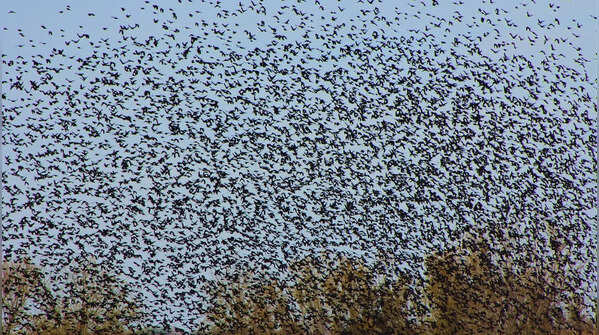
Barn swallow roosts that resemble living storm clouds
Among the little-known but fascinating migratory events is the movement of the ordinary Barn Swallow. Migrating from Europe to Africa south of the Sahara Desert, these common birds make their migrations over several thousand kilometres. Before settling to roost for the night, large flocks of swallows may congregate in the skies above reed beds and marshes. During sunset hours, they indulge in mesmerizing aerial acrobatics, dancing about in the air in tightly-packed formations before resting among vegetation. In certain locations across the United Kingdom, Italy, and parts of Africa, these gatherings can involve hundreds of thousands, and occasionally millions, of birds. The constantly shifting formations resemble smoke drifting across the sky or storm clouds changing shape in real time.
Featured In lifestyle

MORE FROM ETIMES
life & style