
- News
- lifestyle
- travel
- destinations
- 5 most unsettling UNESCO World Heritage Sites in the world
5 most unsettling UNESCO World Heritage Sites in the world
5 most unsettling UNESCO World Heritage Sites in the world
Of course, not all discomfort in travel results from danger or narrative. In certain locations, discomfort results from the physicality of space, how it is constructed, how it confines, or how it warps. A handful of UNESCO World Heritage Sites are notable for this. They are not “creepy” by any intent, but they are locations where, as a result of their history, their architectural construction, state of preservation, and environmental conditions, there is a measurable level of discomfort.
These are locations where the past does not need to be “interpreted” through any form of narrative. The past is simply “present” in a confined space, a preserved form, a half-finished structure, or a landscape that overwhelms any reference of space. The discomfort experienced within these locations is not imagined but actual.
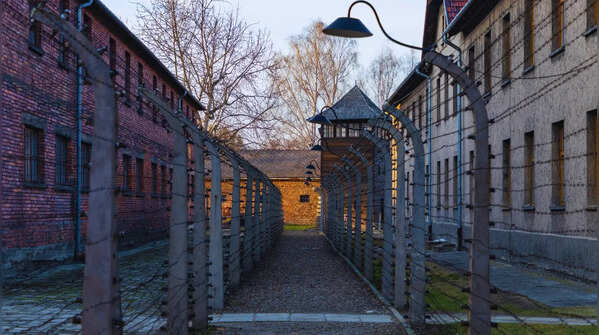
Auschwitz-Birkenau in Poland
The Auschwitz-Birkenau concentration camp (1979) is one of the most well-preserved concentration camp sites from the Second World War, spanning an area of about 191 hectares, including both Auschwitz I and Auschwitz II-Birkenau. The rows of barracks, towers, rail tracks, and fences stretch out in an otherwise flat, open space with little to interrupt them. The source of physical unease is the disparity between the intended use of the space and the emptiness of the space. These spaces were designed to accommodate large numbers of people, but they are now silent spaces.
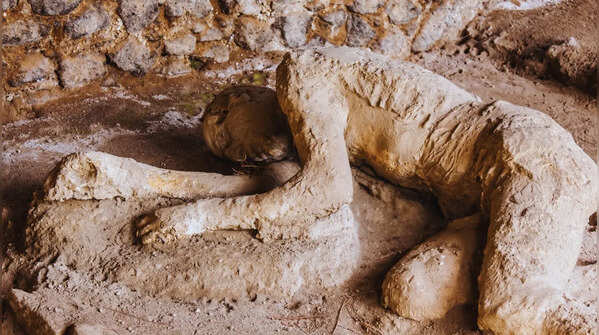
Pompeii in Italy
Pompeii (Archaeological Areas of Pompeii, Herculaneum and Torre Annunziata, inscribed in 1997) and its surrounding areas are examples of Roman urban centers which have "survived" after the eruption of Mount Vesuvius in 79 CE. One of the unique characteristics of this site is that it is an example of an urban layout with streets, buildings, and other structures. A notable characteristic of this site is the presence of plaster casts of bodies which were originally in the cavities of volcanic ash. These are casts of people in their original positions during death.
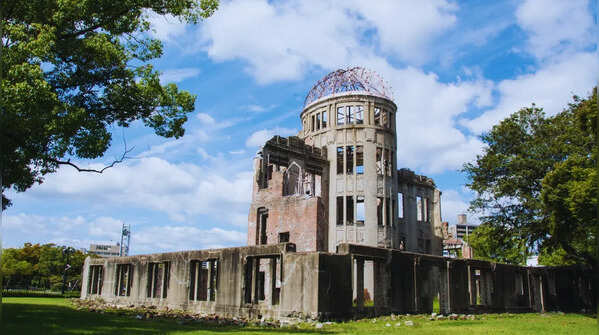
Hiroshima Peace Memorial in Japan
The Hiroshima Peace Memorial (added to the list in 1996), also referred to as the Genbaku Dome, is one of the few structures that managed to withstand the bomb dropped in Hiroshima on August 6, 1945. The building remains in the state it was in after the bomb exploded and has not been restored or rebuilt in any way. The structure of the building is incomplete and consists of a steel frame, broken masonry, and partially collapsed walls. What is interesting is that, unlike most other ruins, which are either restored or deteriorate further over time, this one has intentionally been maintained in the state it is in now. What makes the physical experience interesting is the fact that the building is located in the modern city of Hiroshima, which has been fully rebuilt and now has functional infrastructure, modern buildings, and thriving streets.
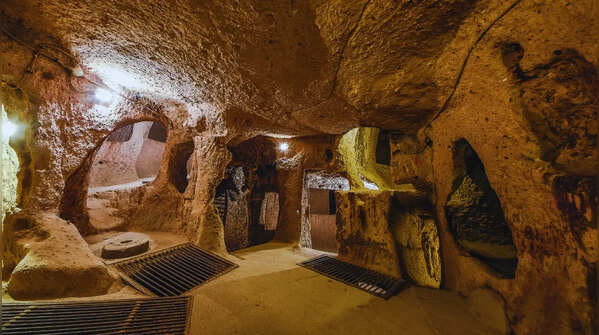
Derinkuyu Underground City in Turkey
Within the Göreme World Heritage Site (inscribed 1985) lies Derinkuyu, one of the largest excavated underground cities in Cappadocia. Carved into soft volcanic rock, the settlement extends to a depth of approximately 60 meters and consists of multiple interconnected levels designed for habitation, storage, and protection. Passageways are narrow, often requiring single-file movement, and ceilings in many sections are low enough to necessitate bending or crouching. Rooms are small, enclosed, and carved directly from rock, with minimal variation in shape or size.
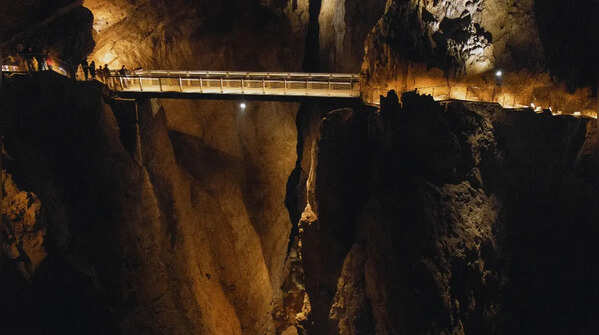
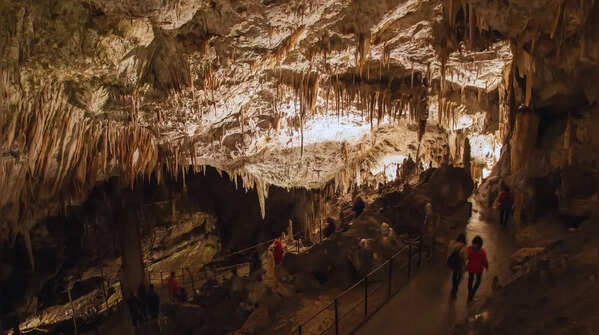
Škocjan Caves in Slovenia
The Škocjan Caves (inscribed 1986) is a karst feature that also contains one of the biggest known underground canyons in the world. The feature that defines this place is the enormous scale of the caves. There are vertical drops greater than 100 meters and areas that are too vast to define spatially. Visitors explore the caves via man-made walkways and bridges that are attached to the walls of the caves. These walkways are narrow compared to the space around them and often are located over significant drops. The unsettling feeling is due to the scale without reference. The human body is accustomed to understanding space in terms of reference points that are defined in terms of human scale. These are largely absent in the caves.
Featured In lifestyle

MORE FROM ETIMES
life & style