Witness the annual Amur falcon migration in Nagaland, Manipur and Assam
Witness the annual Amur falcon migration in Nagaland, Manipur and Assam
You're Reading

Witness the annual Amur falcon migration in Nagaland, Manipur and Assam Why Arunachal’s Parshuram Kund needs to be on your travel bucket list? Have you seen these Ireland-like unique rock formations on Karnataka’s St Mary's Islands? Why are the locals of this village in Uttarakhand upset with Lord Hanuman?


Synopsis
The Amur falcon, a small sized raptor from the falcon family, breeds in Siberia and Northern China but migrates to the warmer climate of the Southern part of Africa via India every year. It’s time for the annual Amur falcon migrat … Read more
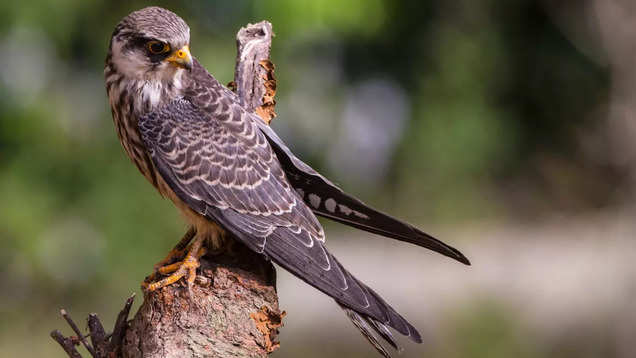
The Amur falcon, a small sized raptor from the falcon family, breeds in Siberia and Northern China but migrates to the warmer climate of the Southern part of Africa via India every year.


India’s northeastern region falls on their migration route and every year, for centuries now, these birds have been visiting some very specific areas.
Why is this migration significant?
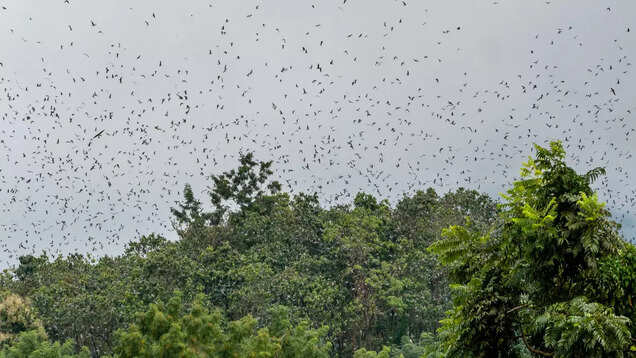
One of the most amazing things these birds do is fly over the Arabian Sea for a really long time, and as they fly, they feed on the insects in the air. It’s a good thing their migration coincides with the dragonfly migration.
In northeast India, they usually come to areas in and around the Doyang river dam in Pangti village in Wokha district, Nagaland. In Manipur, large flocks make Tamenglong district their home for a few weeks. And in Assam, Dima Hasao district gets to see some isolated roosting sites.
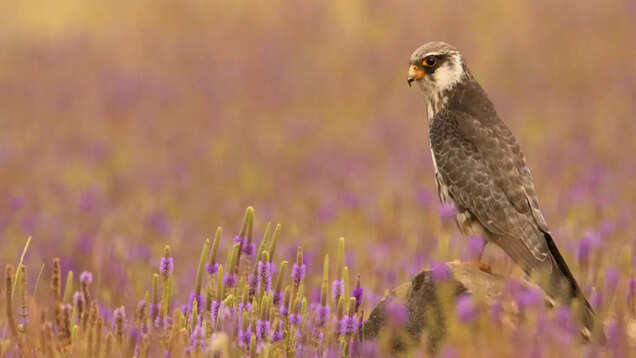
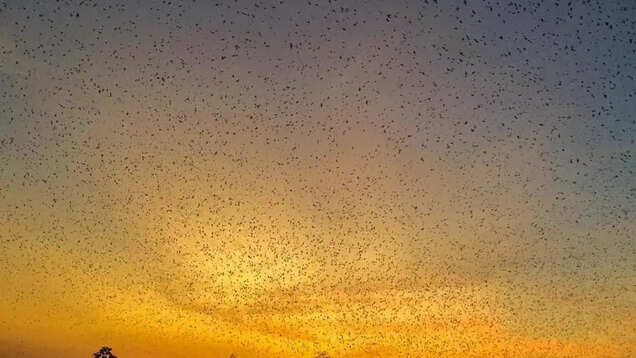
When we talk about wildlife, we often use the word ‘spotting’. In terms of Amur falcons, ‘spotting’ is a very small word. When they come, they are nothing short of a spectacle. The skies darken with millions of birds in the sky, every tree, electric poles, wires, fences, bushes, homes, everywhere they land. This is the kind of spectacle that drives most birding enthusiasts giddy with excitement.
These birds, however, don’t stay on for a long period. You will be able to see them till mid-November. By November, their number won’t be as big as when they first come, as they slowly start their journey to Africa.
In Tamenglong, Manipur, these falcons are locally known as akhuaipuina and the forest department, along with the local wildlife NGOs, are doing their best to give these birds a safe roosting site as long as they are visiting the area.
Some of the birds were geo-tagged and because of this the researchers were able to locate them and keep a track of their whereabouts. Turns out, these birds are the longest travelling raptors in the world. Isn’t that just amazing?
- Where can we see amur falcons in India?
In northeast India, they usually come to areas in and around the Doyang river dam in Pangti village in Wokha district, Nagaland. In Manipur, large flocks make Tamenglong district their home for a few weeks. And in Assam, Dima Hasao district gets to see some isolated roosting sites. Few individuals have been reported from some parts of North India (Uttar Pradesh) and Maharashtra too. - When is the best time to see amur falcons in India?
Amur falcons stay in India for few weeks, mostly from mid-October to November. - Why is Pangti village known as Amur Falcon Capital?
The biggest roosting site in India is in Nagaland. Pangti village in Wokha, Nagaland, is where these birds come in large numbers to roost and the area is aptly named Amur Falcon Roosting Area Union.

closecomments

Be the first one to review.
We have sent you a verification email. To verify, just follow the link in the message
end of article

Visual Stories
10 pretty Indian villages to visit this year-end

8 castles in Germany straight out of a fairy-tale

8 tiger reserves every wildlife enthusiast should visit in India

10 animals that are easily spotted in Ranthambore National Park
How to prepare for a night safari in India?

9 rare animals to spot in the Western Ghats and where to find them



Trending Stories
From women-only night beach to floating walkway: What can travellers expect from Dubai's brand new tourist attraction?
Oldest fires in the world that are still burning, and why they deserve to be on your travel-wishlist
What's it like to visit 10 most economically stable countries in the world right now? What's India's rank
Travel warning across these Indian states as IMD forecasts storms, hail and heat wave conditions
10 best UNESCO spa towns of Europe where people visit for wellness and healing




Comments (0)