Ajanta Caves, World Heritage Site
Ajanta Caves, World Heritage Site
You're Reading


Synopsis
Nearly two thousand years ago, during the reign of Satavahana Dynasty, a complex project took shape on the outskirts of Aurangabad. Caves were carved out of solid rock that served as Viharas for several hundred Buddhist monks. The … Read more
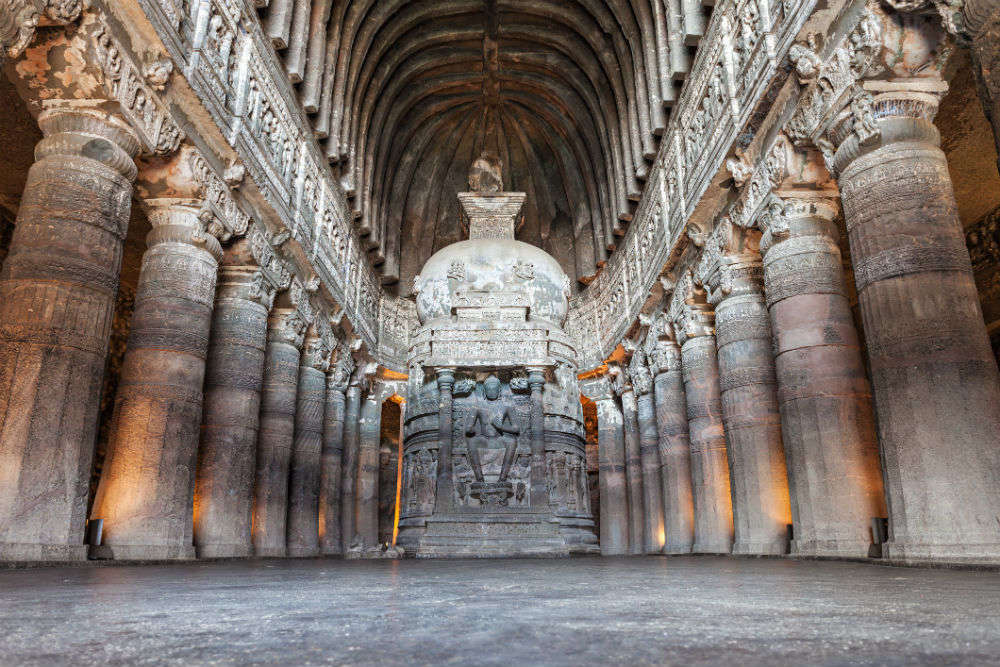 Nearly two thousand years ago, during the reign of Satavahana Dynasty, a complex project took shape on the outskirts of Aurangabad. Caves were carved out of solid rock that served as Viharas for several hundred Buddhist monks. The undertaking has the stamp of not only legendary artistry of the era but also the great insights and significance that people of the time had towards cosmic events. For instance, in a few caves, the sun lights up the statue of Buddha on summer or winter solstice. The walls, the pillars and ceilings display one of the most intricate colour paintings depicting Buddha and his life. Though a few paintings have faded with time, some have been vandalised. A British hunter, whose only claim to fame was the discovery of these caves, that locals always knew of but never advertised, was the first to scratch his name on the priceless paintings. Fierce conservation efforts over the years have ensured preservation of this beautiful heritage for visitors to see.
To keep pollution levels under control, the management does not allow private vehicles beyond a certain point and the last mile through the hills must be done as a battery-operated bus ride. The massive site, with an external walkway connecting the thirty caves, overlooks a stream of the Waghora River flowing like a rapid. The surrounding mountains cast a shadow on the gorge below and makes for an easy viewing experience early in the mornings. Depending on your interest levels, it may take you anywhere between a few hours to repeat visits over a few days to enjoy the impressive structures and paintings. The site is located just over a hundred kilometres north east from Aurangabad and offers porter and assisted mobility services for the needy. The caves are open to visitors between 9:00 am and 5:30 pm and remains closed on Mondays and national holidays.

closecomments

Be the first one to review.
We have sent you a verification email. To verify, just follow the link in the message
end of article
Next story
Lonar Crater Lake
Visual Stories
10 pretty Indian villages to visit this year-end

8 castles in Germany straight out of a fairy-tale

8 tiger reserves every wildlife enthusiast should visit in India

10 animals that are easily spotted in Ranthambore National Park

How to prepare for a night safari in India?

9 rare animals to spot in the Western Ghats and where to find them


Trending Stories
An American tourist pleads with PM Narendra Modi for an Adhaar Card and the reason is....
Delhi gets barrier-less toll system: What this means for travellers on highways
Vande Bharat train journeys across Kerala, Tamil Nadu, Karnataka And Andhra Pradesh every traveller should experience
Rakul Preet Singh's controversy at Gir National Park: 5 things travellers should know about rules for visiting national parks and wildlife sanctuaries
Travelling abroad for summer vacation? Here’s what PM Narenda Modi appeals to travellers and why this is important




Comments (0)