Boudhnath Stupa
Boudhnath Stupa


Synopsis
Situated on the north-eastern edge of Kathmandu, this large white stupa is a major centre of Tibetan Buddhism.
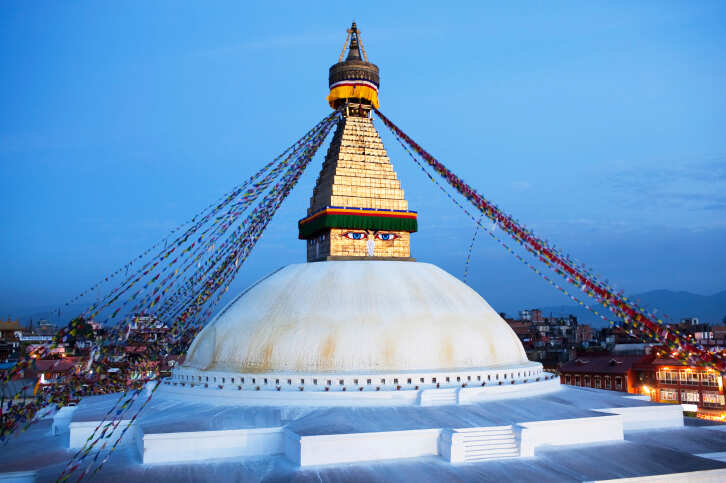 Situated on the north-eastern edge of Kathmandu, this large white stupa is a major centre of Tibetan Buddhism. It lies on an ancient trade route between Lhasa and Kathmandu, and was an important stop for Tibetan traders travelling to the higher reaches of the Himalayas. Believed to house Buddha’s relics, it is also among the largest stupas in Asia. The best times to visit are early morning and dusk, when you can observe monks chanting their prayers and butter lamps being lit.
closecomments

Be the first one to review.
We have sent you a verification email. To verify, just follow the link in the message
end of article
Next story
Patan Durbar Square
Visual Stories
10 pretty Indian villages to visit this year-end

8 castles in Germany straight out of a fairy-tale

8 tiger reserves every wildlife enthusiast should visit in India

10 animals that are easily spotted in Ranthambore National Park
How to prepare for a night safari in India?

9 rare animals to spot in the Western Ghats and where to find them


Trending Stories
An American tourist pleads with PM Narendra Modi for an Adhaar Card and the reason is....
Delhi gets barrier-less toll system: What this means for travellers on highways
Vande Bharat train journeys across Kerala, Tamil Nadu, Karnataka And Andhra Pradesh every traveller should experience
Rakul Preet Singh's controversy at Gir National Park: 5 things travellers should know about rules for visiting national parks and wildlife sanctuaries
Travelling abroad for summer vacation? Here’s what PM Narenda Modi appeals to travellers and why this is important




Comments (0)