Rinpung Dzong
Rinpung Dzong


Synopsis
Rinchen Pung Dzong means 'Fortress on a Heap of Jewels,' once served as the meeting hall for the National Assembly. Now, Rinpung houses both the monastic body and district government offices, including the local courts. Most of th … Read more
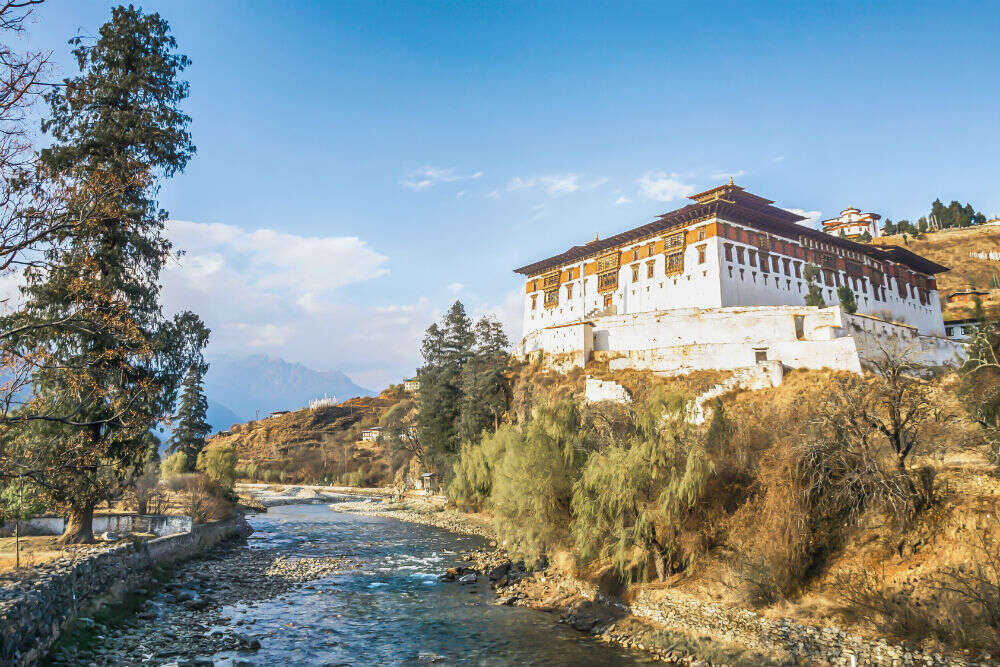 Rinchen Pung Dzong means 'Fortress on a Heap of Jewels,' once served as the meeting hall for the National Assembly. Now, Rinpung houses both the monastic body and district government offices, including the local courts. Most of the area is prohibited for the tourists, but visit this Dzong for its marvel architecture. Famous as Paro Dzong, it was built in 1644 under the order of Zhabdrung Ngawang Namgyal, the holder of Drukpa- Kagyud Buddhist School, and the unifier of Bhutan. This dzong has been used on various occasions to protect Paro from the invasion of Tibet. This fort is built on a hillside due to which the front courtyard of the administrative section is 6 m higher than the portion of monastic courtyard. Outside the dzong is the ground where dancers perform the popular dance forms of tsechu. Below the dzong is a traditional wooden bridge called Nyamai Zam, which was reconstructed when the original one got washed away in a flood in 1969. The Dzong courtyard is opened daily but on the weekends some areas inside has restricted entry.

closecomments

Be the first one to review.
We have sent you a verification email. To verify, just follow the link in the message
end of article
Next story
Chele La pass
Visual Stories
10 pretty Indian villages to visit this year-end

8 castles in Germany straight out of a fairy-tale

8 tiger reserves every wildlife enthusiast should visit in India

10 animals that are easily spotted in Ranthambore National Park

How to prepare for a night safari in India?

9 rare animals to spot in the Western Ghats and where to find them

Trending Stories
From reversing waterfalls and doorless homes; Maharashtra’s most unique wonders every curious traveller should experience
Meet the cutest ‘toll collectors’ in the Himalayas and why Zanskar deserves a spot on every traveller’s bucket list
Indian towns where clouds float through the streets
“In logo ko sharam nahi aati kya”: Indian tourists’ dance on Vietnam’s famous ‘Hanoi Train Street’ sparks online backlash
8 Indian destinations that come alive after monsoon rainfall and how to reach them



Comments (0)