How wage stagnation, inflation pushed Noida’s workers to the edge
- Jairaj SinghArun George
- TNN & Agencies Apr 24, 2026, 14:39 IST IST
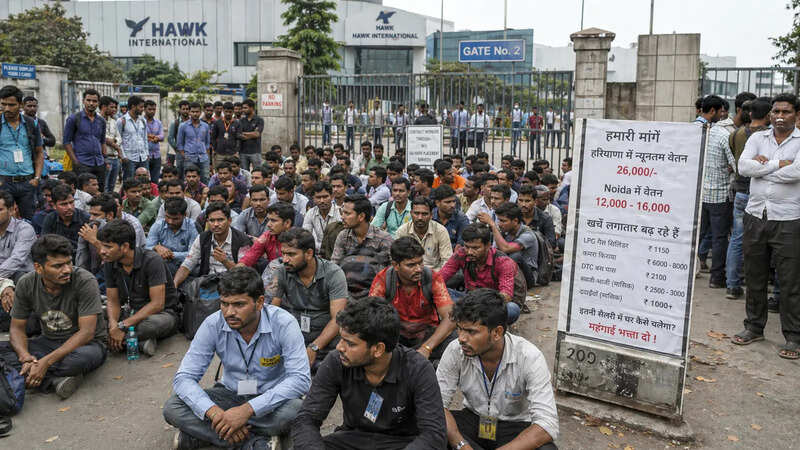
The protests in Noida on April 10 began with workers in the city’s industrial belt demanding higher wages. The anger, however, went far beyond a single pay revision. For years, many workers in factories and workshops in the city earned extremely low monthly wages — between Rs 9,000 to Rs 12,000 — even as the cost of living rose in the same period. When Haryana notified a steep minimum-wage increase on April 9, workers in Noida could see how far behind they had been left. Uttar Pradesh’s interim wage hike, which followed on April 14, helped only contain the immediate crisis.
According to economist Ajit Ranade, the unrest in the industrial belts of Noida and Gurgaon should not be viewed simply as another labour flare-up or law-and-order issue. What unfolded, he says, was the release of pressure that had been building for years: stagnant wages, insecure contract work, weak bargaining power, and inflation steadily eating into meagre pay. For workers at the bottom of the wage ladder, even small increases in the price of LPG, vegetables, fruit, transport or medicines can make life markedly harder.
According to economist Ajit Ranade, the unrest in the industrial belts of Noida and Gurgaon should not be viewed simply as another labour flare-up or law-and-order issue. What unfolded, he says, was the release of pressure that had been building for years: stagnant wages, insecure contract work, weak bargaining power, and inflation steadily eating into meagre pay. For workers at the bottom of the wage ladder, even small increases in the price of LPG, vegetables, fruit, transport or medicines can make life markedly harder.