
- News
- 2. Could the Sikkim disaster have been averted?
This story is from October 5, 2023
2. Could the Sikkim disaster have been averted?
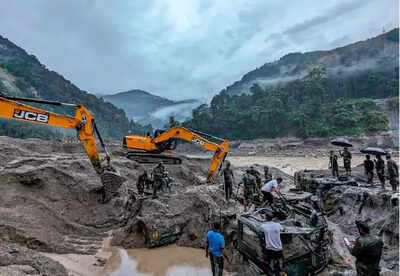
Flash flood
There was a warning
Signs of an approaching danger
What are GLOFs
A greater danger
Scientists watching
- An outburst in
Sikkim ’sSouth Lhonak Lake on the night of October 3-4, triggered a flash flood in the Teesta river basin, leaving 14 people dead and 102 others, including 22 army personnel, missing. - The
Chungthang dam, the largest hydropower project in Sikkim, was also breached.
- A study by an international team of researchers, published in the journal
Geomorphology , warned two years ago that the South Lhonak Lake in Sikkim may burst in the future and significantly impact the downstream region. - The researchers, including those from
IIT , Roorkee, and Indian Institute of Science, Bangalore, worked on this study.
- The 2021 study highlighted that South Lhonak Lake had witnessed significant growth in the past decades due to glacial retreat. This meant there were increased chances of glacial lake outburst floods (GLOF).
- The researchers found that while these lakes are mainly located in remote and unsettled mountain valleys, far-reaching GLOFs may claim lives and damage assets up to tens of kilometres downstream.
- GLOFs occur when lakes formed by melting glaciers suddenly burst open.
- The GLOF that led to disaster in Sikkim may just be an indication of the danger such an event poses to the lives of about 30 lakh Indians living in vulnerable areas of the six Himalayan states and Union Territories — J&K, Ladakh, Himachal Pradesh, Sikkim, Assam and Arunachal Pradesh.
- The first global assessment of such areas, done by an international team led by scientists at UK’s
Newcastle University , flagged about this danger in February talking about the risk of flooding due to GLOF. - India and Pakistan together make up one-third of the total number of people globally exposed to such phenomena.
- The study, published in the journal
Nature Communications , also underlined that the population exposed to GLOFs increases with distance from a glacial lake.
End of Article
FOLLOW US ON SOCIAL MEDIA
Hot Picks
TOP TRENDING
Trending Stories
In Section
Entire Website
- Why has the iconic Tupperware Brands filed for Chapter 11 bankruptcy?
- Meerut Metro: India’s ‘Fastest’ Metro Service Unveiled! Check Top 10 Features, Stations, Route & More
- Several people feared trapped after house collapses in Delhi's Karol Bagh
- 'Putting an end to all the masala': Virat Kohli and Gautam Gambhir leave fans stumped
- Massive tech layoffs at Apple, Dell, IBM are a wake-up call for IT professionals: Why upskilling is the key to survival
- 'Biggest security breach': 1000s of pagers explode across Lebanon, many Hezbollah fighters hurt; 9 dead
- Maharashtra schools closed on Sep 18: Here’s why
- Schools to be closed tomorrow in these states: Here’s why
- 'Prophet Muhammad who taught us to...': Pakistan batter Babar Azam turns to faith amid poor form
- Sukanya Samriddhi Yojana: What are the latest guidelines for SSY accounts? Check here
- Gaganyaan tracking station site finalised at Cocos Islands
- 'One Nation, One Election' cleared by Union Cabinet
- What IPO-bound startups learnt from Paytm’s costly mistakes
- Iran accuses Israel of 'mass murder' after pager explosions in Lebanon
- 'MSP legal guarantee & caste survey': Congress releases Haryana manifesto
- Kolkata cops delayed seizing clothes of RG Kar accused: CBI
- Why Isro needs a new approach to realise its lunar ambitions
- Fired techie shares his 'survival story' on LinkedIn, post viral
- 'Subah bheege badam khate ho?': Virat to Gambhir
- Should Sandip Ghosh's medical registration be cancelled? What WBMC rules say

Popular Categories
Hot on the Web
Top Trends
India Fastest Metro ServiceVince McMahonNPS Vatsalya LaunchDonald TrumpKolkata Doctor Rape CaseShreyas IyerTaiwan PagersGautam Gambhir Press ConferenceUGC Net ResultVirat KohliSukanya Samriddhi YojanaIsrael Hezbollah WarNEET UG Admission CriteriaDelhi CM's ListPager Attack in LebanonDMK StalinLive Cricket Score
Trending Topics
Living and entertainment
Latest News
Throwback: When Aishwarya Rai said that dignity is 'extremely precious' to her; 'The way I have been brought up.....'Shilpa Shetty just rolled out the latest sari trend 'a rainbow sari''Could restore sight': FDA grants 'breakthrough status' to Musk’s Neuralink 'Blindsight' implant. What it meansCM Punk to Step In as Guest Referee for NXT Title Match at WWE NXT Chicago EventWaterborne disease cases spiked after flood in VadodaraThe man who wants to 'cancel' Adani from Sri LankaSuriya to play the antagonist in 'Dhoom 4', here's what we know11 get new lease of life with organs from two in SuratMrBeast aka Jimmy Donaldson, Amazon sued by ‘Beast Games’ contestants over sexual harassment and chronic mistreatment allegations - reportsAmazon India appoints new country headBigg Boss Tamil 8: Actress Sachana Namidass to participate in the upcoming season?India 'very big abuser' of trade ties with US, says Donald TrumpJr NTR's 'Devara: Part 1' to have early morning showsGrieving mom's heart-wrenching letter blames toxic culture for daughter’s deathRicky Ponting is new Punjab Kings head coachA lot at stake as Mohun Bagan get ready for Asian footballHeart problem? Smart stetho can sense it in just 15 secsWhy am I feeling irritable? Common causes of mood swings and how to manage them
Copyright © 2024 Bennett, Coleman & Co. Ltd. All rights reserved. For reprint rights: Times Syndication Service