
- News
- 4 tips for people with diabetes to stay safe during this Covid season
This story is from May 4, 2021
4 tips for people with diabetes to stay safe during this Covid season
Dr. V Mohan, Chairman and Chief Diabetologist, Dr.Mohan’s Diabetes Specialities Centre, offers 4 tips to guard people with diabetes against Covid and prevent complications. He calls this as the ABCD mantra of diabetes management.
What is this ABCD mantra?
A
Stands for A1C or
Glycosylated Hemoglobin. HbA1C is a blood test that shows your blood sugar control for the past 3 months. Keeping the A1c below 7% enhances one’s immunity multifold. The HbA1C level may vary as per age. This needs a three-fold approach – diet, exercise and medicines. While medicines form an important part of the diabetes control, effective diet and exercise regimen are even more important. The choice of medicines needs to be tailor-made as per the physiological make-up of the patient. Diet and exercise also needs to be individualized depending on their age, mobility and other co-morbidities.Dr. Mohan says that the reason why a patient needs to undergo regular checkups is because diabetes control needs to be periodically checked along with the efficacy medicines; diet and fitness regimen can also be advised. The fitness department at Dr. Mohan’s Diabetes Specialities Centres has formulated simple exercises suitable for people with diabetes
. The pandemic has enhanced digital health and it is now easy to book home collection of blood and avail a teleconsultation without leaving your home.
B
stands for Blood pressure. This should preferably be around 120/ 80 mm of Hg. This of course can be higher in older people. Blood pressure control is however important to maintain a healthy heart and kidneys. C
stands for Cholesterol. Cholesterol is measured as serum cholesterol, triglycerides and LDL cholesterol. Each of these parameters needs to be kept in control since they contribute to cardiac problems.D
stands for Vitamin D. Studies at Madras Diabetes Research Foundation have shown that vitamin D deficiency is seen in over 70% of Indians. Vitamin D deficiency has been shown to correlate with an increased prevalence of infections. Indians are also vitamin B12 deficient. Moreover, anemia is quite prevalent in women. These deficiencies can be managed with basic supplements and diet adjustments.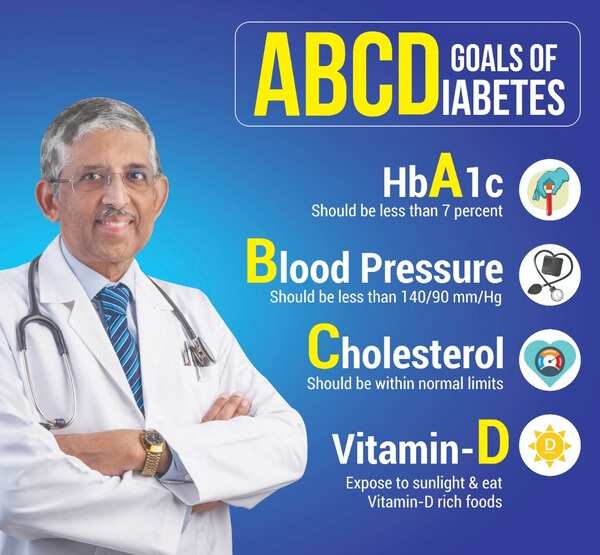
What is Continuous glucose monitoring (CGM)?
Continuous glucose monitoring (CGM) using ambulatory glucose monitoring can help both the patient and the doctor in monitoring the efficacy of the therapy and getting the right balance of diet, exercise and medicines. It is possible to monitor glucose levels 24 x 7 to make sure that they are maintained within normal limits throughout the day and determine whether the prescribed dosages, diet regimen, exercise efforts are working effectively without low or high sugar reactions.
What makes Dr. Mohan’s Diabetes Specialities Centre (DMDSC) the ideal destination for diabetes care?
Firstly at DMDSC, the treatment methods followed are based on 30 years of research on diabetes carried out through their sister institution, the Madras Diabetes Research Foundation (MDRF) which is ranked one of the leading research institutions for Diabetes in India, by several agencies. Extensive research carried out among the Indian population has helped to improve the treatment of diabetes. Secondly, the Dr. Mohan’s group of institutions have specialized tests to find out the type of diabetes so that personalized diabetes care or precision diabetes care can be given to each and every person with diabetes. This helps the patients to prevent diabetes complications. Several hundred patients treated at DMDSC have crossed 90 years of age and are marching towards their 100th birthday. Thirdly, uniform methods of treatment are followed in all 50 branches of DMDSC across India.
Unique subtypes of diabetes in India:
Rather than “bottling” diabetes care into “tailor-made packages” and programs, Dr. Mohan’s Diabetes Specialty Clinics rely on diagnostic skills to separate the different types of diabetes and provide precision care and updated personalized diabetes medication. “One size does not fit all.” Every patient needs to be diagnosed in detail and classified as per their response to medication and their susceptible to develop kidney, eye, foot or heart complications. Most patients with diabetes in India seek clinical care for managing only the complications of uncontrolled diabetes: heart attacks, kidney failure, blindness and foot amputations. Dr. Mohan’s Diabetes attempts to turn this paradigm on its head by focusing on early diagnosis of diabetes and thus help them to prevent all complications of diabetes.
Dr. Mohan’s Diabetes Specialities Centre is currently present in Chennai (8 clinics and a hospital), Hyderabad (7 clinics), Bangalore (5 clinics), Bhubaneshwar, Kolkata (2 clinics), Pondicherry, Calicut, Trivandrum, Coimbatore, Vellore, Tanjore, Madurai, Trichy, Tuticorin, Erode, Salem, Tiruppur, Kanchipuram, Vizag, Vijayawada, Guntur, Nellore, Chittoor, Kadappa, Rajamundry, Tirupathi, Kurnool, Warangal, and very soon at Kakinada. They also have a rural clinic at Tamil Nadu to help the rural population.

Website : www.drmohans.com
Phone : 8939110000
Facebook: www.facebook.com/drmohansdiabetesinstitutions/
Instagram: www.instagram.com/drmohansindia/?hl=en
Twitter: www.twitter.com/DMDSC
Linkedln: www.linkedin.com/company/drmohans/
Youtube: www.youtube.com/drmohansdiabetesspecialitiescentre/
Disclaimer: The views/suggestions/opinions expressed in the article are the sole responsibility of the experts and the hospital concerned.
End of Article
FOLLOW US ON SOCIAL MEDIA
TOP TRENDING
Popular Categories
Hot on the Web
Top Trends
Stock Market TodayBasit AliBrittany MahomesRavichandran AshwinBabar AzamKanpur Test Match RecordsUGC NET Result 2024Tirupati LadduIndia T20 WC SchedulePPF CalculatorBryonna Burrows Net WorthWomen T20 World Cup Points TableWomen T20 World Cup ScheduleIND vs PAK T20 WC MatchDiddyTop Management Colleges of IndiaLive Cricket Score
Trending Topics
GovindaNavratri Colours 2024Solar Eclipse 2024 TimesNavratri WishesGandhi Jayanti WishesDevara CollectionGOAT OTT ReleaseGandhi Jayanti 2024Rajinikanth Health UpdateNavratri HistoryDevaraGovinda NewsDevara Movie ReviewHealthy RaitasSwatantrya Veer SavarkarColdplay India tour 2025Upcoming Smartphones In OctoberAmazon SaleSony Bravia 55 inch 4k Ultra HD TVWordle Answer
Living and entertainment
Latest News
Zodiac Signs as Romantic Movie CouplesJapanese artist’s tribute to Indian classical dance formAnanya Panday unveils her Amol Palekar-inspired look in quirky BTS PICS from 'CTRL’Sanjay Dutt celebrates 'Gandhigiri', shares a scene from 'Lage Raho Munna Bhai'Women's T20 World Cup 2024: Teams, format, venues, defending champions and more FAQs answeredGovinda's bullet injury: Mumbai police not convinced with actor's version but rule out foul playHaircuts and colours to try out this PujoTriptii Dimri denies skipping the Jaipur event after allegations of charging an appearance feeWatch: Orry channels Aishwarya Rai in a hilarious tribute to Shah Rukh Khan and Amitabh Bachchan starrer 'Mohabbatein'Former WWE Champion Jeff Hardy talks about “addiction struggles”Qualifier Yash upsets second seed Manish at Fenesta Open'Scam marathon' under JMM-Congress-RJD rule 'biggest obstacle' to Jharkhand's development: PM ModiPopulation of Hindus & tribals declining in Jharkhand, says PM ModiWHO chief praises PM Modi on 10th anivarsary of Swachh Bharat missionNasa switches off instrument on Voyager 2 spacecraft to save powerAre 3 senior Karnataka mantris jockeying for chief minister's chair?Best Leather Wallets for Men in 2024: Timeless EleganceArya's film faces controversy for not paying junior artists on time
Copyright © 2024 Bennett, Coleman & Co. Ltd. All rights reserved. For reprint rights: Times Syndication Service