
- News
- Sports News
- Tergat, once king of the long run, pauses to reflect
Trending
This story is from August 3, 2016
Tergat, once king of the long run, pauses to reflect
The marathon is simply the greatest human endurance test on land, according to Tergat, who held the world record in the event over five years in the last decade, and it needed defeating in the mind as well as the body.
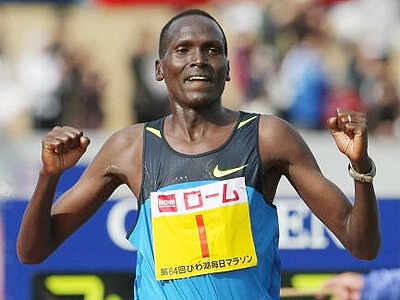
Tergat held the marathon world record over five years in the last decade. (AFP Photo)
It was okay. Tergat could indulge in some mind-running, he had all the time in the world and nowhere to run. The connection to Sao Paulo and further on to Rio delayed in the Ethiopian capital, Tergat sat back, cracked a few jokes ("'Saxena!?' Really? What kind of name is that?") slapped a few backs and told us what madness it is really to run, and run like he did. One of the most accomplished long-distance runners of all time, the Kenyan great ambled in unnoticed into the Bole airport waiting area, one among the rising sea of African faces in the morning travelling rush. It was only when one accidentally spied his name on the airline desk attendant's computer monitor that one was able to put name to face.
It was slightly amusing that he had sat a full hour unnoticed and therefore, undisturbed, in a part of the country which is a great Kenyan rival in long-distance running. Asked whether he was being given the cold shoulder on purpose in the home of Abebe Bikila and Tergat's own great rival, Haile Gebrselassie, Tergat laughed. "Maybe it was different during our running days, maybe because of the rivalry between me and Gebrselassie. But since I have retired, each time I come here, they ask me to stay , not to leave."










Yet, even a decade since his retirement, the deep-seated Kenyan-Ethiopian rivalry doesn't really go away . As the talk veers around Kenenisa Bekele, the 5,000m and 10,000m Olympic and world record holder, and his controversial axing from the Ethiopian long-distance pack for Rio, Tergat is serious, momentarily. "Maybe they have a good younger generation that they are not afraid to try out at Rio," he says in all seriousness, before chuckling, "Whatever the reason, it can only mean a good thing for Kenya."
The marathon is simply the greatest human endurance test on land, according to Tergat, who held the world record in the event over five years in the last decade, and it needed defeating in the mind as well as the body. "At the start, if you keep thinking of the 42 kilometers that lie ahead, then you are not going to make it. I always looked around when I ran, the weather, the city, the people. Then I would allow my mind to roam. God alone knows, how many houses I built, how may feasts I prepared for my friends and how many houses I later pulled down -all in my head when I am running. You'd go crazy otherwise."
Suddenly the flight delay is not a distraction anymore, since Tergat the marathoner himself has taken flight. The current council chairman of the state-run Kenyan Academy of Sports holds forth on his favourite topic. "But when you hit the 35-k mark," his eyes grow large, "You must snap back to the run at hand and then begin the plotting and planning. It's the last seven kilometers of the test that you really use all your strategies for. The rest of the time you are basically running with yourself. It's like playing solitaire on a high-stakes poker table..."
End of Article
FOLLOW US ON SOCIAL MEDIA










Photostories

Top Sports News
TOP TRENDING
Explore Every Corner
Across The Globe
Popular Categories
Hot on the Web
Top Trends
India vs EnglandBlackhawk Pilot KilledMichael JordanHarshit RanaBasit AliDerek LivelyPakistan Champions Trophy SquadTax CalculatorBudget 2025 Income TaxChampions LeagueMoin KhanUS Plane CrashSwara Bhaskar X PostDelhi Election 2025NFL Pro Bowl 2025Budget 2025 Live UpdatesBangladesh Football MatchLive Cricket Score
Trending Topics
Rakesh RoshanEmergency Box Office CollectionGame Changer Box Office CollectionCareer PredictionsBeetroot Chickpea KebabsValentines Day Week ListBaba VangaBasan Panchami WishesMamta KulkarniDeva ReviewKruger National ParkFebruary 2025 Health PredictionsFebruary 2025 Wealth PredictionsFebruary 2025 Career PredictionsFebruary 2025 Love PredictionsRapper Raftaar WeddingRohan KhaunteGujarat School RapeRajasthan High CourtHarpreet Kaur Babla
Living and entertainment
Latest News
Alex Bregman’s free agency sparks debate as fans remain divided over New York Yankees’ lack of interestShohei Ohtani and Dodgers Players Visit Firefighters at Station 69 to Show Their Support Amid WildfiresShark Tank India 4: Perfume brand founder Shashank Chourey says he seeks knowledge, not money; Anupam Mittal quips, 'Gyaan toh tujhe pata hai kiske paas hai'What is a hyperbaric chamber and how it exploded to kill a 5-year-old Michigan boy?Did life stand a chance on Mars amid extreme climate shifts?This simple morning habit can lower stroke riskHyperbaric chamber explodes killing 5-year-old Michigan boy, mother injuredAbhishek Bachchan says Mani Ratnam sees something in him that he does not recognise himself5-year-old detained over fee, school officials bookedWWE Veteran Set to Return After 3 Years: Here’s What You Need to KnowAmended Aadhaar authentication rules to boost ease of living notifiedThis newly identified species of monkey is already on the verge of extinction; know whyWill Joel Embiid play tonight against the Denver Nuggets? Latest update on the Philadelphia 76ers star's injury report (January 31, 2025)Maintenance for working woman? Supreme Court to decideITBP constable gets 10 years in jail for raping colleague in 2021Donald Trump's Canada, Mexico tariffs from February 1: Karoline Leavitt slams Trudeau's 'outlandish' remarkTom Brady once opened up about his divorce, calling it "amicable" despite the "challenging situations"Tamannaah Bhatia on self-love: ‘I touch every part of my body and thank it for withstanding the day’
Copyright © 2025 Bennett, Coleman & Co. Ltd. All rights reserved. For reprint rights: Times Syndication Service