
- News
- Sports News
- In Trinidad, India reverberates
Trending
This story is from August 21, 2016
In Trinidad, India reverberates
The Indo-Trinidadian and Tobagonian community in Trinidad has managed to keep India alive in their lives while getting well integrated into the local milieu.
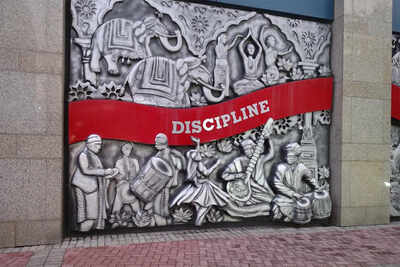
Colours of India: A silver mural in the Trinidad & Tobago parliament building depicts Indian music instruments being played by artists
PORT OF SPAIN (Trinidad): At a small hotel in the Piarco village in Trinidad, strains of a Hindi film melody holds your attention. Waada na tod, waada na tod…. the popular Lata Mangeshkar ditty from the 1987 flick Dil Tujhko Diya makes you nostalgic and you ask the lady at the reception who is playing the song: "Do you like Hindi music?" "Yes," she says. "Do you speak Hindi?" "No," she says, introducing herself as Sushilla Gosain.
Gosain explains that listening to HindI movie songs is her favourite pastime and her not knowing Hindi is no hindrance to that.
Same is the story of Deyal Ramcharan, a cab driver who operates between the Piarco international airport and the city of Port of Spain. The radio in his cab is always playing one Hindi channel or the other, and there are many in Trinidad and Tobago. Deyal also can’t speak Hindi. "Were you born in Trinidad?” Well into his sixties, Deyal informs, “Even my grandfather was born here."
Gosain and Ramcharan highlight the fascinating tale of how the Indo-Trinidadian and Tobagonian community here has managed to keep India alive in their lives while getting well integrated into the local milieu.
After slavery was abolished in 1838 in the British-ruled world, in the Caribbean too, former slaves no longer wanted to work under oppressive conditions. This led to a demand for a servile labour force to work in the vast sugar plantations here in Trinidad and some other Caribbean countries like Guyana. Under colonial rule, India provided the empire with cheap and mobile labour force. It was a poor country with a large labour force desperate for employment and ready to travel to far-off lands to escape poverty.
Between 1845 and 1917 (when indenture was abolished), approximately 1,45,000 Indians came to Trinidad to work as indentured, or bonded, labourers. The majority of these labourers came from the Gangetic planes of Uttar Pradesh and Bihar and that’s why Bhojpuri became the lingua franca of the Indian-origin population here in the early years.
The Indian-origin community here is now about 4.7 lakh strong which is 36 per cent of Trinidad and Tobago's total population.
It's interesting to note how this group has retained its distinctive Indianness while at the same time also getting homogenised with the local culture. Even the fourth or fifth generation Indo-Trinidadian nurtures Indian cultural mores without being at conflict with the Afro-Trinidadian way of life. Of course, the language of their forefathers like Hindi, Urdu and Bhojpuri have been lost but many of the words from these languages have been integrated into the local vernacular.
The most obvious channels through which the Indo-Trinidadians connect to their Indian roots is music, films and food. Hindi music is prominently played around the island and Indian artists regularly come to perform here. Indian cuisine has long entered the mainstream food system. The many popular Roti shops in Port of Spain, selling wraps with potato and meat inside, are a testimony to that.
During a visit to a local radio station, Heritage FM, one sees posters of Indian movies at the reception. Another poster is an advertisement of an upcoming Akla Yagnik show in Port of Spain. The channel's staple is a potpourri of Hindi film songs, bhajan, ghazal and folk.
Chutney music, developed by Indo-Caribbeans, is now a leading form of pop music in Trinidad and elsewhere in the West Indies. It is a mix of Bhojpuri, western and local music and intermingles with Soca and other forms of local music.
A number of temples cater to the religious needs of the Indian-descent people here with the 85-feet Hanuman statue at the Dattatreya temple at Carapichaima – claimed to be the largest Hanuman idol outside India -- being one of the more popular ones.
VS Naipaul, of course, is the towering Indian-origin figure from this country. But there have been scores of others who have distinguished themselves in politics, arts, social work and education, and or course cricket. The likes of Sonny Ramadhin, Denesh Ramdin, Robin Singh, Samuel Badree, Daren Ganga, Sunil Narine, Ravi Rampaul are all Indo-Trinidadians who have entertained cricket fans around the world.
Like all Caribbean nations, Trinidad also celebrates the 'Indian Arrival Day' to commemorate the arrival of Indians on these shores. In Trinidad, this day is celebrated on May 30.
Gosain explains that listening to HindI movie songs is her favourite pastime and her not knowing Hindi is no hindrance to that.
Same is the story of Deyal Ramcharan, a cab driver who operates between the Piarco international airport and the city of Port of Spain. The radio in his cab is always playing one Hindi channel or the other, and there are many in Trinidad and Tobago. Deyal also can’t speak Hindi. "Were you born in Trinidad?” Well into his sixties, Deyal informs, “Even my grandfather was born here."
Gosain and Ramcharan highlight the fascinating tale of how the Indo-Trinidadian and Tobagonian community here has managed to keep India alive in their lives while getting well integrated into the local milieu.
After slavery was abolished in 1838 in the British-ruled world, in the Caribbean too, former slaves no longer wanted to work under oppressive conditions. This led to a demand for a servile labour force to work in the vast sugar plantations here in Trinidad and some other Caribbean countries like Guyana. Under colonial rule, India provided the empire with cheap and mobile labour force. It was a poor country with a large labour force desperate for employment and ready to travel to far-off lands to escape poverty.
Between 1845 and 1917 (when indenture was abolished), approximately 1,45,000 Indians came to Trinidad to work as indentured, or bonded, labourers. The majority of these labourers came from the Gangetic planes of Uttar Pradesh and Bihar and that’s why Bhojpuri became the lingua franca of the Indian-origin population here in the early years.
The Indian-origin community here is now about 4.7 lakh strong which is 36 per cent of Trinidad and Tobago's total population.
It's interesting to note how this group has retained its distinctive Indianness while at the same time also getting homogenised with the local culture. Even the fourth or fifth generation Indo-Trinidadian nurtures Indian cultural mores without being at conflict with the Afro-Trinidadian way of life. Of course, the language of their forefathers like Hindi, Urdu and Bhojpuri have been lost but many of the words from these languages have been integrated into the local vernacular.
The most obvious channels through which the Indo-Trinidadians connect to their Indian roots is music, films and food. Hindi music is prominently played around the island and Indian artists regularly come to perform here. Indian cuisine has long entered the mainstream food system. The many popular Roti shops in Port of Spain, selling wraps with potato and meat inside, are a testimony to that.
During a visit to a local radio station, Heritage FM, one sees posters of Indian movies at the reception. Another poster is an advertisement of an upcoming Akla Yagnik show in Port of Spain. The channel's staple is a potpourri of Hindi film songs, bhajan, ghazal and folk.
Chutney music, developed by Indo-Caribbeans, is now a leading form of pop music in Trinidad and elsewhere in the West Indies. It is a mix of Bhojpuri, western and local music and intermingles with Soca and other forms of local music.
A number of temples cater to the religious needs of the Indian-descent people here with the 85-feet Hanuman statue at the Dattatreya temple at Carapichaima – claimed to be the largest Hanuman idol outside India -- being one of the more popular ones.
VS Naipaul, of course, is the towering Indian-origin figure from this country. But there have been scores of others who have distinguished themselves in politics, arts, social work and education, and or course cricket. The likes of Sonny Ramadhin, Denesh Ramdin, Robin Singh, Samuel Badree, Daren Ganga, Sunil Narine, Ravi Rampaul are all Indo-Trinidadians who have entertained cricket fans around the world.
Like all Caribbean nations, Trinidad also celebrates the 'Indian Arrival Day' to commemorate the arrival of Indians on these shores. In Trinidad, this day is celebrated on May 30.
End of Article
FOLLOW US ON SOCIAL MEDIA
Visual Stories





Top Sports News
TOP TRENDING
Trending Stories
In Sports
Entire Website
- “I think that Dom has hurt me in a bigger way than Rey ever hurt me”: WWE Superstar Shares Insights on Her Troubled Relationship With the Mysterios
- San Francisco 49ers All-Pro Linebacker Fred Warner Reveals How Vikings Player Aided Him in Forcing Game-Changing Fumble
- 5 Wrestling Legends Expected to Be Inducted into the 2025 WWE Hall of Fame
- Is everything between John Cena and Shay Shariatzadeh good? Exploring the relationship status of the 16-time World Champion
- 1st Test: India 81/3 at stumps on Day 2, lead Bangladesh by 308 runs
- Shaqkere Parris hits jaw-dropping 124m six in CPL clash - Watch
- Angry Rishabh Pant to Litton Das: 'Mere ko kyu maar rahe ho?'- Watch
- India vs Bangladesh: Who is Hasan Mahmud who dismissed Rohit Sharma, Shubman Gill and Virat Kohli cheaply in first Test
- Dulip Samaraweera hit with 20-year ban by Australia due to 'inappropriate behaviour'
- Sourav Ganguly takes legal action against YouTuber
- 'We are already dead': Lebanon on edge as Israel ups ante against Hezbollah
- Animal fat in Tirupati laddu: Centre intervenes, temple trust blacklists supplier
- Deep links between alcohol and younger adults developing cancer: New report
- Sri Lanka presidential elections: What's at stake for India and China
- 'Killed Hezbollah commanders were planning Oct 7-like massacre,' says IDF
- Harris basks in star power, but can it power her to White House?
- How Israel killed most wanted terrorist with a phone call in 1996
- Ex-Google employee looking for job in Canada: 'I've been reducing ...'
- Video: Pune civic body truck falls into massive sinkhole at city post office
- Veteran actress Kaviyoor Ponnamma dies at 79

Popular Categories
Hot on the Web
Top Trends
AppleGurgaon Bike AccidentTirupati Laddu RowIsraeli Strikes on HezbollahIND vs BAN LiveJacoby BrissettIIT Companies WFH PolicyOdisha Bharatpur Police Station NewsRhea RipleyIsrael Hezbollah WarKerala Lottery ResultAssembly ElectionTirupati PrasadamEY Pune EmployeeSean DiddySandip GhoshLive Cricket Score
Trending Topics
Stree 2 CollectionRuksana BanoAbdu RozikYudhra ReviewJayamSana Khan HusbandTirupati Laddoo ControversyGOAT CollectionVaazha OTT ReviewKozhipannai Chelladurai ReviewCheetahsKangana RanautAditi Rao HydariDalljiet KaurHoliday DestinationVikas SethiBest Selling Earbuds Under 1000Apple iPhone 16 ProVirat KohliWordle Answer
Living and entertainment
Latest News
SoftBank’s latest investment signals Masa’s brand-new India strategyEvery single infiltrator will be thrown from here, need to protect tribal culture: Amit Shah in JharkhandHenry Danger: Here’s where you can see all seasons - 1 to 5Former Rapper Shyne barrow speaks about Diddy's arrest, says he "Killed" his lifeBigg Boss fame Sana Khan on her photos wearing Abayas going viral during her Maldives vacation; says 'people think you can only wear swimwear...'When Sunita Ahuja said, "You have to be very strong to be an actor’s wife"Kaun Banega Crorepati 16: Amitabh Bachchan reminisces about shooting for Deewar and Kabhi Kabhie; says “Kabhi Kabhie josh mein hum log bohot kuch kar dete hain"India's familiarity with UAE conditions gives them an edge in Women’s T20 World Cup: Mithali RajIIM Tiruchirappalli, Indore under fire as RTI data reveals massive vacancy of reserved category faculty positionsNFL Players Who Use Their Platform for Social GoodTop most expensive athlete divorces: From Michael Jordan to Tiger WoodsJuju Baby Music revives folk with a twist with their latest EP, Folk Outta The BoxKarunaratne, Chandimal fire as Sri Lanka take control of first New Zealand TestOnePlus 12 is available for Rs 35,314 only on Amazon; check exchange deal and bank offersGovt caps late fee at Rs 1k for vehicle fitness certificateHow to watch 'Fast and Furious' movies in chronological order and release datesBack support for chair: Top picks onlineU Mumba team gears up for Pro Kabaddi League Season 11 with 40-day intensive training camp
Copyright © 2024 Bennett, Coleman & Co. Ltd. All rights reserved. For reprint rights: Times Syndication Service