
- News
- Sports News
- The science behind F1’s lightning-fast pit stops: How teams service cars in under two seconds
Trending
The science behind F1’s lightning-fast pit stops: How teams service cars in under two seconds
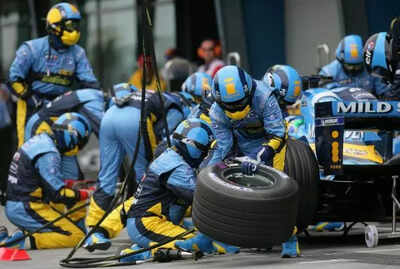
Credit: Getty Images
The job of pit teams
The job of an F1 pit crew consists of some 20 professionals who get tasks assigned to each of them. Jack operators perform quick car lowering and lifting, while tyre changers and carriers swap all four wheels simultaneously. Front and rear wing adjusters provide aerodynamic adjustments, and the man signals the driver to pull out safely. They utilize advanced equipment and technology.
How does it happen?
F1 team pit stop action uses technical devices such as wheel guns, retention systems, and hydraulic jacks to move fast and keep wheels tight. Pit crews rehearse for tens of thousands of hours to gain coordination and develop muscle memory, and slow-motion analysis is studied to hone procedures and cut waste.
Step 1: Decision to pit
- The pit stop decision is made by the strategy team, not the driver.
- The team considers factors like tyre wear, fuel consumption, race conditions, and opponent plans.
- Strategic choices like 'box to overtake' or pitting under a 'Safety Car' are considered.
Step 2: Pit crew preparation
- The pit crew prepares 15-20 seconds before the pit stop
- They test equipment and claim allocated garage spots to prevent crashes.
Step 3: The car enters the pit box
- The driver parks the car in the designated spot.
- The front jack operator raises the front of the car within 0.3 seconds.
Step 4: Rear jack engagement and wheel removal
- The rear jack operator waits until the car has fully entered the pit box.
- Wheel gunners loosen the wheel nuts.
- All four old tyres are removed in 0.6 seconds.
Step 5: New wheels fitted and secured
- New tyres are rolled into position as old ones are removed
- Wheel guns automatically tighten the wheel nuts by 1.4 seconds
Step 6: Release and go!
- Both front and rear jack operators prepare the car for the drop
- The driver drives away from the pit box, ensuring no unsafe releases to gain penalty-free track time
Pit stops have become so quick over the last few years that sub-two-second stops are now the measure for leading teams. Previous records demonstrate McLaren as the quickest pit stop with 1.80 seconds at the 2023 Qatar Grand Prix, but Red Bull Racing has dominated the list of fastest pit stops consistently, showing their expertise in pit lane efficiency. Such accuracy is achieved through intensive training, precision equipment, and a highly coordinated team working with almost flawless execution. This lightning-quick process is what enables Formula 1 teams to make record-breaking pit stops in under two seconds.
Stay tuned for the IND vs AUS Live Score and follow real-time match updates. Get the latest Cricket Live Score and stay ahead with every ball.

About the Author
TOI Sports DeskEnd of Article
FOLLOW US ON SOCIAL MEDIA









Top Sports News
TOP TRENDING
Explore Every Corner
Across The Globe
Houston Rockets vs Indiana PacersMilwaukee Bucks vs Atlanta HawksJoe Burrows OutfitKyiv ReadyAdam SandlerEdmonton OilersTom BradyNew Orleans Pelicans vs Los Angeles LakersElon MuskRhea RipleyCharissa ThompsonTop 5 Bank Fixed DepositsTravis KelceDonald Trump SpeechGolden State Warriors vs Newyork KnicksKyrie Irving ACL InjuryJames Harrison Passes AwayHCL Tech CEOTaylor SwiftPatrick MahomesGiannis AntetokounmpoJoel EmbiidAuston MatthewsTravis ScottSeth JonesBank HolidaysBank Holidays in MarchJames BradberryElon MuskICC Champions Trophy Live Streaming
Hot on the Web
Rubina DilaikKalpana RaghavendarHeart HealthTravis HeadBanarasi SareesSinger Kalpana RaghavendarAmitabh BachchanBeer vs WhiskeyAloe Vera For HairTaarak Mehta Ka Ooltah ChashmahKL RahulArthritis DietAnkita LokhandeOptical illusionRegrow HairBhagyashreeNaga ChaitanyaMahira SharmaChhaava Box Office CollectionMorning Brain ExercisesBig Cats IndiaSadhguru Diet HabitsShakti KapoorBeetroot Dosa RecipesUS National ParksUnique AnimalsHomemade Protein MealsFatty Liver Reducing FoodsBaby Girl NamesSeasonal Fruits
Trending Topics
Joe BurrowTaylor SwiftWayne GretzkyTravis KelceTaylor Swift RelationshipJon CooperBrady TkachukRyan WhitneyPatrick MahomesDonald Trump Major SpeechStephen CurryBlake LivelyJuan SotoLuka DoncicJimmy ButlerLebron JamesLamelo BallStephen CurryDonovan MitchellElon MuskNyt ConnectionsKing Legacy CodesJujutsu Infinite CodesWordle HintsNyt StrandsNothing Phone 3aHow to Watch SA vs NZ MatchSA vs NZ Match Weather UpdateChampions Trophy ScheduleICC Champions Trophy 2025 Live Streaming
Popular Categories
HeadlinesSports NewsBusiness NewsIndia NewsWorld NewsBollywood NewsHealth+ TipsIndian TV ShowsTechnologyICC Champions TrophyIPLTravelEtimesHealth & FitnessWWENFLHow to watch IPL 2025How to watch IPL in CanadaHow to watch IPL in USANSE HolidaysBSE HolidaysMCX HolidaysStock Market HolidaysTechnology NewsInternational SportsAstrologyPublic HolidaysBank HolidaysIndia vs AustraliaWeather Today
Latest News
Laughter Chefs 2: Abdu Rozik quits the show due to prior commitments in Ramzan; who will be the new partner of Elvish Yadav?‘Killed dad’, man tells brother on phone in Chennai; auto driver takes him to policeKalpana Raghavendar hospitalized after alleged suicide attempt; Tollywood singer Sunitha and others visitATM heist attempt in Hyderabad foiled by fire; no cash stolenKannada actress Ranya Rao caught smuggling 14.8 KG gold at Bengaluru airportHow to get Shadow Regice in Pokemon GO and can it be Shiny?RFK Jr. calls vaccination a 'personal choice' amidst Texas measles outbreak, says Vitamin A can treat it!‘Had no option’: Meeting with Devendra Fadnavis, Ajit Pawar sealed fate of NCP minister Dhananjay Munde'14 gold bars strapped in belt': How Kannada actor and DGP's daughter Ranya Rao’s 'golden run' ended at Bengaluru AirportTravis Kelce's neighbour issues public apology after dropping a massive revelation about the Chiefs star's relationship with Taylor SwiftSinger Kalpana Raghavendar gets hospitalised following alleged suicide attempt in her Hyderabad residenceWATCH: Virat Kohli's unbridled joy after India's win in Champions Trophy semifinalSeize your story, own it, and let it guide youAnaswara Rajan hits back at director Deepu Karunakaran’s allegations: ‘He assumed that I would remain silent’BLACKPINK's Jennie plagiarised Pritam's Rani Anthem from Alia Bhatt's 'Rocky Aur Rani Ki Prem Kahani'? - WATCHPokemon GO Shadow Regice raid guide: Best counter, strengths, weaknesses, moveset, and moreFrom Jharkhand village to innovating in AIMarch 03 to 09, 2025: Three Chinese zodiac signs that will experience financial growth this week
Copyright © 2025 Bennett, Coleman & Co. Ltd. All rights reserved. For reprint rights: Times Syndication Service