
- News
- Sports News
- Cricket News
- Ranji performances should be as important as IPL cameos: Chandrakant Pandit
Trending
This story is from April 14, 2020
Ranji performances should be as important as IPL cameos: Chandrakant Pandit
Former Indian wicket-keeper Chandrakant Pandit, the most sought-after coach in India's domestic circuit, explains why first-class cricket deserves more respect...
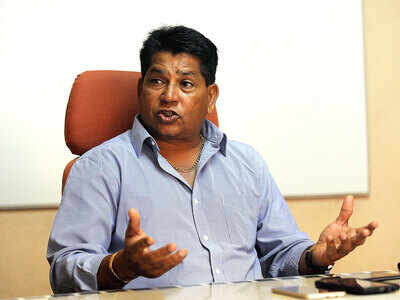
Chandrakant Pandit. (TOI Photo)
NAGPUR: An elegant batsman and handy gloveman in his prime, Chandrakant Pandit made up for a stop-start international career by achieving tremendous success as coach at the first-class level.
With over two decades of trophy-hunting experience, Pandit has time and again proved that his old-school coaching methods will always remain viable.
Excerpts from an exclusive interview with TOI...
After being so successful with Vidarbha, why did you decide to move to Madhya Pradesh?

What changes have you seen in the Indian domestic cricket scene over the years?
The level of competition has increased in the last 10 years. Earlier, there was a huge gap between teams like Mumbai, Delhi, Karnataka or Punjab and the rest. Now, there's little to choose among the top 18 or so teams. I would like to give credit to the Indian cricket board (BCCI). They have closed this gap by providing ample funds to weaker associations.
With good facilities and guidance, the new generation has become very confident. They don't carry any historical baggage. The mindset has changed across the country.
For example, Vidarbha defeated Mumbai in the Ranji Trophy last season (2018-19). This year, Vidarbha U-23 and Under-19 teams defeated Mumbai. Now, teams like Vidarbha, Rajasthan, Gujarat and Saurashtra are winning the Ranji Trophy.
There have been quite a few new semifinalists in the last 10 years. Players know if they have an extraordinary season, a call-up to India 'A' or even the national team isn't far away. Players also realize they can make a good career by playing first-class cricket, which wasn't the case earlier.
Still, what are some of the areas of improvement?
Domestic cricket should be respected. Young players we want to develop for Test cricket and days cricket should not be given immediate opportunity in the Indian Premier League (IPL). With one or two good IPL innings, they tend to get selected to the Indian team, while those who have been performing well in domestic cricket for years miss out.
There should be a rule that until you play a minimum of two years of first-class cricket, you shouldn't be allowed to play IPL. This way, Indian cricket will sustain itself in both the longer and shorter formats. Ranji Trophy performances should be as important as IPL cameos. Cricketers these days feel, 'If I don't play Ranji Trophy it's okay but I should play T20 because there are many who watch.'
There are perceptions that players who play well in the longer format can't be effective in the shorter formats. Take Cheteshwar Pujara. Just because he plays well in Test cricket doesn't mean he can't play shorter versions. Both formats have their own challenges and one has to look at how players can adapt to different formats.
Despite the presence of neutral curators, controversy persists over pitch preparation at the domestic level…
The neutral-curator policy is for a certain reason. Bad pitches don't produce good cricketers, and associations should invest more in this area. The BCCI should insist on associations improving the grounds. If you won't provide proper soil, even neutral curators can't make sporting wickets. BCCI should have guidelines.
Some powerful associations continue to have their way when it comes to pitches …
In that case, the toss should be done away with. The visiting team should take a call on what they want to do. The day this starts happening, every team will make good pitches because they will know it can backfire on them.
How can Ranji Trophy performances be better rewarded?
If the BCCI can give contracts to three-four performers from every team, it will provide motivation to all to do better in the Ranji Trophy. Every player will know there are certain rewards attached to performance. The competition will increase and the pool will widen. Every player will aim to be in that contract list.
What can other teams learn from Vidarbha Cricket Association's remarkable success?
Most important thing is to have vision. You need proper personnel for running the show without worrying about the money. If you think about money, you won't get the right person.
Whether results will come or not is a different story but your intent and process should be right. Vidarbha had that vision. A right person should run the show in an association and his vision should be passed on to others.
You need to have someone who has both passion and vision. Vidarbha has Prashant Vaidya, who spends a lot of time in helping out teams. If in 39 state associations if you have person like Vaidya, you will see great improvement in Indian cricket. People like Vaidya and Dilip Vengsarkar should be given free hand to run as they know the right people for right job.
Your thoughts on the National Cricket Academy?
There are two aspects of coaching. One, you develop technique and skills of players. Two, you focus on temperament, mental toughness and tactical aspects. The NCA and BCCI should think which area they want to focus on, because certain players get confused if you make too many changes to their technique.
Uniformity in coaching is difficult because coaches too have egos that players have to respect. If something is working for a player, why make unnecessary changes? A player's technical issues should be communicated to the association so that local coaches can monitor progress. The motto is to help the player and not to confuse him.
Unfortunately, there is no permanent staff in NCA. You see different coaches every two years and everyone has his own way of coaching. Natural abilities should be encouraged. The likes of Javed Miandad, MS Dhoni, Steve Smith and Virender Sehwag also had unconventional techniques, but they were phenomenally successful because they had the ability to handle pressure situations.
Rahul Dravid has helped the India U-19 and India 'A' youngsters in the last three-four years. Hopefully, he can make a difference in the NCA along with current BCCI president Sourav Ganguly.
PANDIT'S CREDENTIALS
o Guided Mumbai to successive Ranji Trophy titles in 2002-03 & 2003-04
o Coached India U-19 team to victory against Australia in 2009
o Coached India U-19 in ICC World Cup in 2010 (team had likes of KL Rahul, Mayank Agarwal, Jaidev Unadkat)
o Director of cricket, Rajasthan Cricket Association, from 2011 to 2012
o Guided Mumbai to Ranji Trophy title again in 2015-16. Also guided Mumbai to finals in 2016-17.
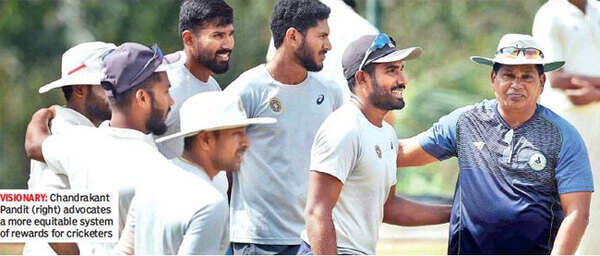
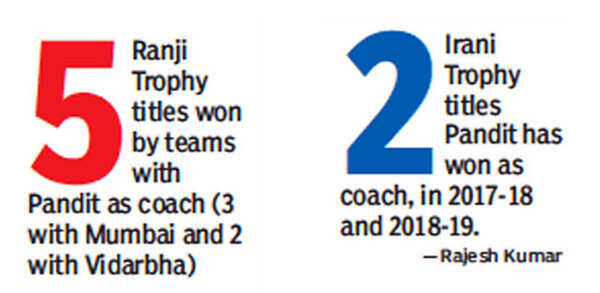
o Guided Vidarbha to successive Ranji and Irani Trophy titles in 2017-18 and 2018-19.
With over two decades of trophy-hunting experience, Pandit has time and again proved that his old-school coaching methods will always remain viable.
Excerpts from an exclusive interview with TOI...
After being so successful with Vidarbha, why did you decide to move to Madhya Pradesh?
It was a professional decision. I always look for new challenges and new team cultures. It keeps the job exciting. You get emotionally attached to a team in three years but one has to move forward. Ultimately I must serve the game all over the country if possible.
What changes have you seen in the Indian domestic cricket scene over the years?
The level of competition has increased in the last 10 years. Earlier, there was a huge gap between teams like Mumbai, Delhi, Karnataka or Punjab and the rest. Now, there's little to choose among the top 18 or so teams. I would like to give credit to the Indian cricket board (BCCI). They have closed this gap by providing ample funds to weaker associations.
With good facilities and guidance, the new generation has become very confident. They don't carry any historical baggage. The mindset has changed across the country.
For example, Vidarbha defeated Mumbai in the Ranji Trophy last season (2018-19). This year, Vidarbha U-23 and Under-19 teams defeated Mumbai. Now, teams like Vidarbha, Rajasthan, Gujarat and Saurashtra are winning the Ranji Trophy.
There have been quite a few new semifinalists in the last 10 years. Players know if they have an extraordinary season, a call-up to India 'A' or even the national team isn't far away. Players also realize they can make a good career by playing first-class cricket, which wasn't the case earlier.
Still, what are some of the areas of improvement?
Domestic cricket should be respected. Young players we want to develop for Test cricket and days cricket should not be given immediate opportunity in the Indian Premier League (IPL). With one or two good IPL innings, they tend to get selected to the Indian team, while those who have been performing well in domestic cricket for years miss out.
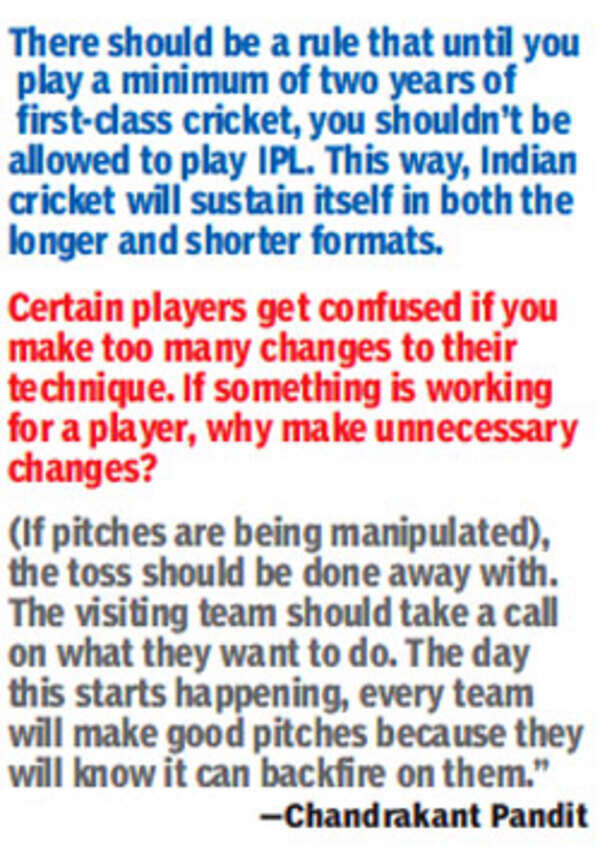
There should be a rule that until you play a minimum of two years of first-class cricket, you shouldn't be allowed to play IPL. This way, Indian cricket will sustain itself in both the longer and shorter formats. Ranji Trophy performances should be as important as IPL cameos. Cricketers these days feel, 'If I don't play Ranji Trophy it's okay but I should play T20 because there are many who watch.'
There are perceptions that players who play well in the longer format can't be effective in the shorter formats. Take Cheteshwar Pujara. Just because he plays well in Test cricket doesn't mean he can't play shorter versions. Both formats have their own challenges and one has to look at how players can adapt to different formats.
Despite the presence of neutral curators, controversy persists over pitch preparation at the domestic level…
The neutral-curator policy is for a certain reason. Bad pitches don't produce good cricketers, and associations should invest more in this area. The BCCI should insist on associations improving the grounds. If you won't provide proper soil, even neutral curators can't make sporting wickets. BCCI should have guidelines.
Some powerful associations continue to have their way when it comes to pitches …
In that case, the toss should be done away with. The visiting team should take a call on what they want to do. The day this starts happening, every team will make good pitches because they will know it can backfire on them.
How can Ranji Trophy performances be better rewarded?
If the BCCI can give contracts to three-four performers from every team, it will provide motivation to all to do better in the Ranji Trophy. Every player will know there are certain rewards attached to performance. The competition will increase and the pool will widen. Every player will aim to be in that contract list.
What can other teams learn from Vidarbha Cricket Association's remarkable success?
Most important thing is to have vision. You need proper personnel for running the show without worrying about the money. If you think about money, you won't get the right person.
Whether results will come or not is a different story but your intent and process should be right. Vidarbha had that vision. A right person should run the show in an association and his vision should be passed on to others.
You need to have someone who has both passion and vision. Vidarbha has Prashant Vaidya, who spends a lot of time in helping out teams. If in 39 state associations if you have person like Vaidya, you will see great improvement in Indian cricket. People like Vaidya and Dilip Vengsarkar should be given free hand to run as they know the right people for right job.
Your thoughts on the National Cricket Academy?
There are two aspects of coaching. One, you develop technique and skills of players. Two, you focus on temperament, mental toughness and tactical aspects. The NCA and BCCI should think which area they want to focus on, because certain players get confused if you make too many changes to their technique.
Uniformity in coaching is difficult because coaches too have egos that players have to respect. If something is working for a player, why make unnecessary changes? A player's technical issues should be communicated to the association so that local coaches can monitor progress. The motto is to help the player and not to confuse him.
Unfortunately, there is no permanent staff in NCA. You see different coaches every two years and everyone has his own way of coaching. Natural abilities should be encouraged. The likes of Javed Miandad, MS Dhoni, Steve Smith and Virender Sehwag also had unconventional techniques, but they were phenomenally successful because they had the ability to handle pressure situations.
Rahul Dravid has helped the India U-19 and India 'A' youngsters in the last three-four years. Hopefully, he can make a difference in the NCA along with current BCCI president Sourav Ganguly.
PANDIT'S CREDENTIALS
o Guided Mumbai to successive Ranji Trophy titles in 2002-03 & 2003-04
o Coached India U-19 team to victory against Australia in 2009
o Coached India U-19 in ICC World Cup in 2010 (team had likes of KL Rahul, Mayank Agarwal, Jaidev Unadkat)
o Director of cricket, Rajasthan Cricket Association, from 2011 to 2012
o Guided Mumbai to Ranji Trophy title again in 2015-16. Also guided Mumbai to finals in 2016-17.
o Guided Vidarbha to successive Ranji and Irani Trophy titles in 2017-18 and 2018-19.
End of Article
FOLLOW US ON SOCIAL MEDIA




Top Sports News
TOP TRENDING
Trending Stories
In Sports
Entire Website
- Batista Reveals Reasons Behind His WWE Exit to Pursue Hollywood Career
- Lionel Messi's Maserati to Lebron James' Lamborghini - Top sports stars and their luxurious fast cars
- Moeen Ali talks about Brendon McCullum’s role in easing pressure on Jos Buttler
- '17-year-old boy became a man...': When Sunil Gavaskar lauded Sachin Tendulkar for his first Test hundred
- 'If it rains like this...': ACB official after third day also washed-out in Afghanistan vs New Zealand one-off Test
- 'If he were to retire tomorrow...' says England coach Brendon McCullum about Jos Buttler
- Rohit Sharma's 'workouts and fun' fitness routine ahead of India vs Bangladesh Test series - Watch
- EXPLAINED: Why Viswanathan Anand is missing from India's Chess Olympiad squad for second time in a row
- Focus on fitness and mentality: Harendra Singh
- HS Prannoy to take a break from game
- Bajaj Housing Finance's IPO gets record Rs 3.2 lakh crore demand
- 2 Army officers thrashed, their female friend gang-raped in Madhya Pradesh
- Kamala may have won debate. But election is still too close to call
- Centre seeks review of SC's mineral royalty judgment
- IIT-Guwahati academic affairs dean quits amid stir over student suicide'
- 4,4,6,6,6,4: Travis Head smashes 30 runs off Sam Curran's over - Watch
- Why SIP investing for 20 years may not have a multiplier effect
- Apple iPhone 16 vs iPhone 15: Which iPhone to buy and why
- BJP netas would’ve been in jail had we got 20 more seats: Kharge
- Youth presses emergency button in Bengaluru metro for 'fun'

Popular Categories
Hot on the Web
Top Trends
Trending Topics
Deepika PadukoneMalaika Arora Father DeathArbaaz KhanJayram RaviAishwarya Rai BachchanSlat WaterWeight GainGOAT CollectionVikas Sethi DeathMalayalam ProducersIndia's Best Dancer 4Simi GarewalDilli BabuIndian National ParksLaung BenefitsVikas SethiiPhone 16Dubai Princess Sheikha MahraMG Windsor EvWordle Answer
Living and entertainment
Latest News
Kapil Sharma gives fans a peek into his Ganesh Chaturthi festivities with wife GinniNot MS Dhoni and Rohit Sharma, Gautam Gambhir calls this Indian player 'Shahenshah'. WatchPolice registered 10 cases against Ganapati mandals for using laser beam lightsMIT researchers develop eco-friendly water filter to eliminate “forever chemicals” and heavy metalsThe Zodiac Signs Most Naturally Inclined to HealingWhy Banyan trees survive for centuries and spread indefinitely?Telangana government pushes for increased flood relief from CentrePolicy of 'Padak Lao, Pad Pao' will be implemented again for the sportspersons, says Deepender HoodaBest 20000mAh Power Banks To Power Your Devices Wherever You GoWalking dog in Goa? Mouth guard, leash soon to be mustDonald Trump and Kamala Harris shake hands as they meet for first time on debate stage: Watch the 'awkward' momentKamala may have won debate. But election is still too close to callCommunal violence erupts in Karnataka during Ganpati Visarjan, section 144 imposed'On basis of fairness and equality': Bangladesh seeks good relations with India, says YunusMpox kills two, six other confirmed cases in Cameroon: GovernmentTrump's claim about sending Taliban leader Abdul his house photo fuels social media frenzyJalen Ramsey demands action against Miami Police following Tyreek Hill's pulled from car49ers RB Christian McCaffrey misses win over Jets
Copyright © 2024 Bennett, Coleman & Co. Ltd. All rights reserved. For reprint rights: Times Syndication Service