
- News
- Sports News
- Cricket News
- Women's cricket: Time to build on the goodwill
Trending
This story is from July 25, 2017
Women's cricket: Time to build on the goodwill
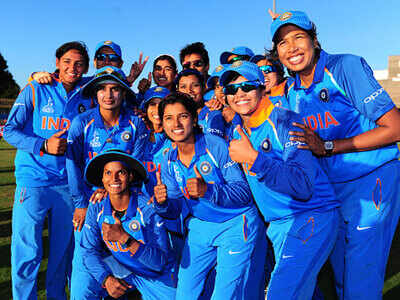
India may have lost in the World Cup final but the women in blue have won over numerous fans
Key Highlights
- Mithali Raj and her band of gutsy players stormed into the World Cup final last week
- A long-term planning needs to be put in place to ensure the gains from this World Cup are not lost in the system
- Women have made great strides in the way they play the game since the inaugural World Cup in 1975
BENGALURU: When American Janis Ian wrote the song ‘Play like a girl’, the Indian women’s cricket team was surely not on her mind. For decades, women cricketers in the country have been mocked for daring to play the ‘gentleman’s game’.
The shortened boundaries, the low scores, batting styles, fielding and bowling action have all come in for ridicule. Women have made great strides in the way they play the game since the inaugural World Cup in 1975, but it has done little to alter people’s perception of the women’s game or their attitude towards it.
That was until Mithali Raj and her band of gutsy players stormed into the World Cup final last week. A nation awoke to the possibility of an Indian team being champions on the world stage, of the country winning another World Cup - ahead of formidable names such as Australia, South Africa, England and the West Indies. That they fell short, heartbreakingly so, in altering the course of history hasn’t changed the narrative one bit. Given the media attention and social media frenzy, their achievement has been well-chronicled. Quite unlike in 2005, the only other time India made the final.
But once the dust settles following the felicitations, the endorsements and the meetings with powerful politicians, what’s next for women’s cricket? Agreed, since coming under the umbrella of the BCCI a few years ago, there has been plenty of improvement in the women’s game, including a better domestic structure, central contracts for players, training facilities, televised matches, better allowances and rewards.
While there is a lot of work that needs to be done at the national level, former Indian skipper and one of the pioneers of women’s cricket, Shantha Rangaswamy, believes the change has to happen at the grassroots level. “What the girls have achieved is phenomenal. We now have to build on it. First we have to widen the base at the state-level. There has been no thinking or planning in that direction.
We have to start inter-school tournaments at the national level. Only then will state associations will look at having inter-school tournaments. Second, we have to have U-16 tournaments. Currently on the south zone has the practice. Another aspect that needed to be looked at is inter- university cricket which thrived in the 1970s and 1980s. Now the university tournaments have dwindled and the ones which exists clash with state-level tournaments. Lastly, we need an IPL for women. It will give the domestic players an opportunity to rub shoulders with the best in business. We could have asked for a better time than this to run in the changes,” said the veteran cricketer.
Outside the system, many believe job security will bring more talent to the forefront. “Many save their daily allowance to make ends meet because barring Railways and Air India there are not many who are willing to give us jobs. That for us is a huge issue because we can’t keep depending on our families forever,” pointed out an international player.
Even as the Women in Blue soak in the much deserved accolades, it’s time to look forward to shaping more champion teams.
The shortened boundaries, the low scores, batting styles, fielding and bowling action have all come in for ridicule.
That was until Mithali Raj and her band of gutsy players stormed into the World Cup final last week. A nation awoke to the possibility of an Indian team being champions on the world stage, of the country winning another World Cup - ahead of formidable names such as Australia, South Africa, England and the West Indies. That they fell short, heartbreakingly so, in altering the course of history hasn’t changed the narrative one bit. Given the media attention and social media frenzy, their achievement has been well-chronicled. Quite unlike in 2005, the only other time India made the final.
But once the dust settles following the felicitations, the endorsements and the meetings with powerful politicians, what’s next for women’s cricket? Agreed, since coming under the umbrella of the BCCI a few years ago, there has been plenty of improvement in the women’s game, including a better domestic structure, central contracts for players, training facilities, televised matches, better allowances and rewards.
However, the job on hand now is to ensure a long-term planning is put in place to ensure the gains from this World Cup are not lost in the system. For example, in the central contracts handed out by BCCI in 2015-16, there is no concept of contracts for coaches and support staff. Tushar Arothe, the coach of the team, was hired in place of Purnima Rau two months prior to the World Cup. He was given a contract until the ended of tournament in England. Now or even prior to Arothe taking over, there has been no invitation for applications for the job, or a selection panel to pick a candidate. In fact, there has never been a process in place to pick support staff.
While there is a lot of work that needs to be done at the national level, former Indian skipper and one of the pioneers of women’s cricket, Shantha Rangaswamy, believes the change has to happen at the grassroots level. “What the girls have achieved is phenomenal. We now have to build on it. First we have to widen the base at the state-level. There has been no thinking or planning in that direction.
We have to start inter-school tournaments at the national level. Only then will state associations will look at having inter-school tournaments. Second, we have to have U-16 tournaments. Currently on the south zone has the practice. Another aspect that needed to be looked at is inter- university cricket which thrived in the 1970s and 1980s. Now the university tournaments have dwindled and the ones which exists clash with state-level tournaments. Lastly, we need an IPL for women. It will give the domestic players an opportunity to rub shoulders with the best in business. We could have asked for a better time than this to run in the changes,” said the veteran cricketer.
Outside the system, many believe job security will bring more talent to the forefront. “Many save their daily allowance to make ends meet because barring Railways and Air India there are not many who are willing to give us jobs. That for us is a huge issue because we can’t keep depending on our families forever,” pointed out an international player.
Even as the Women in Blue soak in the much deserved accolades, it’s time to look forward to shaping more champion teams.
End of Article
FOLLOW US ON SOCIAL MEDIA






Top Sports News
TOP TRENDING
Trending Stories
In Sports
Entire Website
- Vinesh Phogat backed out? Lawyer Harish Salve reveals what happened after CAS verdict on Paris Olympics controversy
- Asian Champions Trophy Live, India vs Pakistan: A face-off between traditional rivals
- 'Threat to the game is...' says outgoing ICC Anti Corruption Unit Chief Alex Marshall
- Lobera-guided Odisha look for season encore but with a trophy; take on Chennaiyin in Kalinga opener
- Royal Mysore may win Pune City Gold Cup
- Border Gavaskar Trophy: When Ricky Ponting's on-air analysis of Prithvi Shaw turned into match reality
- Sriram Balaji to open campaign against Sweden
- India vs Pakistan: The famous encounters of storied hockey rivalry
- ISL season-11: Honours shared as Mohun Bagan & Mumbai City FC resume rivalry in style
- Moin Khan calls Shaheen Afridi's removal from Pakistan captaincy 'unjust'; says 'Mohammad Rizwan a short-term option'
- 'Water reached tomb of Shahjahan': After heavy rain, water leaking from Taj Mahal's dome
- Ind vs Pak Hockey Live: India lead 2-1 with Harman's brace
- Five things to keep in mind before betting on Bajaj Housing Finance
- Yechury's mortal remains in CPI office: Sonia, Sisodia, Pawar pay last tribute
- Came to meet as your 'didi': Mamata on 'last attempt' to resolve doctors crisis
- 'Three families destroyed ... ': PM Modi attacks Cong-PDP-NC in J&K' Doda
- People will now elect judges in Mexico: Mistake or a masterstroke?
- Sexual harassment probe opened against SAP CTO: What the company said
- Watch: PM Modi welcomes birth of calf 'Deepjyoti' at residence
- Army man demands sexual favours to pass student in NCC test

Popular Categories
Hot on the Web
Top Trends
Trending Topics
Korean TeaSector 36 ReviewGreen Apple BenefitsPriyanka Chopra TattooKottukkaali OTT ReleaseNational Parks In IndiaGhaziabad Juice SellerGOAT CollectionVikas Sethi DeathMalayalam ProducersIndia's Best Dancer 4Simi GarewalDilli BabuIndian National ParksLaung BenefitsVikas SethiApple iPhone 16Donald TrumpAadhar Card Update By Sept 14Wordle Answer
Living and entertainment
Latest News
Kaun Banega Crorepati 16: Can you guess the answer for this Rs 3,20,000 question on Navy, which contestant Naman Jain incorrectly answered?Exclusive - Has Palak Sindhwani aka Sonu from Taarak Mehta Ka Ooltah Chashmah breached her contract; Neela Film Productions to issue a legal notice to the actress?Ford drives into India for 3rd timePIL: Publicise laws, penalties to curb crimes against womenGrowth potential 7.5% or more: RBI governorHindus take to Bangladesh streets to stop attacks and demand justiceE-commerce speeds up to catch up with Quick commerce'Will take digital public infrastructure stack to 50 nations'Justin Timberlake faces DWI charges: Court-ordered apology, fine and community serviceDonald Trump on another debate with Kamala Harris: 'Maybe, if I got in the right mood ... 'Border Gavaskar Trophy: When Ricky Ponting's on-air analysis of Prithvi Shaw turned into match realitySebi gives clean chit to NSE, ex-executives in co-location caseEdible oil import duty hiked by 20%Lucky houseplants for each Zodiac, as per a renowned astrologerOnam is a time when everyone comes together to celebrate: Manju Warrier'Calling all Swifties for Trump': Donald's new campaign merch imitates Eras Tour shirtsWWE Hall of Famer Watches 15 Hours Of Wrestling Each WeekTovino on training for Kalaripayattu in ‘ARM’: I practiced every single day, even if I had a hectic day on set
Copyright © 2024 Bennett, Coleman & Co. Ltd. All rights reserved. For reprint rights: Times Syndication Service