
- News
- Sports News
- Cricket News
- Ball-tampering row: From Warne to Smith and Warner, a history of cricketing punishments
Trending
This story is from March 28, 2018
Ball-tampering row: From Warne to Smith and Warner, a history of cricketing punishments
Here’s a look at some of the biggest cases, barring those related to match-fixing or spot-fixing which rank as the biggest crimes in cricket.
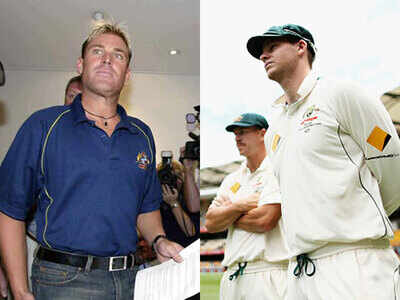
In 2003, Shane Warne was banned by the Australian Cricket Board’s drug panel after testing positive for the drugs hydrochlorothiazide and amiloride
Key Highlights
- Cricket Australia banned Australian captain Steve Smith and vice-captain David Warner for 12 months
- Shane Warne was banned in 2003 for a year just before the World Cup after testing positive for two drugs
- In early 2017, Andre Russell was banned for one year following a doping whereabouts rule violation
NEW DELHI: On Wednesday, Cricket Australia (CA) handed out sanctions to the trio of Steve Smith, David Warner and Cameron Bancroft for their roles in the ball-tampering row that blew up last Saturday during the Newlands Test against South Africa. Smith and Warner were banned for 12 months each and Bancroft for nine months, ending four days of widespread speculation over their fates after immense outrage back in Australia, from the fans, media and even Australian Prime Minister Malcolm Turnbull.
ALSO READ: Cricket Australia bans Steve Smith, David Warner for 12 months
Where do Smith and Warner’s punishments rank in the history of cricketing transgressions that resulted in punishment? Here’s a look at some of the biggest cases, barring those related to match-fixing or spot-fixing which rank as the biggest crimes in cricket.

In 2003, on the eve of Australia’s ICC World Cup opener, their leading spin bowler was banned by the Australian Cricket Board’s drug panel after testing positive for the drugs hydrochlorothiazide and amiloride, both diuretics normally used to aid temporary weight loss. Aged 33, Warne also had his lucrative ACB contract torn up and missed the World Cup, a tour to the West Indies, home Tests against Bangladesh, Sri Lanka and Zimbabwe and a lucrative county stint with Hampshire. Warne’s stance was that his mother had given him the diuretics to lose weight. For a controversial figure who had survived betting and sex scandals, a little pill proved the biggest setback in his career.
ALSO READ: David Warner steps down as captain of Sunrisers Hyderabad
Shoaib Akhtar and Mohammad Asif
The Pakistan fast-bowling pair was banned from all forms of cricket in November 2006 after failing a drugs test. Akhtar was banned for two years and Asif for one, having both tested positive for a banned substance known as nandrolone. The Pakistan Cricket Board (PCB) later removed the ban on Akhtar and Asif and the pair toured South Africa in early 2007. A year later, Asif again tested positive for a banned substance during the first IPL and again received a one-year ban.
Andre Russell
In early 2017, the West Indies allrounder was banned for one year following a doping whereabouts rule violation. Russell was revealed to have committed the violation 11 months earlier, having registered three filing failures in 2015 - lapses which constitute as a failed drugs test under the World Anti-Doping Agency (WADA) rules. Starting January 31, 2017 Russell was handed a one-year ban. Russell returned to cricket in February of this year, first for Jamaica in West Indies’ Super50 Cup and then for Islamabad United in the Pakistan Super League.
Shakib Al Hasan
In February 2014, the enigmatic Bangladesh allrounder was banned for three matches by the Bangladesh Cricket Board (BCB) for “making an inappropriate gesture on live television” during an ODI against Sri Lanka in Mirpur, and also fined $3800.
In July 2014, Shakib was handed a six-month ban by the BCB for “serious misbehaviour” towards the new coach Chandika Hathurusingha after making arrangements to turn out in the Caribbean Premier League without proper clearance, as well as for an altercation with a fan during an ODI against India. Shakib was also not granted an NOC to participate in overseas tournaments.
The ban was, however, lifted in August after Shakib begged for a review of the punishment, and he returned to the national squad in September.
Mark Vermuelen
The eccentric Zimbabwe batsman - who was once found guilty of burning down his country’s cricket academy - was in October 2015 banned from all cricket activities for referring to black people as “apes”. Vermeulen, now retired, had replied to a Facebook post by former Zimbabwe captain Prosper Utseya, which alleged that there was racism in Zimbabwean cricket. Vermeulen subsequently apologised in a letter published in a local newspaper and Zimbabwe Cricket then announced that he was “banned from participating in all cricket activities”.
In 2006, Vermeulen had been handed a ten-year ban from English cricket after he reacted to taunts from spectators during a Lancashire League game by throwing a cricket ball at them. This was later reduced to three years.
Raza Hasan
The exciting young Pakistan spin bowler was suspended for two years after failing a drug test in a local tournament. The PCB had conducted random testing in January 2015 and sent Hasan’s samples to a WADA accredited laboratory in India.
ALSO READ: Cricket Australia bans Steve Smith, David Warner for 12 months
Where do Smith and Warner’s punishments rank in the history of cricketing transgressions that resulted in punishment? Here’s a look at some of the biggest cases, barring those related to match-fixing or spot-fixing which rank as the biggest crimes in cricket.
Shane Warne
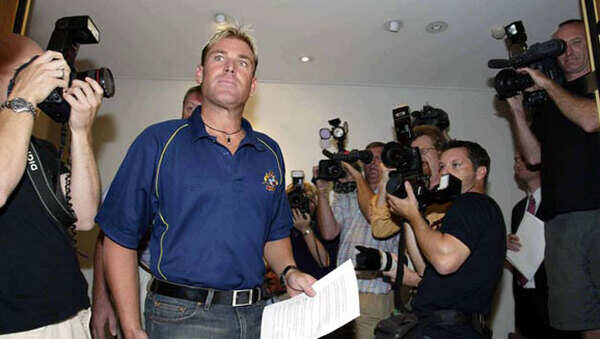
In 2003, on the eve of Australia’s ICC World Cup opener, their leading spin bowler was banned by the Australian Cricket Board’s drug panel after testing positive for the drugs hydrochlorothiazide and amiloride, both diuretics normally used to aid temporary weight loss. Aged 33, Warne also had his lucrative ACB contract torn up and missed the World Cup, a tour to the West Indies, home Tests against Bangladesh, Sri Lanka and Zimbabwe and a lucrative county stint with Hampshire. Warne’s stance was that his mother had given him the diuretics to lose weight. For a controversial figure who had survived betting and sex scandals, a little pill proved the biggest setback in his career.
ALSO READ: David Warner steps down as captain of Sunrisers Hyderabad
Shoaib Akhtar and Mohammad Asif
The Pakistan fast-bowling pair was banned from all forms of cricket in November 2006 after failing a drugs test. Akhtar was banned for two years and Asif for one, having both tested positive for a banned substance known as nandrolone. The Pakistan Cricket Board (PCB) later removed the ban on Akhtar and Asif and the pair toured South Africa in early 2007. A year later, Asif again tested positive for a banned substance during the first IPL and again received a one-year ban.
Andre Russell

In early 2017, the West Indies allrounder was banned for one year following a doping whereabouts rule violation. Russell was revealed to have committed the violation 11 months earlier, having registered three filing failures in 2015 - lapses which constitute as a failed drugs test under the World Anti-Doping Agency (WADA) rules. Starting January 31, 2017 Russell was handed a one-year ban. Russell returned to cricket in February of this year, first for Jamaica in West Indies’ Super50 Cup and then for Islamabad United in the Pakistan Super League.
Five who could succeed Smith as Australia captain
Shakib Al Hasan
In February 2014, the enigmatic Bangladesh allrounder was banned for three matches by the Bangladesh Cricket Board (BCB) for “making an inappropriate gesture on live television” during an ODI against Sri Lanka in Mirpur, and also fined $3800.
In July 2014, Shakib was handed a six-month ban by the BCB for “serious misbehaviour” towards the new coach Chandika Hathurusingha after making arrangements to turn out in the Caribbean Premier League without proper clearance, as well as for an altercation with a fan during an ODI against India. Shakib was also not granted an NOC to participate in overseas tournaments.
The ban was, however, lifted in August after Shakib begged for a review of the punishment, and he returned to the national squad in September.
Mark Vermuelen

The eccentric Zimbabwe batsman - who was once found guilty of burning down his country’s cricket academy - was in October 2015 banned from all cricket activities for referring to black people as “apes”. Vermeulen, now retired, had replied to a Facebook post by former Zimbabwe captain Prosper Utseya, which alleged that there was racism in Zimbabwean cricket. Vermeulen subsequently apologised in a letter published in a local newspaper and Zimbabwe Cricket then announced that he was “banned from participating in all cricket activities”.
In 2006, Vermeulen had been handed a ten-year ban from English cricket after he reacted to taunts from spectators during a Lancashire League game by throwing a cricket ball at them. This was later reduced to three years.
Raza Hasan
The exciting young Pakistan spin bowler was suspended for two years after failing a drug test in a local tournament. The PCB had conducted random testing in January 2015 and sent Hasan’s samples to a WADA accredited laboratory in India.
End of Article
FOLLOW US ON SOCIAL MEDIA







Top Sports News
TOP TRENDING
Trending Stories
In Sports
Entire Website
- Cristiano Ronaldo misses Al-Nassr's debut in new Asian Elite tournament due to viral infection
- 'They could be knocked down ... ': Sunil Gavaskar warns Rohit Sharma-led Team India against Bangladesh
- Travis Kelce Net Worth 2024
- "Miami Dolphins Owner Stephen Ross Eyes Multi-Billion Dollar Deal: The $7 Billion Power Play"
- Shannon Sharpe's Net Worth 2024, His Jaw-Dropping Income, Personal Life and More
- The Secret Behind NFL Marriages: How These Couples Make It Work
- Famous NFL Superstars Who Are Friends Of Taylor Swift
- Top 10 EDM Artists Who Deserves A Chance To Perform At Super Bowl: Skrillex, DJ Snake and More
- Bo Nix’s Tough Debut: Rookie QB Left Scrambling Without Support, Says Schlereth
- Asian Champions Trophy Semi-Final Live, India vs Korea: A spot in the final beckons India
- 'Look at own record': India condemns remarks by Iran's Supreme Leader Khamenei
- Docs-Mamata meet ends but minutes of talks still being finalised
- Will resignation gambit help Kejriwal win Delhi again?
- Watch: BJP MLA falls on rly tracks while flagging off Vande Bharat train
- 'Political rivals but ... ': BJP's reaction on Bittu's Rahul 'No. 1 terrorist' remark
- MHA to open Kendriya Police Kalyan Bhandars for civilians in Manipur
- Cow vigilantes killing a Brahmin is the wake-up call India needed
- Apple's biggest 'iPhone update' for year 2024 rollout starts today
- 2 attempts to 'kill' Trump in 2 months: How it may impact US polls
- UPS vs NPS Calculator: Switch a no-brainer? Not really! Check top points

Popular Categories
Hot on the Web
Top Trends
Prince HarryWho is Ryan RouthUPI Transaction LimitArvind Kejriwal ResignationNEET UG Admission CriteriaKolkata Doctor Rape CaseUS Presidential ElectionsRohit SharmaSports Stars Turned Power CouplesIBPS RRB Clark PO ResultDonald TrumpCristiano RonaldoIndia vs Korea HighlightsBMW Accident Madhya PradeshUPS vs NPS CalculatorMiami Dolphins OwnerLive Cricket Score
Trending Topics
Living and entertainment
Latest News
Who was Illia 'Golem' Yefimchyk, the Belarusian bodybuilder who consumed 2.5 kg of meat and 108 sushi pieces daily before his death at 36?Vempalle Shareef's story is now a lesson for degree students in Andhra PradeshGovt launches programme to tackle glacial lake outburst flood threat in Himalayas, all 190 high-risk lakes to be monitoredAstrological Influence on Zodiac Signs' Career ChoicesBike rally held to raise voter awareness in Jammu and Kashmir's Doda ahead of assembly electionsFalcons' Predictable Offense and Cousins' Prime-Time Woes Spell Trouble in PhiladelphiaLiza Colon becomes 1st Latina to win Best Supporting Emmy Award'Oh no!': Hilarious goof-up leads to missed catch, leaves bowler in smile. WatchJr NTR on shooting under water scene for 35 days in 'Devara Part 1': It is an important sequence!Top NFL Superstars Who Are Vegan: Derrick Morgan, David Carter, Theo Riddick and moreKSCA Invitational: Arjun Tendulkar takes match haul of 9 wickets in big Goa CA XI winAbhishek Kumar shares selfies with Alia Bhatt; recalls the time when he worked as a crowd artist in ‘Humpty Sharma Ki Dulhaniya’Jessica Gunning wins her 1st Primetime Emmy for 'Baby Reindeer'Shocking! Man celebrates birthday by lying among massive PythonsSohum Shah says 'Tumbbad 2' will be different from 'Munjya' and 'Stree 2': 'They are not making dadi-nani ki kahaniyaan'Sathiyan set to partner Sreeja in mixed doublesHere's why multiple WWE Hall of Famers refused to team up with Kevin Owens on SmackDownCarlito's Net Worth 2024, Current WWE Salary and More
Copyright © 2024 Bennett, Coleman & Co. Ltd. All rights reserved. For reprint rights: Times Syndication Service