
- News
- Science News
- Chandrayaan-3's low-thrust engines helped it achieve 'cleanest' landing
This story is from March 19, 2024
Chandrayaan-3's low-thrust engines helped it achieve 'cleanest' landing
Chandrayaan-3 spacecraft accomplished a significant milestone with a smooth landing near the moon's south pole, minimizing moon dust disturbance. Suresh K from ISRO emphasized the mission's strategic navigation through hazardous areas. The mission captured crucial images, surpassing previous landing records, and provided valuable lunar data.
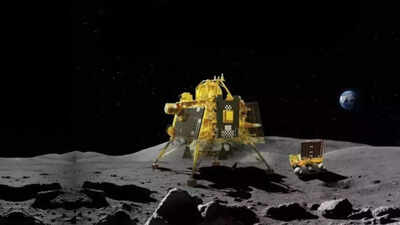
India's Chandrayaan-3 Moon landing. (Photo/Agencies)
This strategic approach helped in capturing crucial images that guided the spacecraft away from potential hazards, ensuring a safe landing. Suresh K, a scientist from the Space Applications Centre (SAC) of ISRO, highlighted the significance of navigating through scientifically interesting yet hazardous areas during the mission.
At the Lunar and Planetary Science Conference (LPSC) in Texas, Suresh K shared insights from the Chandrayaan-3 mission, showcasing images captured before and after the landing. Despite operating on the moon for a brief period due to extreme lunar night temperatures, the mission provided valuable data.
The descent phase of spacecraft usually results in the dispersal of moon dust due to engine exhaust interacting with the surface. However, Chandrayaan-3's cameras detected minimal dust plumes just 59 feet above the moon's surface, setting a new record for the least disturbance during a moon landing compared to previous missions.
The spacecraft's engines were strategically operated in a diagonal configuration, further minimizing the impact on the moon's surface.The Chandrayaan-3 mission team continues to evaluate data on the dust plume's characteristics, considering factors such as spacecraft mass and lunar regolith properties.
Noteworthy achievements of the mission included the exploration conducted by the Vikram lander and Pragyan rover at the designated landing site, named 'Shiv Shakti Point' by Indian Prime Minister Narendra Modi.Pratim Das, the director of the science program office at ISRO, highlighted the rover's activities on the lunar surface, including sulfur detection, crater avoidance, and regolith sampling at multiple locations.
The seismometer onboard Vikram recorded various lunar events, while a thermal probe provided insights into the lunar soil's temperature at different depths.Looking ahead, India is preparing for its next lunar mission, Chandrayaan-4, scheduled for 2028 with a goal to bring moon rocks to Earth.

About the Author
TOI Science DeskEnd of Article
FOLLOW US ON SOCIAL MEDIA

Hot Picks
TOP TRENDING
Explore Every Corner
Across The Globe
Popular Categories
Hot on the Web
Top Trends
Ravichandran AshwinMeena Ganesh ActressMohammed ShamiUS Government ShutdownVirat KohliICAI CA Final ResultRahul GandhiPakistan Ballistic MissileR Ashwin DaughterJoe BidenTaylor SwiftLogan PaulIncome Tax PenaltyNTA ApplicationRRB Technician Admit CardParliament SessionNew York Knicks vs Minnesota TimberwolvesLive Cricket Score
Trending Topics
Living and entertainment
Latest News
Abhishek Bachchan turns protective husband for Aishwarya Rai Bachchan as they arrive with Amitabh Bachchan at Aaradhya's annual day function - WATCH VIDEOSZakir Hussain's funeral to be held in San Francisco todayLeopard kills woman in Tamil Nadu’s Vellore districtQuepem man jailed 3 years for attempted murder and theftWhich 5 U.S. Universities have the lowest acceptance rates? Check out the list hereWisconsin shooting: Did Alexander Paffendorf inspire Natalie Rupnow?Dwayne 'The Rock' Johnson Reveals Emotional Toll of His WWE ComebackCM Fadnavis says ATS squad probing use of 'terror funds' in 'Maha' pollsWisconsin shooter Natalie Rupnow's motive was to seek 'infamy': 'Would rather be dead than...'Bigg Boss 18: Varun Dhawan, Wamiqa Gabbi and Keerthy Suresh to join Salman Khan for the star-studded Weekend Ka VaarShah Rukh Khan-Gauri Khan, Aishwarya Rai Bachchan-Abhishek Bachchan, Kareena Kapoor Khan and more celebs grace Ambani school's annual day function'Leave him alone': Ashwin clarifies on father's 'retirement due to humiliation' remarkAffirmative Action Gone, Legacy Preferences Stay: Is DEI the Only Hope for Equity?Tata Technologies looking to hire 100+ Cloud & Data Engineers; positions available in this cityIs an accounting error to blame for India’s record trade deficit?Sussanne Khan's heartfelt birthday wish for Arslan Goni draws a reaction from Hrithik Roshan, know here'Jaishankar said it best': Putin talks about Brics, Ukraine, Trump & Syria in annual news conference5 WWE Superstars Romantically Involved with Vince McMahon
Copyright © 2024 Bennett, Coleman & Co. Ltd. All rights reserved. For reprint rights: Times Syndication Service