
Trending
This story is from October 3, 2011
Purifire!
Religious and cultural traditions around the world regard fire as creator and purifier. The first verse of Rig Veda invokes fire, which is seen as the vital life-giving spark.
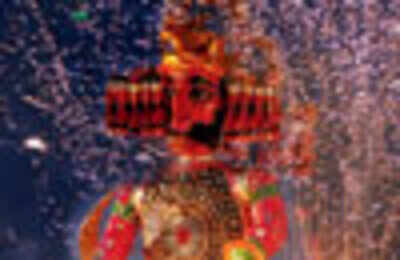
At sunset, on Dussehra, once the nine-day Navaratri festival concludes, the effigy of the 10-headed ‘demon’ king Ravana, is set afire with firecrackers. The 10 heads stand for kama or lust, krodha or anger, moha or delusion, lobha or greed, mada or excessive pride, matsara or jealousy, manas or mind, budhi or intellect, chitta or will and ahankara or ego.

Rajesh M Tiwari, a priest at the Shiva temple in Kanpur, says, “After Dasha Hara, the hot summer months end and winter sets in. The onset of winter brings with it many infections. The burning of the putlas or effigies, filled with firecrackers containing phosphorus, is believed to purify the atmosphere. In many temples, Chandi or Durga homam or fire ritual is performed with the same intention”.
Fire as cleansing agent
Vedas: In April this year, Athirathram, an ancient Vedic yagna or fire ritual was conducted in a village in Kerala to purify the atmosphere of pollution, bacteria and negative energies.
Ayurveda physician Sivakaran Namboothri says yagnas balance the cycle of nature and nourish life. They create a pure, clean and medicinal atmosphere. They also cleanse the negative effects of pollution. “Our studies say that there is a definite reduction in aerial micro flora in the surrounding area,” he says, referring to the Athirathram’s effects.
Judaism: In Judaism, fire represents the spirit of God. Every Friday evening, 18 minutes before sunset, Raizel Marshak lights two candles, draws her hands around the candles and towards her face three times, covers her face with her hands and recites the blessing, “Blessed are You, Lord our God, Ruler of the Universe, who has sanctified us with commandments, and commanded us to light Shabbat candles.”
Ezekiel Isaac Malekar, honorary secretary, Judah Hyam Synagogue, Delhi, says that when the Universe was created, the spirit of God manifested in the form of a mystical, irresistible fire. In all synagogues, there is always aNer-E-Tamid or oil lamp — the eternal light — that flickers throughout the day. Malekar says, “Light (read fire) removes darkness; it purifies the mind and promotes tranquillity.”
Zoroastrianism: For Parsis, fire symbolises Righteousness, the Moral Order of the Universe, and Purity. Zoroastrians regard Atar or Fire as the son of Ahura Mazda, the Wise Lord. “In Indo-Aryan tradition, fire, which is full of warmth is seen as the one that absorbs dirt and negative forces but it stays pure,” says Shernaz Cama, director of the UNESCO Parzor Project on preserving Parsi Zoroastrian heritage. “All Zoroastrian agiaries or fire temples have a holy fire that represents goodness and purity. Once it is properly enthroned in a silver afarganiya, the temple fire is kept burning,” Cama adds.
Buddhism: Shinnyo-en, a Buddhist denomination in Japan, believes in fire purification ceremonies. In Tibetan Buddhism, red Pandaravasini, the consort of Amitabha, one of the five primordial Buddhas, is associated with the element of fire.
Egypt: In Egyptian mythology, Isis placed the son of the king of Byblos in the fire to purify him from earthly impurity.
Alchemy: In alchemy, the crucible in which a metal was tested became a metaphor for spiritual purification.
The universal purifier
US-based ritual expert Donna Henes blogs: “Purification by fire is the recurrent mythic and symbolic theme of midwinter festivals in many places. It suggests the cleansing of our spirits as part of the careful preparations for the coming of the springtime light. All these purification ceremonies of renewed fire suggest a clearing of humanity’s earthly orientation in order to be open to the growing divine light of the coming spring — the reassuring light at the end of the long, dark winter tunnel.”
ranjeni.singh@timesgroup.com
End of Article
FOLLOW US ON SOCIAL MEDIA
Visual Stories









lifestyle videos

Featured In Lifestyle
Popular Categories
Entertainment NewsBollywood NewsTollywood NewsKollywood NewsMollywood NewsMovie ReviewsLatest Hindi MoviesLatest Tamil MoviesMX PlayerParenting TipsHome RemediesWeight LossBeauty TipsParenting TipsHindi VideosHindi Video SongsBhojpuri Music VideosLatest Telugu MoviesBhojpuri Music VideoHindi TV News
Trending in Entertainment
Latest MoviesBollywood MoviesHollywood MoviesTamil Movies 2024Telugu Movies 2024Malayalam Movies 2024Kannada Movies 2024Marathi Movies 2024Bengali Movies 2024Top Rated Movies 2024Best Hindi MoviesBest English MoviesBest Telugu MoviesBest Tamil MoviesBest Malayalam MoviesBest Kannada MoviesBest Bengali MoviesUpcoming Hindi MoviesBest Movies Of All TimeBest Hindi Movies of All Time
Trending in Etimes
Horoscope TodayNumerology Predictions TodayKamala HarrisMarcellus WilliamsVivek RamaswamyElon MuskAnna Paulina LunaChappell RoanGhost Shark SpeciesRyan RouthDonald TrumpLaurene Powell JobsKamala HarrisSituationship TipsMagnesium DeficiencyRelationship TipsSean Diddy CombsAlzheimers DiseaseJennifer Lopez
Trending in TV
Trending in Lifestyle
Trending in Regional
Movie Reviews
Yudhra ReviewJo Tera Hai Woh Mera Hai ReviewKahan Shuru Kahan Khatam ReviewHis Three Daughters ReviewNever Let Go ReviewDancing Village: The Curse Begins ReviewTransformers One ReviewFirst Love ReviewBerlin ReviewThe Buckingham Murders ReviewSpeak No Evil ReviewVisfot ReviewThalapathy Is The G.O.A.T ReviewRebel Ridge Review
Upcoming Hindi Movies
Latest News
Strike by more than 1,000 Samsung workers enters a third weekIndia chess federation announces Rs 3.2 crore rewards for Olympiad-winning teams8 Spices that can help reduce high blood sugar'Imprints of Make in India visible everywhere': PM Modi lauds 10 years of flagship initiativeWho is Laurene Powell Jobs? Invisible hand behind Kamala Harris's rise"I got the utmost respect for him": Cowboys' CeeDee Lamb Makes An Emotional Apology Following His Argument With Dak PrescottGovernment urges these Microsoft users to immediately update their devicesWatch: Pit Bull saves children from snake attack in Jhansi4 injured after elephant overturns autorickshaw in Kerala's Idukki4 Telangana cops injured during protest over sexual assault on 6-year-old girl by teacherSony unveils iridescent "Chroma Collection" for PS5 Slim and DualSenseFirst Blood Match, Stretcher Match, and 3 other classic stipulations that should return in WWEHere’s why free airport lounge access was denied for many flyersChina holds rare test of ICBM into Pacific to show its mightWWE RAW Suffers Lowest Viewership of 2024 Amidst Competition from Two Monday Night Football Games on September 23'Shouldn't BJP's retirement rule apply to PM Modi?': In letter to RSS chief Mohan Bhagwat, Kejriwal poses five questionsByteDance shuts down TikTok music globallyApple releases new public betas for iOS 18.1, iPadOS 18.1, and macOS Sequoia 15.1, here are the new features
Copyright © 2024 Bennett, Coleman & Co. Ltd. All rights reserved. For reprint rights: Times Syndication Service