
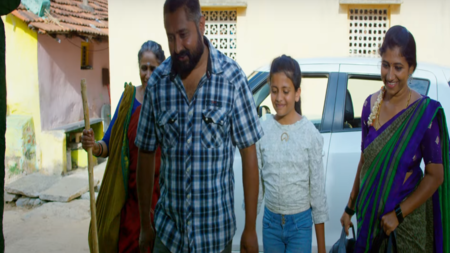
Thayavva
U2 hrs 3 minsReleased: 30 May, 2025
Kannada
Drama
2.0
Critic's Rating
2.0
Users' Rating
About the Movie
The film explores gender discrimination through the lives of young girls and a village midwife, Thayavva, highlighting issues like female infanticide, child marriage, and everyday sexism. It sheds light on how deeply rooted biases persist across both rural and urban households.

Thayavva Movie Review: Bold Questions, Safe Answers

The Times of India
May 31, 2025, 11:26 AM IST2.0
By Susmita SameeraThe film opens in a classroom where students share typical aspirations—engineer, doctor—but Pallavi’s unexpected response, “I wish to be a boy,” immediately sets the tone. From the very first scene, the film directly addresses gender discrimination, highlighting how casual, everyday remarks like “This isn’t your house, you’ll marry and leave,” “A girl should learn to cook from a young age,” or “Your father spends too much on your education” can make a girl feel like a burden rather than a valued individual. These microaggressions, common even in urban, educated households, create lasting stress and guilt in young girls. The story follows Pallavi’s journey and then shifts to her friend Spoorthi, whose educated doctor parents send her to a village during the holidays. There, Spoorthi meets Lakshmi, a village girl, her pregnant mother Savithri, and the local midwife Thayavva. Through their lives, the film explores the struggles girls face from birth to old age—female infanticide, child marriage, denial of education, and being labelled “unlucky” or “iron-legged” for misfortunes beyond their control. While the film’s intention is commendable, the execution at times feels predictable and drawn out. In both Pallavi and Lakshmi’s stories, grandmothers are portrayed as the primary oppressors, which limits the narrative by overlooking broader societal structures and systemic neglect. The film also misses an opportunity to show consequences or accountability for those who harm or discriminate against girl children—diluting its potential impact. Even in an urban household like Spoorthi’s, where her doctor parents appear to provide an unbiased upbringing, gender inequality subtly persists. Her mother, also a practising doctor, is shown coming home after a long day, only to cook and manage the house, while her father remains uninvolved. Including at least one example with shared responsibilities and mutual respect, even at the household level—not just professional equality—would have added a necessary layer of hope and balance. Technically, the cinematography is thoughtful and complements the subject well. Thayavva’s folk songs lend authenticity, anchoring the story in its cultural context. Notable moments include a scene where a TV show celebrates women achievers in the background while a young girl is forced to do chores during her study time. Thayavva’s metaphor about voiceless animals—used only for labour—delivers a powerful message about the importance of speaking up. Despite its flaws, the film courageously addresses crucial issues of gender bias, particularly within familial and cultural contexts. With tighter storytelling and more nuanced representation, its impact could have been even stronger.
User Reviews
0/1500
Post ReviewTrailer
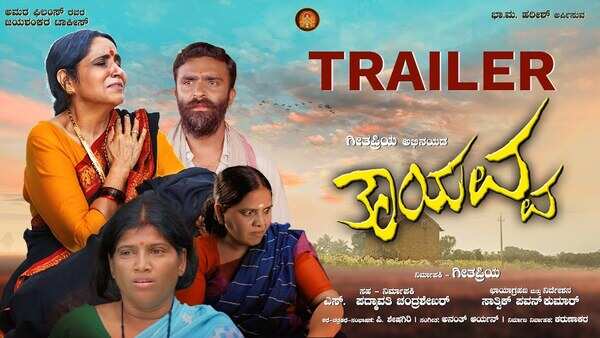
Tayavva - Official Trailer

Photos
Latest Movie Reviews



Hot on the Web
Swaroop Sampat RawalGul PanagRanbir KapoorRent Hike RulesAamir KhanJuhi ChawlaVedang RainaTraditional Indian FoodsDhurandhar 2 OTT ReleaseAbhishek BachchanDrishyam 3 Box Office CollectionAishwarya Rai BachchanVinod KhannaMaa Behen TrailerDeepika PadukoneChand Mera Dil Box Office CollectionNiranjana DesaiAishwarya Rai BachchanUnique Fruit TreesKaruppu Box Office CollectionDhurandhar 2Abhijeet DipkePopular FoodSnake Parks in IndiaKangana RanautHemant ModiBaby NamesDhurandhar 2 Box Office CollectionRaja Shivaji Box Office CollectionHoroscope TodayCuba Drone ThreatFatah 3 VS BrahmosUS Powerball LotteryRajnath SinghUAE Nuclear PlantSanjeev AroraNyt ConnectionsEpic Fury 2.0Legal Document PropertySuryastraS 400Captions For Instagram Posts
Trending Topics
Latest MoviesBollywood MoviesHollywood MoviesTamil Movies 2026Telugu Movies 2026Malayalam Movies 2026Kannada MoviesMarathi MoviesBengali Movies 2026Top Rated Movies 2026Best Hindi MoviesBest English MoviesBest Telugu MoviesBest Tamil MoviesBest Malayalam MoviesBest Kannada MoviesBest Bengali MoviesUpcoming Hindi MoviesBest Movies Of All TimeBest Hindi Movies of All TimeLatest English MoviesLatest Malayalam MoviesEnglish TV NewsTamil TV NewsTelugu TV NewsMalayalam TV NewsKannada TV NewsMovie ReviewsBhojpuri Cinema NewsGujarati Cinema News
Popular Categories
Viral NewsK Pop NewsWeb Series NewsAnime NewsUpcoming English MoviesUpcoming Tamil MoviesUpcoming Telugu MoviesUpcoming Malayalam MoviesUpcoming Kannada MoviesFashion TipsTravel NewsEntertainment NewsBollywood NewsTollywood NewsKollywood NewsMollywood NewsFood NewsLatest Hindi MoviesLatest Tamil MoviesParenting TipsHome RemediesWeight LossBeauty TipsParenting TipsHindi VideosHindi Video SongsBhojpuri Music VideosLatest Telugu MoviesBhojpuri Music VideoHindi TV News
Latest News
Hazaribag man drowns while fishing in lake"Behen Darr Gayi!": Fans relive ‘Bhagam Bhag’ era after watching Akshay Kumar's 'Bhooth Bangla' trailerMBOSE HSLC result 2026 to release tomorrow: Check details hereIran war risk: JPMorgan CEO Jamie Dimon warns of oil shocks, sticky inflation and higher interest ratesMake your clutch last longer with these easy driving tips“Three-against-one situation”: El Rubius opens up on being “targeted” in MrBeast’s viral $1M challengeBihar BTSC lab assistant notification released for 1091 posts at btsc.bihar.gov.in; apply hereIPL craze costs techie Rs 1.46 lakh in fake RCB vs CSK ticket scamRaising “robot-proof” kids: Why creativity and curiosity matter more than everInside ‘Satguru Sharan’: Exploring Saif Ali Khan and Kareena Kapoor Khan’s Rs 100 crore Bandra homeHow selling Alaska in 1867 was a costly mistake for Russia'Hera Pheri 3 is coming': Paresh Rawal dismisses delay reports and reveals he will 'start shooting soon'US-Iran War: A daring rescue Hollywood blockbuster is on its way. Till then, pick your favourite from these 10 films on bringing someone home against all oddsKolkata team unveils fan mural at Rash Behari Avenue, celebrating city’s first loveHow US spread a lie to rescue a pilot of a jet shot down in IranNetflix unveils ‘VOID’, an AI model that can change a movie plotAI data centers are causing 'stress' not just to tech companies, but also private insurers"Trans women are.....": Clavicular’s viral moment with trans women sparks fresh conversation on internet culture