
- News
- Writers and protest and freedom dissent and indian democracy
This story is from November 30, 2015
Writers and protest and freedom dissent and indian democracy
“The BJP, with the slow development of Wahabi Hinduism,’ observes Amit Chaudhuri at the Times Lit Fest Delhi, “is decimating the pluralism of Hinduism.”
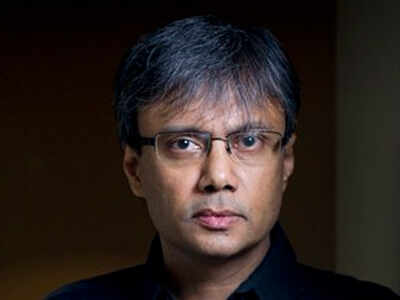
“The BJP, with the slow development of Wahabi Hinduism,’ observes Amit Chaudhuri at the Times Lit Fest Delhi, “is decimating the pluralism of Hinduism.”
“The BJP,” he says, “speaks deeply out of ignorance of Hindu texts. Sushma Swaraj says she reads the Gita every day. She doesn’t read it at all.” He produces an English translation and reads from it. “Gita is saying, “Chuck out the Vedas and it says that again and again, partly because of its absorption of Buddhism, but it’s a deeply dissenting religion. Pluralism is not the opposite of religion, pluralism resides within to religious. The BJP with its slow development of a kind of Wahabi Hinduism is decimating the pluralism of Hinduism.” He mocks the BJP’s tendency to exaggerate ancient India’s supposed scientific achievements saying, of the negative response to his book that was based on a “non-event” – “BJP people talking about helicopters in the Ramayana weren’t there then. People weren’t beating you or killing you or telling you to go to another country for writing about non-events.”
Hariharan started the conversation on protesting writers. “All writers are, in a sense, offenders,” she observes and proceeds to address each of the charges made against the writers who’ve returned their awards. She counters “accusations of manufactured dissent” saying it comes from those who “don’t know what writers are like.” “You can’t put five writers in a factory and get them to agree on a narrative.” “Many of the writers have spoken up at different points and nobody can tell writers when to speak out. But something has happened in the last few months [prompting] them to express themselves in ways writers usually don’t,” she says adding that there is, even outside the group of award-returners, a large group of people “who don’t think the rishis designed everything, who don’t look into your refrigerator to see what you eat.” She describes this group as one of “decent citizens who think it is wrong for somebody to be killed because his eats meat.” Academic Leela Gandhi would later describe award returning as a “Swarajic action.” “I am terribly excited about it,” she says, “It is an example of what swaraj is – to rule the desire to rule and limiting your self-development for the sake of others. I am optimistic. It puts us back on the path to swaraj and on the dyadic relationship of freedom and equality.”
Writer Mridula Garg, once arrested on charges of obscenity in her writing, observes that “the purpose of all censorship is to make the writer self-censor.” “Protesting during the Emergency, you knew you’d be arrested. Now, you don’t know who will kill you.”Chaudhuri, who was already warming up to the theme, argues that there’s been a steady “attrition of our right to political dissent.” “I can’t think of any party, in West Bengal or all of India, that can resist the temptation to censor if it can.” He further observes that the Trinamool government was welcomed by Kolkata, till the citizens clocked the “punitive approach of the government not just of dissent but what was construed to be dissent. In a particular ethos, anything can be offensive.” He adds, however, that Trinamool simply inherited that context from the Left Front.
Chaudhuri has a Sahitya Akademi award. And declares he feels “great solidarity with” the award-returners but didn’t join them. His 2002 book, A New World for which he won it, had been panned by Delhi critics for not having conventional storyline, an “event”. The award for this one, he says, had signified to him then “that what the journalist was saying was not the last word.” Chaudhuri thinks the writers – and later, artists, scientists and film-makers – “had to take recourse to what we had in a colonial system” to register protest. An audience-member brings up Rabindrathan Tagore’s renouncing the knighthood and it just proves his point. “Where did the idea come from that they [the authorities] cannot be spoken with? All countries that have dealt with this have done so by recourse to institutional means but that only happens if one has faith in the institutional, legal, constitutional means.” He argues that the public is now “unclear about who is being offensive according to the constitutional framework. The guy who says kill someone isn’t offensive while someone who wants to name something after Tipu Sultan is. It is a bizarre thing to be happening – that people can [tell others] to go to Pakistan….It [signals] a total failure of understanding what our constitutional rights are. In that [context] returning of the awards is a very important makeshift gesture.” But for more permanent change, he suggests authors “test the constitution and legal framework.”

About the Author
Shreya Roy ChowdhuryEnd of Article
FOLLOW US ON SOCIAL MEDIA
Photostories
Hot Picks
TOP TRENDING
Popular Categories
Hot on the Web
Top Trends
Exit Poll ResultsJ&K Election Exit Poll ResultHaryana Election Exit Poll ResultTravis KelceAUS vs SL Live ScoreWomen T20 World Cup ScenarioAmethi Murder CaseIsrael Iran WarJ&K Exit PollHulk HoganUGC NET ResultDiddyWomen's T20 World CupTop MBA Colleges of IndiaT20 WC ScheduleWomen T20 World Cup Points TableLive Cricket Score
Trending Topics
Bigg Boss 18 House PhotoNavratri Colours 2024Navratri Day 2 ColourTMKOC New SonuNaga ChaitanyaDevara CollectionGOAT OTT ReleaseRajinikanthDeepika PadukoneGovindaDevaraGovinda NewsDevara Movie ReviewHealthy RaitasSwatantrya Veer SavarkarColdplay India tour 2025Maa Durga 108 NamesNavratri JewellerySony Bravia 55 inch 4k Ultra HD TVWordle Answer
Living and entertainment
Latest News
India’s F&O addiction: Falling, hurting, bleeding but chasing that elusive pot of goldSnapshot of brutalityDRDO tests of man-portable air defence shield successfulWorld Meningitis Day 2024: What is meningitis, the deadly brain infection? Know signs and symptomsBlaze damages goods worth Rs 3L at Bambolim flat“With Davante Adams on the Verge of Departure, Raiders' Robert Spillane Promises Big Plays Ahead”Maryland Governor Makes Bold Pitch for Raiders' $140M All-Pro: Could Davante Adams Join the Ravens?Aries, Weekly Horoscope, October 06 to October 12, 2024: Face health and emotional challenges at the start of the weekKareena Kapoor, Soha Ali Khan, Kunal Kemmu and others have a blast at Neha Dhupia's son Guriq's birthday bash - See INSIDE photosAmid China's muscle-flexing, Malabar drill to start on October 86,000 Dasara dolls bring underwater city of Dwarka to life in BasavanagudiWWE Bad Blood 2024 Betting Odds: Dominik Mysterio favored to escape shark cage, Punk and McIntyre favored to bleed, and moreTripura court serves notice to a police officer on cash looting chargeRecord 41 companies files for IPOs in SeptemberBone health in the elderly: Why seniors should get a bone density testBengal villagers attack police after child's body found in ditchSamantha Ruth Prabhu showers praise on Ananya Panday's 'CTRL'; calls her 'outstanding'West Bengal govt misses 'deadline', junior docs begin fast
Copyright © 2024 Bennett, Coleman & Co. Ltd. All rights reserved. For reprint rights: Times Syndication Service