
- News
- The story of Delhi is a work in progress: Malvika Singh
This story is from November 28, 2015
The story of Delhi is a work in progress: Malvika Singh
The story of Delhi, like the city itself, is a work in progress. As publisher and moderator for the session, Malvika Singh points out, “There can’t be a “definitive biography, a final word, because the city is constantly evolving.”
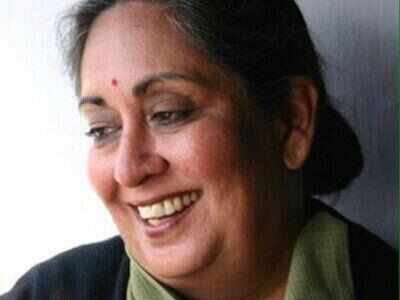
The story of Delhi, like the city itself, is a work in progress. As publisher and moderator for the session, Malvika Singh points out, “There can’t be a “definitive biography, a final word, because the city is constantly evolving.”
It does and always will.
But of Delhi’s biographies, there have been many. Each of the three speakers have addressed some aspects of it each. Sadia Dehlvi – so very Delhi, her origins are inscribed in her name – has several books on Delhi’s heritage and is working on another two tracing the history of its cuisine. Dehlvi’s family, like all “original Delhiites,” comes from Old Delhi, Shahjahanabad. “My family has been in Delhi for 500-600 years. I’m one of the ‘original Delhiites’ but I think the idea is delusional. You’re all Delhiites,” she graciously says to the audience. “Delhi is accepting. It’s due to what we call and want to preserve – the Ganga-Jamuni tehzeeb” that has prevailed in the city for centuries. Namita Gokhale has set several of her novels in the Capital including her first, Paro: Dreams of Passion, published in 1984 when Delhi was mostly “a dull bureaucratic place” but was changing after the 1982 Asian Games. She describes it as a “ruthless city that takes people in and sidelines them.” She’d later mention the resettlement colonies. Singh herself has written two books on Delhi and edited one.
Dehlvi grew up in post-Partition India. “With the enterprising, vibrant Punjabis coming in, our whole lifestyle, culture, was threatened,” she says. Saying ‘bola’ instead of ‘kaha’ made her mother shudder; women started eating street-food – “It was blasphemy to eat on the streets” -- and butter-chicken became a legitimate part of the city’s food culture. “Coming into Delhi,” observes Singh, “Has happened peacefully. There’s been no discord.” But the growth and change hasn’t been all organic. As Gokhale points out, after the British left, Lutyen’s Delhi was handed over to the government. “If the British had been able to connect the colonial part of Delhi to its older parts, the bureaucracy wouldn’t be living in a strange bubble. Now Lutyen’s Delhi has the snobbery of Indraprastha.” Indraprastha is one of the oldest of the seven cities of Delhi and Gokhale has interpreted the Mahabharata for children. Delhi’s survived attacks too. Singh argues that after 1857, “the next attack came with the Emergency”. She also believes the young “don’t venture” into Old Delhi – “a living museum” -- but Dehlvi believes the Delhi Metro is changing that.
There have also been ‘biographies’ in Urdu, Dehlvi points out, that have not been translated – Sir Syed Ahmad Khan’s and Bashiruddin Ahmad’s. “There hasn’t been a lot of work after 1947,” she says. RV Smith and others documented the changes in Delhi but it was Khushwant Singh “who made Delhi fashionable.” There have been many more chroniclers since, of course, including William Dalrymple and many other foreigners who’ve lived and worked in the city and wrote of the parts they encountered.

About the Author
Shreya Roy ChowdhuryEnd of Article
FOLLOW US ON SOCIAL MEDIA
Hot Picks
TOP TRENDING
Trending Stories
In Section
Entire Website
- 'Nandini': The new ghee supplier for Tirupati laddus – who owns it?
- India’s rising influence in the Asia Power Index surpassing Japan and China; ranks 3rd in the list
- 3 Reasons Why Bad Blood 2024 Will Make An Epic Return To WWE PLE Calendar
- 'Diddy List': Names of celebrities connected to Sean Combs viral
- EY Pune employee Anna Sebastian's death: Probe finds MNC lacked labour welfare permit
- Virat Kohli, Gautam Gambhir, Rishabh Pant's buggy-ride goes viral; fans say 'teeno bhai tabahi' - Watch
- 'Virat Kohli has lost momentum, can't beat Sachin Tendulkar's record'
- Pope offers refuge to jailed Suu Kyi: Report
- YouTuber Sugandha Sharma apologises after video defaming Bengaluru sparks outrage
- Goldberg vs Brock Lesnar: Who Won The Greatest Battle In WWE History?
- 'Why was he shot in head?': Key questions by Bombay HC in Badlapur encounter case
- Several flights diverted at Mumbai airport amid heavy rain
- What the rest of India can learn from Tamil Nadu's footwear clusters
- Haryana assembly election: Why 'unhappy' Kumari Selja could play the spoilsport for Congress
- Tirupati laddu row: Reddy calls for atonement rituals on Sept 28 for Naidu's 'sin'
- Kohli's spin vulnerability exposed again as Axar cleans him up in nets
- Why young people need to worry about that sneaky cholesterol
- Flipkart claims 3 users got iPhone 13 at Rs 11: What company said
- 'Laga ki sher ghus gaya': Rare moment of Dhoni losing cool
- 'Already invited India': Zelenskyy on 2nd peace summit to end conflict with Russia

Popular Categories
Hot on the Web
Top Trends
Trending Topics
Living and entertainment
Latest News
Strike by more than 1,000 Samsung workers enters a third week8 Spices that can help reduce high blood sugar'Imprints of Make in India visible everywhere': PM Modi lauds 10 years of flagship initiativeWho is Laurene Powell Jobs? Invisible hand behind Kamala Harris's rise"I got the utmost respect for him": Cowboys' CeeDee Lamb Makes An Emotional Apology Following His Argument With Dak PrescottGovernment urges these Microsoft users to immediately update their devicesWatch: Pit Bull saves children from snake attack in Jhansi4 injured after elephant overturns autorickshaw in Kerala's Idukki4 Telangana cops injured during protest over sexual assault on 6-year-old girl by teacherSony unveils iridescent "Chroma Collection" for PS5 Slim and DualSenseFirst Blood Match, Stretcher Match, and 3 other classic stipulations that should return in WWEHere’s why free airport lounge access was denied for many flyersChina holds rare test of ICBM into Pacific to show its mightWWE RAW Suffers Lowest Viewership of 2024 Amidst Competition from Two Monday Night Football Games on September 23'Shouldn't BJP's retirement rule apply to PM Modi?': In letter to RSS chief Mohan Bhagwat, Kejriwal poses five questionsByteDance shuts down TikTok music globallyApple releases new public betas for iOS 18.1, iPadOS 18.1, and macOS Sequoia 15.1, here are the new featuresIndia’s rising influence in the Asia Power Index surpassing Japan and China; ranks 3rd in the list
Copyright © 2024 Bennett, Coleman & Co. Ltd. All rights reserved. For reprint rights: Times Syndication Service