
- News
- The government had been “morally callous”, says Pratap Bhanu Mehta
This story is from November 27, 2016
The government had been “morally callous”, says Pratap Bhanu Mehta
“This moment represents the most serious crisis for judiciary since Independence including Emergency days.”
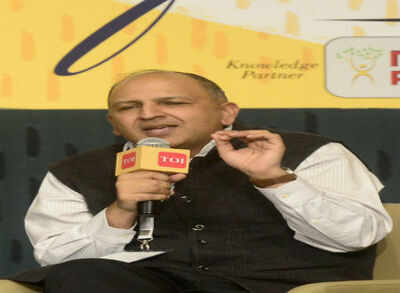
Pratap Bhanu Mehta
Speaking at the Times Lit Fest on Sunday Mehta said,”As far as I can see there is no government ordinance or law that permits this (demonitisation.) They should have got an ordinance...The idea that government now has these powers without accountability and reflection...government can decide what counts as ease and convenience for citizen, what counts as hardship for citizens...that a secretary can stand up and announce it and change it every three hours, that a RBI circular has no sanctity, that the PM’s promise is reneged on by bureaucrats...if this does not smack of arbitrariness and discretionary government I don't know what does.”
While slamming the government for its moral callousness Mehta said, “There is no doubt that Modi is bold, takes risks and has the capacity to tap into people's energy and sense of civic duty like no other leader in recent times....but that is the very thing that makes this somewhat dangerous.
But demonitisation is not a well thought through scheme not just in implementation but in objective....What is worrying is that there was never evidence that the larger cost worth the gains. What isn't going to do for job creation and growth?These questions have been taken very lightly (by the government) which speaks of a moral callousness.”
He added that it had also led to a reversal of cardinal principle since 1991 which is that liberal society can function on presumptive trust.
In conversation with festival co-director Nalin Mehta, Pratap Bhanu Mehta was scathing about the conflict between the government and the judiciary. “This moment represents the most serious crisis for judiciary since Independence including Emergency days,” he said.
The head for Centre for Policy Research said this was a tangible crisis and the judiciary itself had in recent years over-reached with the Supreme Court usurping large domains of governance. “We have rule by courts, that is not the same as rule of law,” he said.
He said that NJAC was a good opportunity to check the system but “judiciary overplayed its hand.”
End of Article
FOLLOW US ON SOCIAL MEDIA
Photostories

Hot Picks
TOP TRENDING
Popular Categories
Hot on the Web
Top Trends
Ratan Tata HospitalisedIND vs BAN Live ScoreIND vs SL Live ScoreNew UPI Transaction LimitHurricane MiltonWorld First Top 10 TrillionairesStock Market TodayKerala Lottery ResultElection Results 2024Tom BradyIsrael Hezbollah WarSuryakumar YadavManagement Colleges of IndiaTop Medical Colleges of IndiaTop Engineering Colleges of IndiaTop Pharmacy Colleges of IndiaLive Cricket Score
Trending Topics
Diwali WishesBigg Boss Tamil 8 Contestants ListBhool Bhulaiyaa 3 TrailerDurga Puja WishesSanjay Leela BhansaliVettaiyan ReviewBigg Boss 18 House PhotoDevara CollectionBigg Boss 18Deepika PadukoneShailesh LodhaDevaraColdplayNational Film Awards 2024Swatantrya Veer SavarkarColdplay India tour 2025Watch NFL Live StreamDress To ImpressRatan TataWordle Answer
Living and entertainment
Latest News
CATS YouTube codes for October 9, 2024: Earn 500 CATS and know how to redeem the codesTHE World University Rankings 2025: IISc Leads India , Check the List of Top 10 Indian Institutes HereAre HDFC Bank, Axis, Kotak a value buy or value trap for investors?Triptii Dimri on emotional struggles following criticism for 'Animal’: Side effect of being in a mainstream filmDid the threat of ‘first Hindu CM’ help NC-Congress win J&K?Ranbir Kapoor's UNSEEN BTS pic from 'Shamshera' goes viralMudassar Aziz: A filmmaker needs to carefully study while pegging a film around the idea of stardomPrabhas starrer 'Kalki 2898 AD' gears up for its release in JapanWho is Aniruddhacharya Maharaj? Know more about Pookie Baba’s life journey and net worthOnly a true creative genius can spot the odd unicorn in 12 seconds!Will Allu Arjun be able to beat Prabhas in North America with Pushpa 2?OnePlus 12 is available for Rs 35,314 only on Amazon; check exchange deal and bank offersIndian man goes ‘skinny-dipping’ at an Australia's beach that isn’t even on Google Maps | Watch video"We all still love him": TNA producer and former Knockouts Champion hopes for AJ Styles’ return to the company"She's garbage": Raheem Mostert's Wife, Devon, Calls Out Kamala Harris Over Controversial Hurricane Milton RemarksAnupama's 15-year leap: Toshu's transformation and new actor Manish Nagdev joins amidst dramatic fire crisisAamir Khan takes Amitabh Bachchan back to his Kolkata days300 kg tea adulterated with coconut shell powder seized in this city
Copyright © 2024 Bennett, Coleman & Co. Ltd. All rights reserved. For reprint rights: Times Syndication Service