
- News
- ‘Kashmir Today: Towards an Indian Future?’
This story is from November 29, 2015
‘Kashmir Today: Towards an Indian Future?’
“To take that veto away, we have to have a well-crafted and well-thought out policy towards Kashmir.”
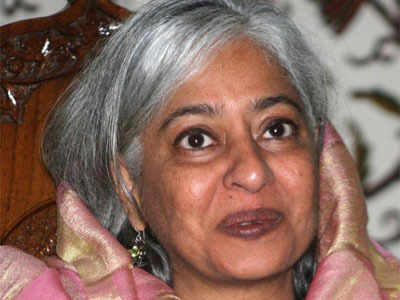
“To take that veto away, we have to have a well-crafted and well-thought out policy towards Kashmir.”
Kashmir is rarely out of the news, and with the recent statements of Dr Farooq Abdullah and Ahmed Shah Geelani – comments of several degrees of provocativeness – the opening session on day two of the Rajnigandha Times Delhi LitFest, ‘Kashmir Today: Towards an Indian Future?’, turned out to be appropriately topical.
On the panel were Radha Kumar, head of a Delhi thinktank, Rakesh Sood, a former Indian ambassador to Afghanistan, France and Nepal, and A S Dulat, former RAW chief and Kashmir advisor in A B Vajpayee’s administration.
A S Dulat began with a question: “Are we prepared to give the Kashmiri an Indian future?” Kashmiris haven’t, he said, been made to feel a part of the country. “Let’s at least accommodate them, give them freedom with dignity, honour, self-respect and justice.”
Kumar offered that the situation in Kashmir had progressively deteriorated. “It hasn’t been as bad as this in a long time,” she maintained. “The government doesn’t seem to be working, and little of the common minimum program has been implemented.”
Kumar said the only time there has been any forward movement in Kashmir is when both Pakistan and the Kashmiris have been involved in negotiations. This was the case when General Musharraf was in power in Pakistan. “There were civil society discussions between Indian and Kashmiris, through the back channel, and this put pressure on Gen. Musharraf.” Dulat too felt that no forward movement is possible without the involvement of Pakistan.
Sood queried whether normalizing the situation in Kashmir should be linked to normalizing relations between India and Pakistan. “Should one depend on the other? If they are linked, then dialogue between India and Pakistan assumes criticality.
“If normalizing Kashmir is going to be dependent on normalizing Indo-Pak relations, then we’re giving Pakistan a veto over how we manage Kashmir.” Sood believed that the two issues need to be separated, and this would necessitate a change in policy. “We need a change of thinking.
“To take that veto away, we have to have a well-crafted and well-thought out policy towards Kashmir.”
Delhi, Kumar lamented, has tended to take two steps back after taking a step forward. And there has been little effort to keep the process going, even when a breakthrough has appeared imminent. She also pronounced Delhi’s Kashmir strategy as too “fragmented”, and too concentrated on the Valley. “We have tended to focus too much on the Valley, often to the detriment of the Valley,” she said.
Sood agreed, saying that this “exclusive” focus on the Valley has meant less attention given to Jammu or Ladakh. Add to that the central government’s proclivity to step in only to douse the flames but not to do so when real progress is visible, and no wonder little headway has been made.
All panelists felt that engagement with Pakistan and with the Kashmiris must not grind to a halt. “The Kashmiri understands his future is with India. We need to give him a chance,” remarked Dulat.
Kumar warned, however, that the situation could get worse if a serious effort to resolve Kashmir is not attempted. India could conceivably, she added, “lose” the Valley in the next 10 years. Sood said that while militancy and separatist tendencies might have come down, there still remains plenty of alienation and resentment, and growing radicalization. “We need to address all this with greater urgency.” And less acrimony on the Kashmir debate would help, too.
On the panel were Radha Kumar, head of a Delhi thinktank, Rakesh Sood, a former Indian ambassador to Afghanistan, France and Nepal, and A S Dulat, former RAW chief and Kashmir advisor in A B Vajpayee’s administration.
The session was moderated by Sankarshan Thakur.
A S Dulat began with a question: “Are we prepared to give the Kashmiri an Indian future?” Kashmiris haven’t, he said, been made to feel a part of the country. “Let’s at least accommodate them, give them freedom with dignity, honour, self-respect and justice.”
Kumar offered that the situation in Kashmir had progressively deteriorated. “It hasn’t been as bad as this in a long time,” she maintained. “The government doesn’t seem to be working, and little of the common minimum program has been implemented.”
Dulat described the coming together of the BJP and Mufti Mohammad Sayeed’s PDP as “imaginative”, and felt it would bring Jammu and Kashmir together. “The election threw up a result that satisfied no one, and the coalition was the best option. But the partners have drifted apart.”
Kumar said the only time there has been any forward movement in Kashmir is when both Pakistan and the Kashmiris have been involved in negotiations. This was the case when General Musharraf was in power in Pakistan. “There were civil society discussions between Indian and Kashmiris, through the back channel, and this put pressure on Gen. Musharraf.” Dulat too felt that no forward movement is possible without the involvement of Pakistan.
Sood queried whether normalizing the situation in Kashmir should be linked to normalizing relations between India and Pakistan. “Should one depend on the other? If they are linked, then dialogue between India and Pakistan assumes criticality.
“If normalizing Kashmir is going to be dependent on normalizing Indo-Pak relations, then we’re giving Pakistan a veto over how we manage Kashmir.” Sood believed that the two issues need to be separated, and this would necessitate a change in policy. “We need a change of thinking.
“To take that veto away, we have to have a well-crafted and well-thought out policy towards Kashmir.”
Delhi, Kumar lamented, has tended to take two steps back after taking a step forward. And there has been little effort to keep the process going, even when a breakthrough has appeared imminent. She also pronounced Delhi’s Kashmir strategy as too “fragmented”, and too concentrated on the Valley. “We have tended to focus too much on the Valley, often to the detriment of the Valley,” she said.
Sood agreed, saying that this “exclusive” focus on the Valley has meant less attention given to Jammu or Ladakh. Add to that the central government’s proclivity to step in only to douse the flames but not to do so when real progress is visible, and no wonder little headway has been made.
All panelists felt that engagement with Pakistan and with the Kashmiris must not grind to a halt. “The Kashmiri understands his future is with India. We need to give him a chance,” remarked Dulat.
Kumar warned, however, that the situation could get worse if a serious effort to resolve Kashmir is not attempted. India could conceivably, she added, “lose” the Valley in the next 10 years. Sood said that while militancy and separatist tendencies might have come down, there still remains plenty of alienation and resentment, and growing radicalization. “We need to address all this with greater urgency.” And less acrimony on the Kashmir debate would help, too.
End of Article
FOLLOW US ON SOCIAL MEDIA
Hot Picks
TOP TRENDING
Trending Stories
In Section
Entire Website
- UPS vs NPS Calculator: Is A Switch From National Pension Scheme to Unified Pension Scheme Really A No-Brainer? Check Calculations, Benefits - Top Points
- Top 10 sports stars turned power couples: From Agassi-Graf to Conner-Comaneci
- UPI transaction limit to change from September 16! Here are the new limits for various UPI payments
- Protests by Hindu groups in Shimla continue despite mosque demolition
- Schools to be closed tomorrow in these states: Here’s why
- 9 Inspirational Quotes Every Student Should Embrace for Academic Success
- 'We can be political rivals but ... ': BJP's reaction on minister's Rahul 'No. 1 terrorist' remark
- Donald Trump Jr dumps fiancee Kimberly Guilfoyle for Bettina Anderson?
- Trump vs Kamala polls latest: Harris gains from post-debate bounce
- NEET PG counselling schedule 2024 delayed: Why candidates moved to Supreme Court, hearing dates and other latest updates
- Will work next few months to bring back 'elder brother' Kejriwal as Delhi CM: Atishi
- 'No glorification and grandstanding of bulldozer justice': SC bans demolition till Oct 1
- How could another attempt to assassinate Trump happen again?
- 'Discipline on your leaders': Kharge to PM Modi on 'violent' remarks against Rahul
- 'Congress, its ecosystem angry': PM Modi over Ganesh Puja with CJI
- ACT Final Live: India eye record 5th title
- 'To achieve peace in Manipur, first seal Indo-Myanmar border’
- ICICI Bank warns customers; says these are signs of 'fraud attempt'
- Sensex rises 6,300 points in just 100 days of Modi 3.0 government
- Excise policy scam case: HC grants bail to Amit Arora, Amandeep Singh Dhall

Popular Categories
Hot on the Web
Top Trends
Dominique PelicotUS Fed Rate CutIndia vs China Champions TrophyUPI Transaction LimitWhere to Watch India vs China Final Hockey MatchUPS vs NPS CalculatorSports Stars Turned Power CouplesNEET UG Admission CriteriaAtishiKolkata Doctor Rape CaseArvind Kejriwal Resignation LiveAli Khamenei TweetSuryakumar YadavVince McMahonTech LayoffsDonald TrumpLive Cricket Score
Trending Topics
Living and entertainment
Latest News
Pankaj Kapur is proud of son Shahid Kapoor’s film choices, calls him ‘the finest actor in the country’Mukhtar Ansari died of heart attack, not poisoning: UP's Banda district magistrate's report4 types of tea to improve gut health and ease digestive issuesMemeFi daily codes for 17 September 2024: Boost your earnings with daily codes and know how to maximizeKhatron Ke Khiladi 14: Shalin Bhanot hosts a fun party for his co-contestants Krishna Shroff, Abhishek Kumar, KaranVeer Mehra and othersDecoding how log analytics systems are enabling brands to derive maximum value from dataSebi U-turn: Pulls note blaming 'external elements' for staff stirTaurus, Daily Horoscope Today, September 17, 2024: Anxiety and stress diminishLiza Colon becomes 1st Latina to win Best Supporting Emmy AwardFormer WWE superstar is no longer listed on their internal rostersBeyond Paychecks: Job satisfaction, work-life balance more important than salary for Gen Z workforceThrowback: When Sunita Ahuja showered love on husband Govinda, 'A superb son, brother, and a very good father...'‘You is sleep or you can sleep’: Students prank Benglauru’s ‘pookie professor’ in viral videoWhy more couples aged 50 or older are getting divorcedThese are the most toxic fresh produce of 2024Things to do before, during and after Lunar EclipseCongress condemns Shiv Sena MLA's 'Rs 11 lakh reward to cut Rahul Gandhi's tongue' remarkThe 3 Strongest Zodiac Signs: Powerhouses of the Zodiac Wheel
Copyright © 2024 Bennett, Coleman & Co. Ltd. All rights reserved. For reprint rights: Times Syndication Service