
- News
- Deciphering the enigma that was Narasimha Rao
This story is from November 26, 2016
Deciphering the enigma that was Narasimha Rao
The current PM might run him close but possibly no other leader of post-Independent India has evoked as many conflicting emotions as Pamulaparti Venkata Narasimha Rao.
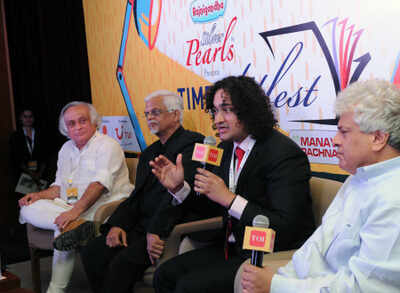
<p>Deciphering the enigma that was Narasimha Rao<br></p><p><br></p>
In an entertaining evening session chaired by Suhel Seth, and featuring Jairam Ramesh of the Congress, Sanjaya Baru, former media advisor to Dr Manmohan Singh, and Vinay Sitapati, author of a recent – and much-praised – biography of Rao, it was asked whether the unassuming Andhra man was India’s best prime minister.
Ramesh’s answer was an unambiguous no. “But, did he change India’s economic direction? Did he convert a crisis into a magnificent opportunity? Did he show political courage to carry the change through? Was he bold in his policy making? Did he make egregious mistakes? The answers to these questions is yes.”
Rao, said Ramesh, experienced striking success and striking failure. And having taken over at a time of extreme economic crisis, he was able to engineer a paradigm shift in India’s economic policy. “He was an extraordinarily erudite man, our most scholarly PM, and the most multilingual of our PMs.”
Baru said that to judge a leader’s record, it’s important to look at what he or she inherited when they became prime minister, and what legacy they left behind when they departed from office. “Rao came to power when India was facing chaos and virtual bankruptcy, when India had no allies after the collapse of the Eastern bloc. By the time he left, he had taken India to the verge of testing a nuclear device.
“But Rao has been completely erased from memory, and from the record of his own party,” lamented Baru. Sitapati, a self-confessed “child of 1991”, said the way Congress treated Rao after his retirement was “disgraceful”.
Continued Sitapati, “He spoke very little but thought a lot, and took lots of notes. He was a man of action, and he realised that if you want to bring about change, you should never talk about it.”
Ramesh described Rao as an extremely self-confident man. “His greatest strength was his silence. He took whatever was happening in his stride, and would strike at the right time.
“When he was being attacked in Parliament for mortgaging India’s sovereignty, he responded in Sanskrit, saying, ‘I’ve done something that had to be done, I haven’t done anything transformational.
“For political salesmanship, he was using an idiom that was rooted in the Indian ethos.” Rao’s complicity (or not) in the demolition of Babri Masjid, and in the Anti-Sikh pogrom of 1984, and the part he played in the nuclear program, all came under scrutiny. He was an enigma in life, and continues to remain so after death. “Rao was a nondescript state minister and a lacklustre chief minister. There was nothing in his career to suggest that he would go on to become a successful prime minister,” said Ramesh.
The last word goes to Baru. “Someone who was a lifelong number two became a number one, and decided to act like one.”
End of Article
FOLLOW US ON SOCIAL MEDIA
Photostories

Hot Picks
TOP TRENDING
Popular Categories
Hot on the Web
Top Trends
Shantanu NaiduRussell WilsonsTom BradyPakistan Cricket FanSuryakumar YadavNobel Peace PrizeMahadev Betting AppNew UPI Transaction LimitRatan Tata DiesPM ModiNarayana MurthyUGC NET Result 2024Management Colleges of IndiaTop Medical Colleges of IndiaTop Engineering Colleges of IndiaTop Pharmacy Colleges of IndiaLive Cricket Score
Trending Topics
Diwali WishesJigra ReviewDussehra WishesVettaiyan OTT ReleaseVettaiyan CollectionVettaiyan ReviewBlack Movie ReviewDevara CollectionBigg Boss 18Deepika PadukoneShraddha KapoorRatan Tata Passed AwayColdplayVettaiyan Movie ReviewSwatantrya Veer SavarkarDussehra 2024Elon MuskKing Legacy CodesUltimate Football Codes October 2024Wordle Answer
Living and entertainment
Latest News
Harris overtakes Trump among suburban voters: Reuters/Ipsos pollSamantha Ruth Prabhu shares playtime with Chinmayi Sripaada's daughter, says 'It took her 4.5 seconds to disown her parents'Dilip Kumar-Saira Banu wedding anniversary: How the legendary actor surprised all by marrying his belovedSpiritual fervour all around as Sun God steers Lord's chariot at TirumalaInfosys to no longer send job offer letters and attachments, the company will ...Jaggery vs honey: Which one is better for weight loss?My mother would love to have a swayamwar for me: Raj AnadkatRanji Trophy: Focus on Shreyas Iyer as Mumbai begin title defenceHappy Dussehra 2024: Top 50+ Wishes, Messages, and Quotes to Share with Your Loved OnesBigg Boss 18: Karan Veer Mehra's comment on Arfeen Khan converting his wife's religion sparks anger; Arfeen says, "Agar ye ghar mein nahi hota main iski band baja deta"Amitabh Bachchan turns 82: Priyanka Chopra, Prabhas, Kajol, and other celebs extend heartfelt birthday wishes to the legendary starIndia's Steel City (Jamshedpur) mourns loss of iconic steel tycoon Ratan Tata“A fresh approach”: New York Jets' Interim Head Coach Jeff Ulbrich Replaced Nathaniel Hackett as Offensive Play Caller With Todd DowningKarnataka Congress faces backlash over case withdrawals linked to Hubballi riotsWomen's T20 World Cup: Don't need to be told about NRR, says Shafali VermaAxe the tainted & non-performers, PM Modi tells Union secretariesLead with AI and transform challenges into opportunities with GrowFast's AI and Analytics based Business Strategy online courseRanji Trophy: All eyes on Manav Suthar
Copyright © 2024 Bennett, Coleman & Co. Ltd. All rights reserved. For reprint rights: Times Syndication Service