
- News
- Biography and the Making of Indian History
This story is from November 29, 2015
Biography and the Making of Indian History
The place of biography in Indian historiography is often relegated to the sidelines, as most historians prefer to take an overarching view of a subject, rather than tell it from an individual’s vantage.
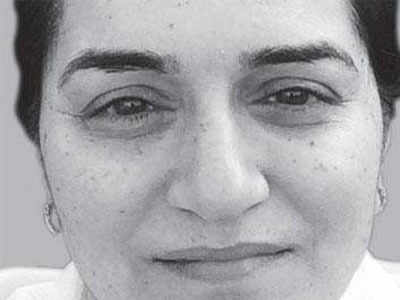
The place of biography in Indian historiography is often relegated to the sidelines, as most historians prefer to take an overarching view of a subject, rather than tell it from an individual’s vantage.
The place of biography in Indian historiography is often relegated to the sidelines, as most historians prefer to take an overarching view of a subject, rather than tell it from an individual’s vantage. But the biography can tell a story from ground-up suggested professors of history, Nayanjot Lahiri and Seema Alavi. The former has authored a biography on Ashoka, and the latter, on five 19th century Muslim intellectuals.
“Individuals are at the underbelly of states and empires,” said Alavi, whose own work, Muslim Cosmopolitanism in the Age of Empire, tracks the lives of five Muslim scholars who fled British India after 1857, for different cities in the Ottoman Empire, from where they contributed to a pan-Islamic intellectual network that spanned continents. She pointed out that individual stories often tell a different truth from official scripts, and pointed as example the fact that British intelligence referred to her subjects as terrorists, while they were lauded as scholars by Muslim intellectual community. “Taking a non-state-centric view of history enables us to capture a wide swathe,” she points out, adding that biographies are like micro-histories that can be strung together to give you an alternative history. “They’re an emotional topography of a time and place,” she concluded.
Lahiri suggested that one’s understanding of history deepened when one knew more about the lives that were central to it. Apart from Ashoka’s own epigraphs – of which 50 continue to survive – Lahiri attempted what she calls an archeological biography, where she studied the archeological discoveries of the places Ashoka was said to have inhabited, and used the artefacts unearthed from that time to corroborate Ashoka’s story, even when written after his time. “An example is his claim that he had turned the whole of Afghanistan vegetarian. Bones recovered from the region in that time prove the hollowness of this claim,” Lahiri pointed out.
The biography, Alavi admitted, was the most challenging of genres. “You need to balance the micro-macro narrative and make it credible,” she said. The reason there are comparatively fewer biographies in Indian history compared to the West she added was that the discipline isn’t encouraged by academia itself. “Teachers should get their students excited about juxtaposing a person with a historical context and humanizing history,” she said. Listing another challenge, she added that culturally, we treat our heroes as holy cows and write nothing but adulatory accounts of them. “One is worried of the consequences of writing a warts-and-all account of a famous person, like say, Gandhi. Although a biography written by a relative is better accepted.”
“Individuals are at the underbelly of states and empires,” said Alavi, whose own work, Muslim Cosmopolitanism in the Age of Empire, tracks the lives of five Muslim scholars who fled British India after 1857, for different cities in the Ottoman Empire, from where they contributed to a pan-Islamic intellectual network that spanned continents. She pointed out that individual stories often tell a different truth from official scripts, and pointed as example the fact that British intelligence referred to her subjects as terrorists, while they were lauded as scholars by Muslim intellectual community. “Taking a non-state-centric view of history enables us to capture a wide swathe,” she points out, adding that biographies are like micro-histories that can be strung together to give you an alternative history. “They’re an emotional topography of a time and place,” she concluded.
Lahiri suggested that one’s understanding of history deepened when one knew more about the lives that were central to it. Apart from Ashoka’s own epigraphs – of which 50 continue to survive – Lahiri attempted what she calls an archeological biography, where she studied the archeological discoveries of the places Ashoka was said to have inhabited, and used the artefacts unearthed from that time to corroborate Ashoka’s story, even when written after his time. “An example is his claim that he had turned the whole of Afghanistan vegetarian. Bones recovered from the region in that time prove the hollowness of this claim,” Lahiri pointed out.
The biography, Alavi admitted, was the most challenging of genres. “You need to balance the micro-macro narrative and make it credible,” she said. The reason there are comparatively fewer biographies in Indian history compared to the West she added was that the discipline isn’t encouraged by academia itself. “Teachers should get their students excited about juxtaposing a person with a historical context and humanizing history,” she said. Listing another challenge, she added that culturally, we treat our heroes as holy cows and write nothing but adulatory accounts of them. “One is worried of the consequences of writing a warts-and-all account of a famous person, like say, Gandhi. Although a biography written by a relative is better accepted.”
End of Article
FOLLOW US ON SOCIAL MEDIA
Hot Picks
TOP TRENDING
Trending Stories
In Section
Entire Website
- UPI transaction limit to change from September 16! Here are the new limits for various UPI payments
- GK for students: 7 Fascinating Features of These Unique Birds
- No look shot gone wrong! Pakistan batter hilariously trolled after dismissal. Watch
- Andhra suspends 3 IPS officers for 'framing', arresting Mumbai actress
- UP medical aspirants converting religion to secure MBBS seats: A look at NEET UG admission criteria around minority reservation rules
- Who is Ryan Wesley Routh? Man held for 'apparent assassination attempt' on Trump
- Virat Kohli at his destructive best, shatters Chepauk wall near India dressing room with six
- 'Prince Harry is not even the spare to his wife': Meghan Markle’s treatment of Duke under fire
- Vince McMahon’s Expensive Properties, Bungalows, Villas, Private Jet, Car Collections, and More
- "Miami Dolphins Owner Stephen Ross Eyes Multi-Billion Dollar Deal: The $7 Billion Power Play"
- Assassination bid on Trump: 'Gunman supporter of Ukraine in its war against Russia'
- 'Doesn't sound like the man I know:' Son of assassination attempt accused
- Cow vigilantes killing a Brahmin is the wake-up call India needed
- 'Didn't want to be late for party': BMW speeding down wrong lane kills 2
- Who is Ryan Routh? Man held for 'apparent assassination attempt' on Trump
- Arvind Kejriwal's resignation: Who will be the next Delhi CM?
- Will resignation gambit help Kejriwal win Delhi again?
- Apple's biggest 'iPhone update' for 2024: India time, how to prepare
- 'Bolte zyada hain': Pakistan great on Babar, Virat
- 'No one trying to ...': How Musk reacted to 2nd assassination bid on Trump

Popular Categories
Hot on the Web
Top Trends
Trending Topics
Living and entertainment
Latest News
Challenges won’t stop me from making films that matter: Aditya Kripalani3 Reasons Why Hell in a Cell Tag Team Match Between Cody Rhodes, Roman Reigns and The Bloodline 2.0 Would Be perfect for Bad Blood 2024Odisha to join Ayushman plan; Delhi, Bengal to be only holdoutsRobert's wild encounter with Henry, the world's oldest 124-year old crocodile; internet shocked | Watch videoHooda says Congress coming to power in Haryana, asks criminals to give up crime or leave state‘I Hate Taylor Swift!’: Donald Trump rages after singer endorses Kamala HarrisFather-son duo Eugene and Dan Levy's dazzling entrance at the EmmysBakuchiol: Nature’s answer to youthful skin radianceSaudi Arabia footballer Fahad Al-Muwallad hospitalized after fall from balcony'Will hug my kids extra tight tonight': JD Vance after Trump 'assassination attempt'Bengal govt blames junior docs for logjam but sends fresh offer for talksLodi-era mosque collapses in AgraVineet Kumar Singh calls Superboys of Malegaon standing ovation at TIFF a 'magical experience': 'I can still hear the clapping and whistling" - ExclusiveFoods to pair with dates for boosting immunityLast Lunar Eclipse of 2024: What it means for your zodiac signNeeraj Chopra misses second Diamond League title by an agonising 1 cm; finishes second behind AndersonKejriwal says he will quit as CM in 2 days, wants aam aadmi's 'honesty certificate'Jessica Gunning wins her 1st Primetime Emmy for 'Baby Reindeer'
Copyright © 2024 Bennett, Coleman & Co. Ltd. All rights reserved. For reprint rights: Times Syndication Service