
- News
- Anuja Chauhan, Navtej Sarna on fiction as family history
This story is from November 30, 2015
Anuja Chauhan, Navtej Sarna on fiction as family history
From conniving aunts to mysterious people in family photograph authors Anuja Chauhan and Navtej Sarna discussed what it takes to write about families and family histories in the world of fiction, with Indrajit Hazra at the Times LitFesr on Sunday.
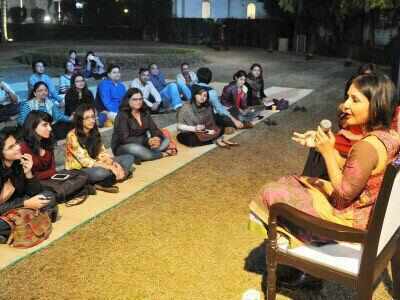
From conniving aunts to mysterious people in family photograph authors Anuja Chauhan and Navtej Sarna discussed what it takes to write about families and family histories in the world of fiction, with Indrajit Hazra at the Times LitFesr on Sunday.
Family features very strongly in the works of both the authors. Talking about how they deal with as Hazra puts it,”a massive beast called family” Sarna said “it would be difficult to think of any fictional book which in some way or the other is not dealing with family.
Whether it is a troubled childhood, a divorcing couple or an extramarital affair or a three generation saga whatever you call it I think its family. Infact family history is becoming a genre more in the non-fiction sense.
Increasingly with the digitization of our records more and more people are digging into family history beyond what they could hear from their grandmothers. So I think that it is a kind of an accepted non-fiction writing today.”
Anuja Chauhan said that she treaded into writing about families because of the family stories she heard.
“The first stories you hear are family stories. All the did you knows and don’t knows. Everyone’s memory of the youth is quite fresh and it comes back when you write.
Nobody is complete till they are in there with their little venn diagram of intersecting circles which is the people touch.” she said.
The authors also spoke about how their personal family histories and instances shaped their writing. Sarna’s short story called ‘Death in Winter’ which he wrote on the 1984 riots draws some influence from his family history during partition. “ While I was trying to decide on the structure of the story it suddenly came in a big flash and linked to my family’s history of 1947 and so without sort of meaning to I began writing what i had heard from my grandmother .It all mixed into this fictive context. In a way you can tell real history if you are not pushing it too much.” he said.
In her book ‘Those Pricey Thakur Girls’ Anuja Chauhan sets the family in pre-liberalization days. The authors feel that locating a family in a particular era also in a sense gives glimpses of the way life was lived in that era and saves history from being lost.
“While writing I like to look for things that deserve their little place like pre-liberalization days. I felt my children needed to know about those times.I wanted to write an ode to the 80s, those time of lush bungalows in Delhi and times of the trunk calls.” she said
End of Article
FOLLOW US ON SOCIAL MEDIA
Photostories

Hot Picks
TOP TRENDING
Popular Categories
Hot on the Web
Top Trends
Trending Topics
Devara CollectionBigg Boss Kannada 11 Launch Live UpdatePawan KalyanJungle SafariStree 2 OTT ReleaseRose GardenDevara CollectionOTT Release MovieMasala OmeletteEmergencyDevaraTaaza Khabar 2 Twitter ReviewDevara Movie ReviewHealthy RaitasSwatantrya Veer SavarkarColdplay India tour 2025Smartphone DealsApple Macbook Air M1Amazon SaleWordle Answer
Living and entertainment
Latest News
TN: Sri Lankan Navy apprehends 17 fishermen off Rameswaram coast, seizes 2 boatsIndia vs Australia: Can Akash Deep make the difference Down Under?India shooter reports late for final, misses potential medal at Junior World ChampionshipsExclusive - A sneak peek into Zain Imam aka Teerth’s makeup room on the set of Suman IndoriThree killed, four injured after bus collides with truck in Bihar's KaimurSivakarthikeyan imitates Kamal Haasan at the 'Amaran' promotional event, gets praises‘Devara’ stars Jr. NTR and Saif Ali Khan try their hand at Punjabi and BhojpuriAir Canada fined for breaching restricted Iraqi airspaceStress could be your heart's worst enemyI Say ‘Khamosh’ to Sonakshi: Zaheer Iqbal - ExclusiveNFL Analyst Sparks Controversy with Deshaun Watson and Joe Flacco Comparison over $230 Million ContractHaryana polls: Explain the 'compelling' circumstances, CEO asks authorities on Dera Sacha Sauda chief Ram Rahim's plea for temporary releaseUnion minister Nitin Gadkari invites Sachin Tendulkar for coffee at newly inaugurated bird park in Maharashtra's JamthaDrake Hogestyn, beloved 'Days of Our Lives' star, passes away at 70Fire Country Season 3: Bode's road to freedom, new characters, and trouble ahead'IPL is getting stronger': Irfan Pathan supports ban on players opting out after auctionVirginia jury awards $300 million to women alleging sexual abuse at children's hospitalShah Rukh Khan and Suhana Khan's film 'King' to be announced on SRK's birthday: Report
Copyright © 2024 Bennett, Coleman & Co. Ltd. All rights reserved. For reprint rights: Times Syndication Service