
- News
- In the Indian democracy, space for dissent is shrinking: Ashok Vajpeyi
This story is from November 26, 2017
In the Indian democracy, space for dissent is shrinking: Ashok Vajpeyi
Perumal Murugan, Ashok Vajpeyi, Hansda Sowvendra Shekhar and N Ram—got together to brainstorm at the Times LitFest Delhi.
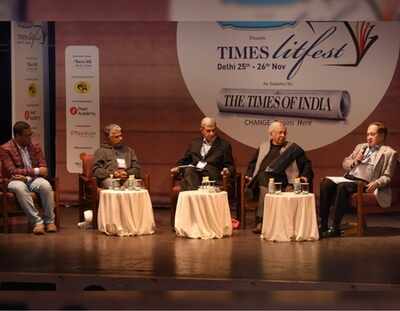
Original Times litfest 2017 (from left) Hansda Sowvendra shekhar , Perumal Murugan, Sanjiv Sankaran (TOI) Ashok Vajpeyi, N.Ram during 2nd day of Times litfest 2017 at India Habitat Centre in Delhi
Vajpeyi said dissent is part of the Indian tradition because three great religions dissented from Hinduism—Buddhism, Jainism and Sikhism.
“However, space for dissent was always contested. Yet, some values from our great Indian tradition also entered our Constitution apart from the ideals that inspired our national movement. In the last 100 years, Indian literature has been one of dissent. Most writings in free India have been anti-establishment,” he said.
The noted litterateur noted that the state was always interfering. “But in our current climate, both the state and the communities are interfering,” Vajpeyi said.
Shekhar, whose book was banned recently, said in his case both the ruling party and the opposition worked together to get his book banned.
Perumal Murugan, who was welcomed with a thunderous applause, said that social media has been a big factor in the shrinking of the space for dissent. “Society is unequal, riddled by caste. Social media noise has accentuated those inequalities,” Murugan said.
N Ram, the former editor of
The Hindu
, recounted his own experience of investigating the Bofors scam in the 1980s, and fighting numerous lawsuits slapped on him and his publication by the Jayalalitha government in the past. “But the hardships we faced in the past are nothing when compared to what people are facing today. It was never this bad,” he said.Ram said laws in India have been illiberal and haven’t seen much change since colonial times. “The changes have been status quo-ist, not transformative. But even when there have been changes, ground reality has always been different,” he said.
Ram also pointed out the current political environment going against free speech and dissent. “Look at the
Padmavati
episode. We all must hang our heads in shame. It’s all BJP governments that have declared bans on it even before knowing what it contains. How is it different from Ayatollah Khomeini (who had issued a fatwa against Salman Rushdie for writing Satanic Verses
)?” Ram said.Vajpeyi added to it and said, “One good thing about all governments is that they are all foolish. So, if you are clever, you can escape attention and still say what you want to say. But in this fight for our democratic space, the television media has really betrayed us. It’s only the print media that’s still raising issues,” Vajpeyi said.
Ram also pointed out the “chilling effect” of crushing of dissent on writers. Murugan added to that and said it has affected him and his writing a lot as now he is conscious about what he is writing.
Vajpeyi said this is really unfortunate as writers have always been outrageous, whether Kalidasa or Kabir. “Unless you are fearless in this environment, what good are you as a writer?” he said.
End of Article
FOLLOW US ON SOCIAL MEDIA
Photostories

Hot Picks
TOP TRENDING
Popular Categories
Hot on the Web
Top Trends
Shantanu NaiduRussell WilsonsTom BradyAUS vs PAK Live ScorePakistan Cricket FanSuryakumar YadavNobel Peace PrizeMahadev Betting AppNew UPI Transaction LimitRatan Tata DiesPM ModiUGC NET Result 2024Management Colleges of IndiaTop Medical Colleges of IndiaTop Engineering Colleges of IndiaTop Pharmacy Colleges of IndiaLive Cricket Score
Trending Topics
Diwali WishesJigra ReviewDussehra WishesVettaiyan OTT ReleaseVettaiyan CollectionVettaiyan ReviewBlack Movie ReviewDevara CollectionBigg Boss 18Deepika PadukoneShraddha KapoorRatan Tata Passed AwayJigra Movie ReviewVettaiyan Movie ReviewSwatantrya Veer SavarkarDussehra 2024Elon MuskKing Legacy CodesUltimate Football Codes October 2024Wordle Answer
Living and entertainment
Latest News
Navratri 2024: Jaya Bachchan and Shweta Bachchan join Rani Mukerji at the Durga puja pandalInternship scheme: 193 companies post over 90,000 slots on portalOff Argentina's Patagonian coast, whales and their calves dive deep for foodApplications for new power connections among services moved exclusively onlineSara Arfeen Khan opens up about converting to Islam; says, 'I read all holy books and attended a lot of religious debates before converting'Amitabh Bachchan, Rambha, Khushboo and others check in on Govinda after gun misfire incident - ExclusiveCops on unusual hunt: For denturesHappy Dussehra 2024: Top 50 Wishes, Messages, Images and Quotes to Share with Your Loved OnesFortified-food plan faces questions from two PM panel membersKrushna Abhishek shares a heartwarming post for mama Govinda; says 'jab body mein adha blood supremely talented actor Govinda ka ho...'Could Tyreek Hill Return to the Chiefs? Cryptic Posts Fuel Trade Speculation'All is well': Ajit Pawar calls claims of rift in Mahayuti 'baseless'With special access card, disabled people can skip Exposition queuesForex reserves drop $3.7 billion in week, most since start of August'Jigra' box office collection day 1 early estimate: The Alia Bhatt starrer faces tough competition with Rajinikanth's starrer 'Vettitan' and Rajkummar Rao's Vicky Vidya Ka Woh Wala Video'Robert Gronkowski Reacts to His Hilarious Impression in FX's American Sports Story: Aaron HernandezIf Rahul Gandhi fails to deliver, INDIA bloc may make LoP post rotational: BJP‘Kallanum Bhagavathiyum’: The Vishnu Unnikrishnan and Mokksha starrer is set to get a sequel
Copyright © 2024 Bennett, Coleman & Co. Ltd. All rights reserved. For reprint rights: Times Syndication Service