
- News
- lifestyle
- travel
- things-to-do
- Meet 7 birds of Indian forests that are also masters of camouflage
Meet 7 birds of Indian forests that are also masters of camouflage
Meet 7 birds of Indian forests that are also masters of camouflage
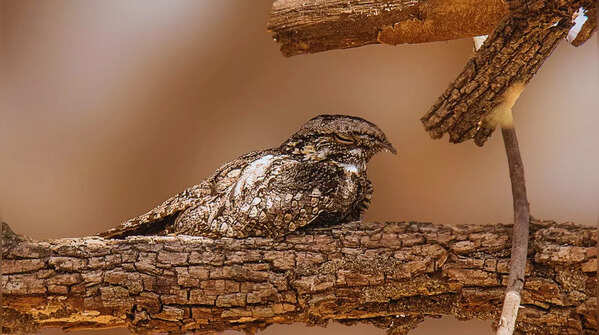
India’s forests conceal some of the most elusive birds on Earth. They have mastered survival not through speed, strength, or aggression, but through invisibility. And by invisibility, we mean camouflage. These birds rely on extraordinary camouflage, with plumage that mimics tree bark, dry leaves, forest soil, rocks, and sometimes shifting shadows. Many of them are actually widespread across the country, yet even seasoned birdwatchers often miss them entirely. Spotting these birds is less about luck and more about knowing where to look, slowing down, and learning to recognise shapes that seem to dissolve into the forest itself.
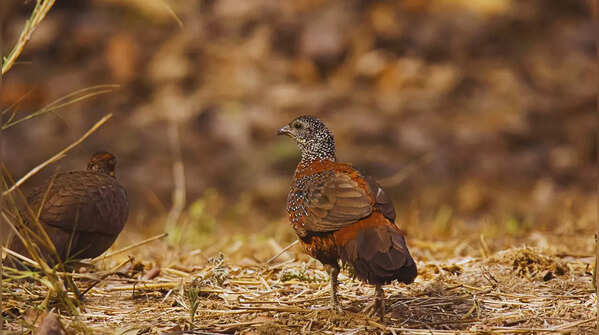
Painted spurfowl
Find them in the Western Ghats, especially in Kerala, Karnataka, and Tamil Nadu. They are endemic to India, and are shy and thrive in dense undergrowth within evergreen and semi-evergreen forests. Their earthy plumage helps it melt into the forest floor, where it moves cautiously through thick vegetation. It’s rare to spot them directly. That’s because they prefer to hide rather than fly.
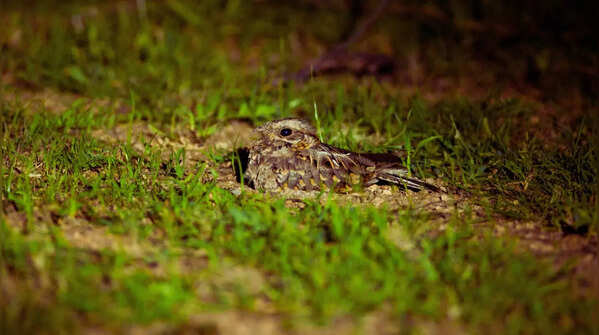
Indian nightjar
Found across most of Indian plains, forest edges, and scrublands, the Indian nightjar is rarely noticed. During the day, it rests directly on the ground along forest paths, rocky clearings, or open scrub. But it’s difficult to spot them because they choose locations that perfectly match their cryptic plumage. On top of that, they have a flattened posture that makes it difficult to distinguish from the surrounding terrain. You will know of its presence if it moves.
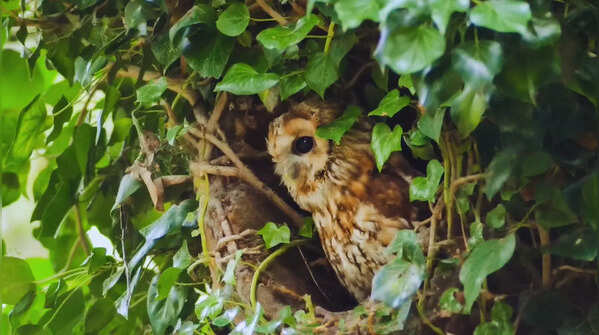
Tawny fish owl
In the Himalayan foothills, northeast India, and parts of eastern India, the tawny fish owl inhabits riverine forests and wooded wetlands, often near slow-moving water bodies. Its muted brown tones help it to blend into tree trunks, riverbank vegetation, and shaded rocks. Unless you know what you are looking for, high chances are, you won’t spot. But try. Though it is large in size, it remains remarkably difficult to spot, and the fact that it prefers dark, shaded areas, does not help.
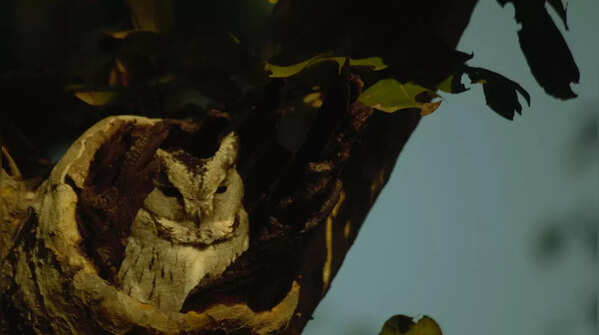
Indian scops owl
In the forests of central India, Western Ghats, and eastern India, this small owl relies almost entirely on camouflage. By day, it roosts close to tree trunks, or inside a tree hollow. When out of the hollow, it resembles a broken branch or knot in the bark. Its finely patterned plumage makes it nearly invisible.
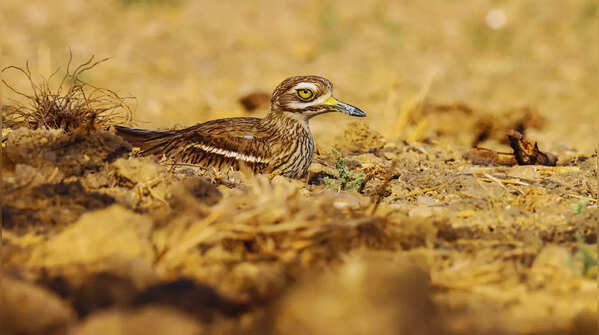
Indian thick-knee
While visiting dry forest edges, scrublands, rocky areas across peninsular India, scan the ground carefully. Although more commonly associated with open landscapes, the Indian thick-knee uses camouflage with remarkable effectiveness in wooded scrub and dry forest floors. During daylight hours, it mostly remains motionless, relying on its stone-coloured plumage to blend into gravel, soil, and leaf litter. However, its large eyes and upright posture may catch your attention.
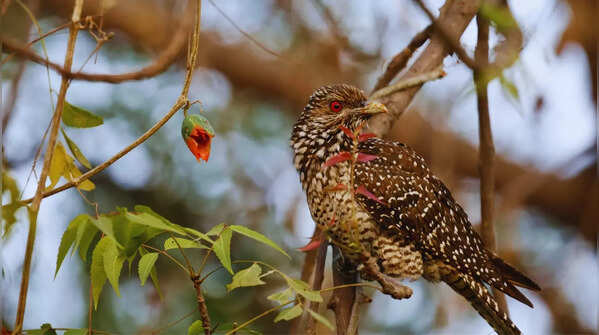
Asian koel
While the male Asian Koel is glossy black and conspicuous, the female is a master of camouflage. The female’s streaked brown and cream plumage blends effortlessly with dense foliage and tangled branches. Follow the call, and look up at the forest canopies and wooded areas, and squint a little if you must. Sometimes, the eyes are the first thing you will notice. This camouflage is particularly important during the breeding season, when she moves stealthily through forest canopies to lay eggs in host nests.
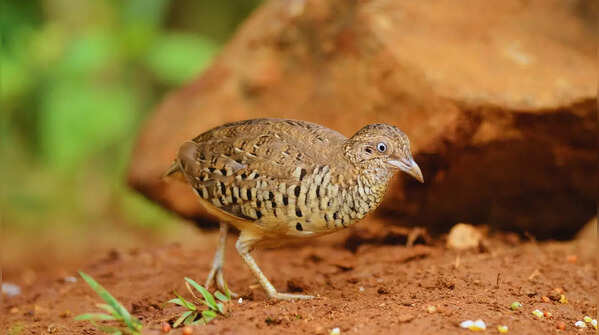
Asian barred buttonquail
Grasslands and forest undergrowth across central and southern India are where you will get to see these birds. These are one of the smallest and most elusive ground birds in India, add to that fact that they are extremely difficult to detect. Asian barred buttonquail prefers dense grass, forest undergrowth, and leaf-strewn ground, where its finely barred plumage blends seamlessly into the surroundings. Whether you are looking at a pile of dried leaves or a bird, it will take you some practice to find out. And that’s because, rather than flying, it freezes in place or moves silently through cover. Stealth mode activated!
Featured In lifestyle

MORE FROM ETIMES
life & style