Trending
New US visa rules to affect Indian travellers: Longer waiting period, no overseas interviews
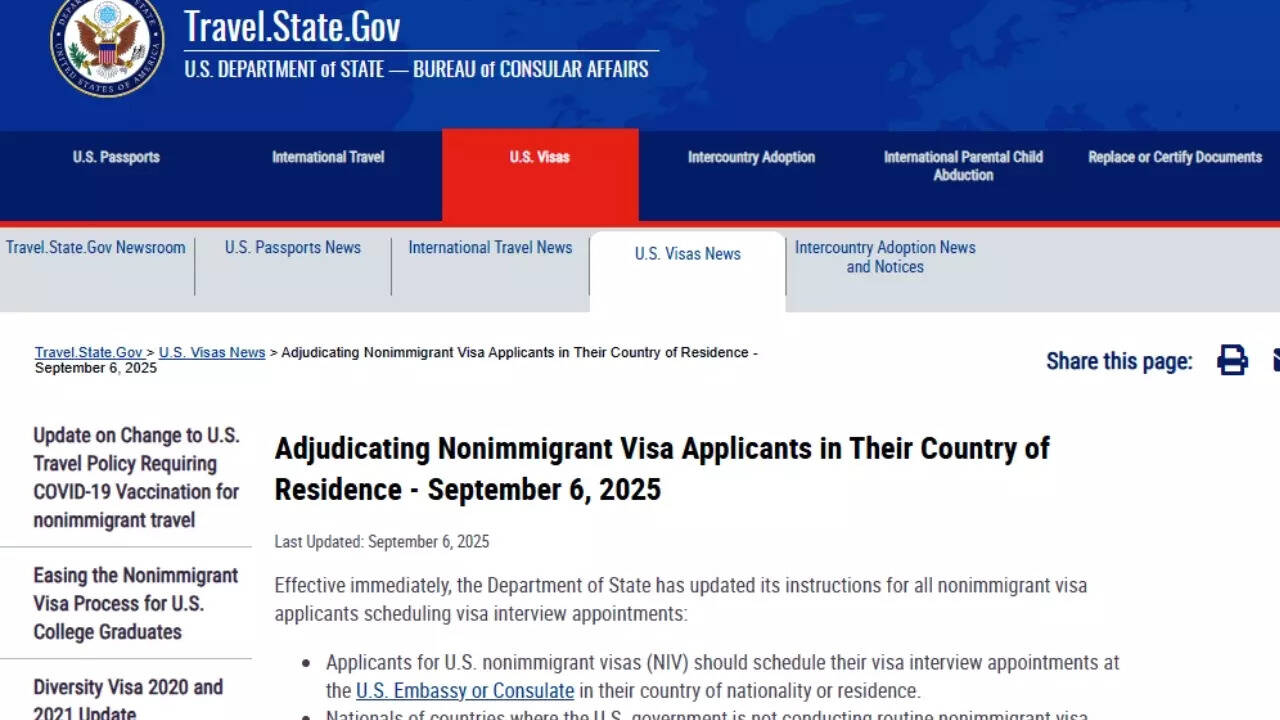
The US State Department has implemented new rules mandating visa interviews in the applicant's country of citizenship or legal residence, eliminating the option for quicker appointments abroad. This change impacts Indian travelers significantly, causing potential delays due to already lengthy wait times for B1/B2 visa interviews.

How does it affect Indian applicants?
Exceptions to the rule

About the AuthorTOI Lifestyle Desk
End of Article
Follow Us On Social Media
Photostories
Tired of too many ads?go ad free now
lifestyle videos
Featured In Lifestyle

Tired of too many ads?go ad free now
MORE FROM ETIMES
life & styleHot on the Web
Pankaj Dheer Death NewsKidney Detox FoodsMadhumati Death NewsLiver HealthFatty Liver DiseaseMoringa For Hair GrowthDiwali 2025Lemon Water BenefitsD'Angelo Death NewsKaty PerryAkshay KumarColon Cancer SymptomsCalcium Deficiency SymptomsLiver CancerBlood Sugar ControlDe De Pyaar De 2 TrailerHimesh ReshammiyaIndian RailwaysSunjay KapurHair Growth OilT RajenderInternational DestinationsChinese HoroscopeWalking Health BenefitsBigg Boss 19Kantara Box Office CollectionSunny Sanskari Ki Tulsi Kumari CollectionAlec BaldwinIdli Kadai Box Office CollectionOG Box Office CollectionElephant Safari National ParkTips To Improve Child HealthMaple SyrupNight Flights Are CheaperChronic ConstipationWeight GainIranian SnakeDark Patches On SkinRishi SunakDiwali AI Photo PromptsDaily Exercise For Heart Health
Trending Topics
Latest MoviesBollywood MoviesHollywood MoviesTamil Movies 2025Telugu Movies 2025Malayalam Movies 2025Kannada Movies 2025Marathi Movies 2025Bengali Movies 2025Top Rated Movies 2025Best Hindi MoviesBest English MoviesBest Telugu MoviesBest Tamil MoviesBest Malayalam MoviesBest Kannada MoviesBest Bengali MoviesUpcoming Hindi MoviesBest Movies Of All TimeBest Hindi Movies of All TimeLatest English MoviesLatest Malayalam MoviesEnglish TV NewsTamil TV NewsTelugu TV NewsMalayalam TV NewsKannada TV NewsMovie ReviewsBhojpuri Cinema NewsGujarati Cinema News
Popular Categories
Viral NewsK Pop NewsWeb Series NewsAnime NewsUpcoming English MoviesUpcoming Tamil MoviesUpcoming Telugu MoviesUpcoming Malayalam MoviesUpcoming Kannada MoviesFashion TipsTravel NewsEntertainment NewsBollywood NewsTollywood NewsKollywood NewsMollywood NewsFood NewsLatest Hindi MoviesLatest Tamil MoviesParenting TipsHome RemediesWeight LossBeauty TipsParenting TipsHindi VideosHindi Video SongsBhojpuri Music VideosLatest Telugu MoviesBhojpuri Music VideoHindi TV News
Latest News
Malvika Sharma's Kannada debut: Actress to star in Ganesh and Srinivas Raju film - ReportChhattisgarh bags award as top in nation in PM-JAY implementationBrittany Mahomes’ reaction to Taylor Swift’s surprising Showgirl gift reveals what fans never knew about their friendship3 simple expert-approved vegetarian foods to meet your daily protein needsNHL trade rumor: Is the Maple Leafs GM Brad Treliving planning to trade block Nick Robertson again?Calangute liquor shops shut for booze sale after 10pmMass surrender of Maoists in Bastar, 78 including 42 women cadres quit armed struggleJaakko Ohtonen and Mariela Garriga board Mel Gibson's 'Resurrection of the Christ'Surprising health benefits of eating avocados, top US doc explainsExplained: Is Virat Kohli leaving RCB and retiring from IPL? 'He will play his last match ... '10 reasons your teeth turn yellow and how to prevent themBattleground Bihar: Prashant Kishor quits race, JD(U) bets big on newcomers - everything that happened todayCEO of Tesla-rival company issues ‘software warning’ to all EV makers: 'Automakers who don't...'SC nod on green crackers: TMC's Mahua Moitra says no more 'moaning' about air quality; Delhi CM Rekha Gupta thanks top courtDelhi CM: Nitish brought Bihar back on track, Modi provided pace to its developmentTHIS legendary actor rehashed his dialogues in Punjabi; his son reveals the secret behind his natural actingMemphis Grizzlies vs Charlotte Hornets Preseason Matchup Injury Report: Who’s Playing, Who’s Out, and More (October 15, 2025)Ahaan Panday shares NEW rugged look, prepares for Ali Abbas Zafar’s next film