
- News
- lifestyle
- travel
- destinations
- Why are stepwells a beautiful piece of history? From the oldest to the one which is a UNESCO heritage- 5 iconic stepwells
Why are stepwells a beautiful piece of history? From the oldest to the one which is a UNESCO heritage- 5 iconic stepwells
Why are stepwells a beautiful piece of history? From the oldest to the one which is a UNESCO heritage- 5 iconic stepwells
Long before modern reservoirs and pipelines transformed how cities accessed water, India perfected an ingenious solution that blended utility with architectural brilliance, the stepwell. Known by different names across regions, including baoli, vav and pushkarni, these subterranean structures were designed to store water year-round while offering respite from the scorching heat. Over centuries, stepwells evolved into elaborate spaces for social gatherings, religious rituals and artistic expression, adorned with carvings that easily rivalled temple architecture.

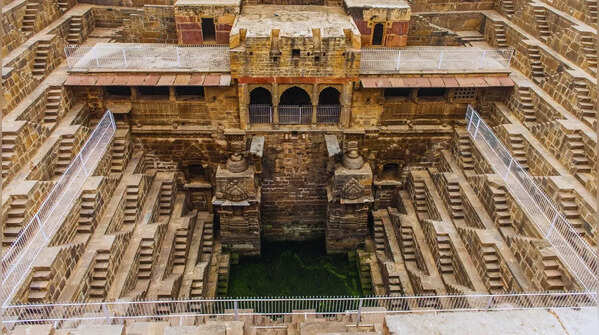
Chand Baori, Rajasthan
Often considered one of the oldest and deepest stepwells of the country, the Chand Baori at Abhaneri, Rajasthan, is believed to be built during the 9th century during the rule of King Chanda from the Nikumbh dynasty. With an astonishing 3,500 perfectly symmetrical steps arranged across 13 storeys, the structure goes down nearly 30 meters underground. Chand Baori was built primarily for water conservation in the arid landscape of Rajasthan, but it also served as a cool retreat for locals. The temperature near the bottom is significantly lesser than at ground level, and thus stands as a natural refuge in peak summers

Mata Bhavani’s Stepwell, Gujarat
It is situated in Ahmedabad and, therefore, is considered to be from the Solanki period, probably built in the 11th century. Devoted to Goddess Bhavani, this structure indicates that step wells built during those days were used for two purposes: as a source of water and as a holy place. Although less elaborate compared to the step wells of later periods, its design strongly pertains to the ritualistic practices with a stepped descent. Essentially, the structure explains the very early evolution of stepwell architecture in western India.
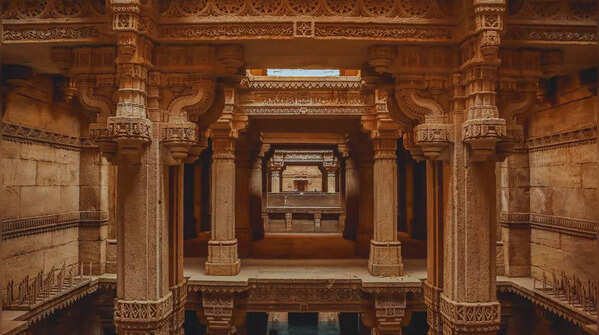
Adalaj's Step Well, Gujarat
Located just on the outskirts of Ahmedabad, the Stepwell at Adalaj is known among the most ornate stepwells in India. The five-story stepwell dates to the year 1499 and was built during the reign of Queen Rudabai. The main reason why the stepwell at Adalaj garners popularity is because it has a smooth blend of Hindu and Islamic styles. This blending could be correlated to the change in regime at that time. Not just aesthetically pleasing, the stepwell included a wonderful system that provided both filtered air and water.
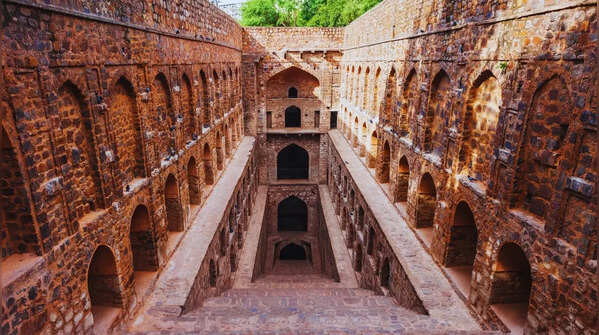
Agrasen Ki Baoli, Delhi
Agrasen ki Baoli is a unique example of contrasts between old engineering skills and urbanization. Despite the inability to determine its exact origins, this water stepwell is believed to have existed during the medieval era and was named after Maharaja Agrasen. From the main Janpath Market area in Connaught Place, this baoli is just 1.3 km away. Interestingly, many believe that Agrasen ki Baoli is haunted by the spirits of people long gone. The 60-metre-long structure features three distinct levels lined with arched niches, giving it a stark yet elegant appearance. Unlike most stepwells, which are normally located in rural or semi-arid areas, Agrasen ki Baoli is situated right in the midst of a bustling city.

Rani Ki Vav, Gujarat
At the top of the list is Rani ki Vav in Patan, Rated as one of the world’s best examples of stepwell architecture; it is a UNESCO World Heritage site. Built by Queen Udayamati as a tribute to King Bhima I of the Solanki dynasty during the 11th century AD, it can be described as a reversed temple with seven levels of Vishnu idols and over 1,500 sculptures of various deities, Apsaras, as well as other mythological creations, symbolizing a high level of artistic maturity. The historic monument was buried under silt due to the annual flooding of the Saraswati River but was well preserved until it was found in the 20th century.
Featured In lifestyle

MORE FROM ETIMES
life & style