
This is what Rashtrapati Bhavan's 'At Home Reception' invitation bag contain: It is so heartwarming
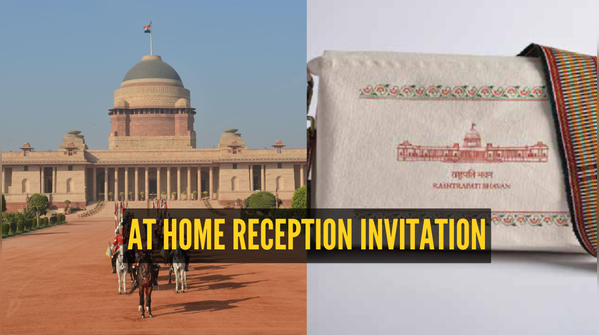
The celebration of Ashtalakshmi states of north east India
While the world saw the cultural diversity of India at the 77th Republic Day Parade, what many didn't see was the 'At Home Reception' invite of President Droupadi Murmu, an evening gathering where all the dignitaries were present, including Prime Minister Narendra Modi and the Chief Guests—European Commission President Ursula von der Leyen and European Council President António Costa. Carefully crafted, the invitation bag celebrates northeastern India in the most beautiful manner. As per the details published on the official website of Rashtrapati Bhavan, the Ashtalakshmi states are a celebration of our cultural diversity and flourishing traditions. The invitation reflects the distinctive traditions that shape daily life in each state of India's North Eastern region, unique handicraft techniques, and the natural ecosystems that sustain their homes. Curated by the National Institute of Design, Ahmedabad, under the Department of Promotion of Industry and Internal Trade, Ministry of Commerce and Industry, Government of India, it is recognised as an Institution of National Importance.
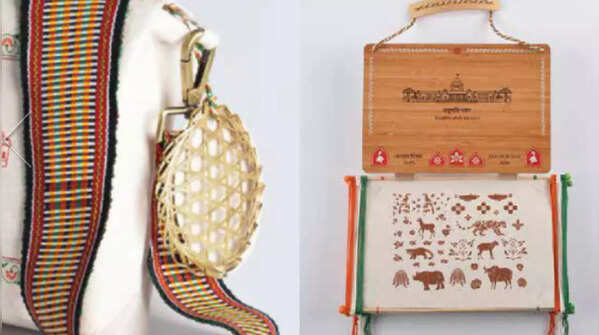
Invitation cover and box
As per the website, the invitation box celebrates bamboo in a big way. The invitation box uses a woven bamboo mat created in a loom with dyed cotton threads on the wrap, and fine bamboo splits on the waft, a technique commonly used in the state of Tripura. The nametag on the outer part of the bag is also made with handmade paper and is accompanied with a bamboo artwork. The decorative motifs on the cover and the box were inspired from the Assamese manuscript painting style.
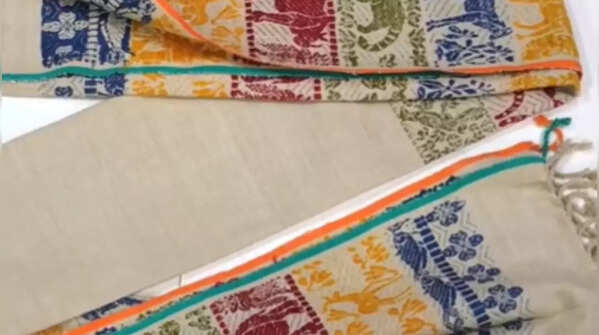
Eri Silk Stole
It's a stole designed with Eri Silk, often called Peace Silk or Ahimsa Silk and is a vital textile tradition and economy of north-east India. The motifs of stole includes Tripura nagkesar flower, Indian butter catfish, Nagaland's rhododendron flower, mithun, Mizoram's red vanda orchid, Himalayan serow, and Manipur's Shirui lily, and sangai deer.
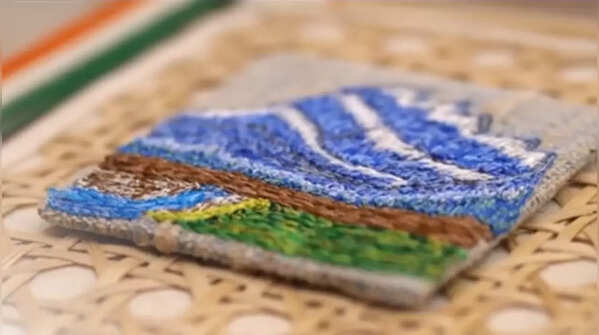
Woven Nettle Fabric and Embroidery, Sikkim
Sikkim's distinctive Lepcha weaving or 'thara' traditionally uses yarns from the stinging nettle plant. Nowadays, in modern Lepcha weaving, the use of cotton and cool nettle yarn is used to create colourful fabrics on loin-looms.
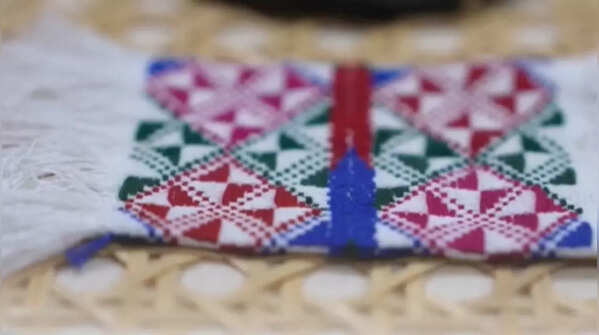
Handwoven Puan Chei, Mizoram
It is a shawl or wrap-around skirt. Puan simply refers to clothing worn or used by the Mizo people. The suffix or prefix attached to puan indicates its specific purpose. Chei means to decorate and Puan refers to the more ornate garments worn by women on important occasions.
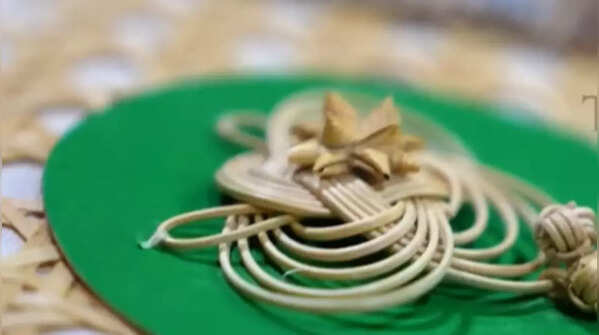
Cane & Bamboo Jewellery, Tripura
As per the invite, in Tripura, tribal craftspersons create exquisite jewellery and decorative items with bamboo and cane. These innovative designs demonstrate the imagination, dexterity, and skill of the craftspersons' of the state.
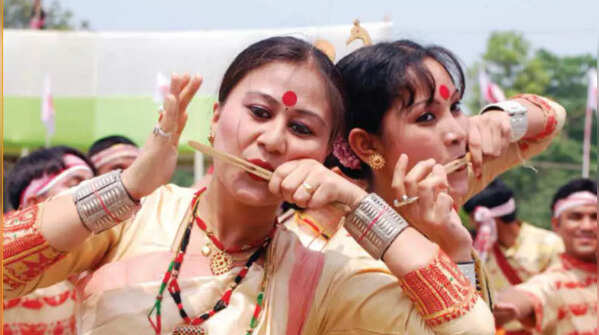
Gogona-Bamboo Jaw Harp, Assam
It is a jaw harp made of bamboo and is an iconic part of celebrations like Rongalo Bihu.
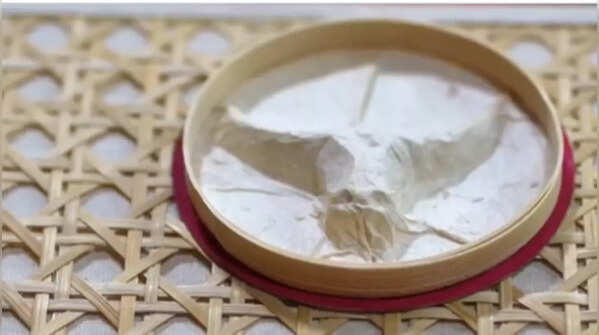
Mon Shugu Paper, Arunachal Pradesh
In Arunachal Pradesh, the Monpa people forage in the forest to gather the inner bark of the Shugu Shenge shrub. The bark is boiled, beaten into pulp and then diluted. The resulting material has high tensile strength, making it resistant to tearing and is used to make handmade paper.
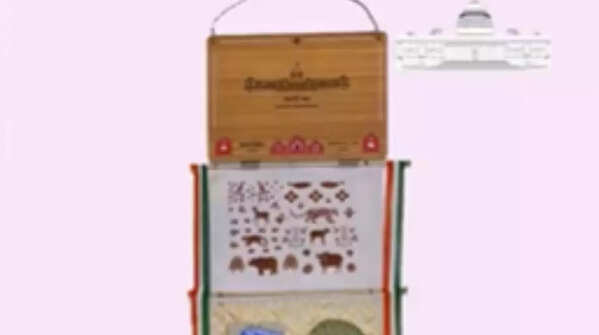
Wall Hanging Scroll
It is constructed using an octagonal bamboo weave pattern that unfolds to reveal an artistically curated display of handcrafted creations from each state of India's North Eastern region. The structure uses tri-colored threads and evokes the shape of the loin-loom, a portable tool used particularly by women in the region.
Images Courtesy: X/rashtrapatibhvn and Rashtrapati Bhavan website
Featured In lifestyle

MORE FROM ETIMES
life & style