
5 Indian women painters who reshaped modern art and deserve more spotlight
5 Indian women painters who reshaped modern art and deserve more spotlight
India’s modern art history is often reduced to a brief list of celebrated men. But alongside them, and frequently despite structural barriers, women painters were carving out bold, original visual languages of their own. Across decades marked by political change, cultural negotiation, and global exchange, these artists used color, form, and subject matter to question norms, explore identity, and widen the very idea of what Indian art could be. Some trained abroad and returned with fresh perspectives; others rooted their work firmly in local life while pushing aesthetic limits. Their contributions did not merely supplement the canon; they helped reshape it. Here are five Indian women painters whose impact deserves far more attention than it usually receives.
Amrita Sher-Gil
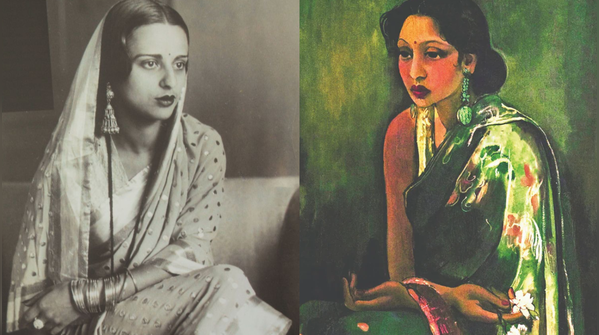
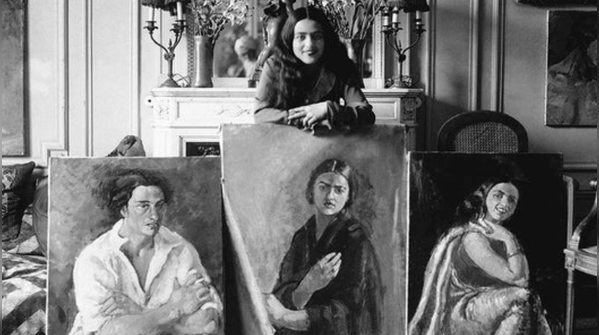
Often called India’s first great modernist, Amrita Sher-Gil fused European academic training with a profound engagement with Indian life. Educated in Paris and influenced by post-Impressionists, she returned to India in the 1930s, determined to paint rural communities, women at rest, and everyday intimacy with dignity rather than exoticism.
Her colours gradually turned warmer and more grounded, shaped by Indian miniature painting and mural traditions. Paintings such as Three Girls and Bride’s Toilet feel quietly intense rather than dramatic, studying social realities with a steady, unsentimental eye. Although her life ended tragically at just 28, her determination to depict Indian subjects through a modern, international visual language altered the course of twentieth-century Indian art, leaving a legacy far larger than her short career might suggest.
Arpita Singh
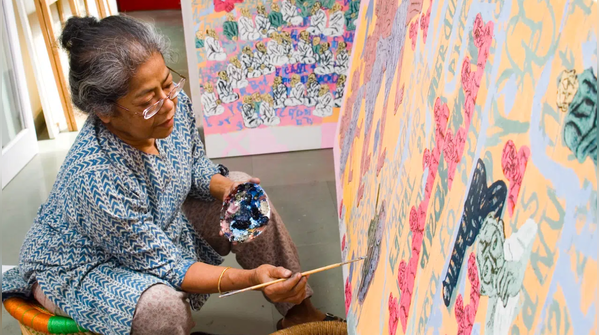
Arpita Singh’s canvases unfold like dense visual diaries, crowded with floating figures, handwritten text, maps, weapons, domestic objects, and mythic references. Emerging in the 1960s, she analysed and resisted neat stylistic categories, instead borrowing from folk idioms, miniatures, surrealism, and political cartoons to build her own layered visual language.
What sets Singh apart is her unflinching portrayal of vulnerability and violence in everyday life, especially through female protagonists. Her women are anxious, amused, defiant, fearful, and rarely idealized. Over decades, Singh has created a visual language that feels intimate yet politically alert, expanding what figurative painting in India could communicate.
Image credit: India Art Fair
Nalini Malani
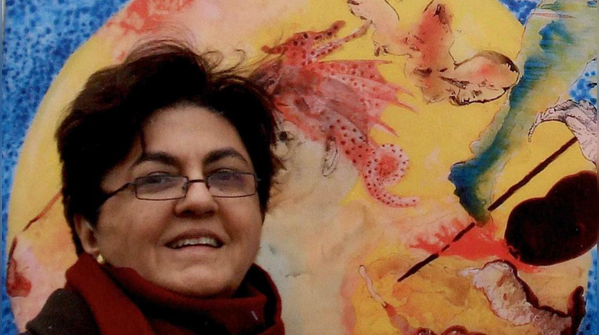
Although widely known today for immersive installations and shadow plays, Nalini Malani began as a painter and draftswoman, and her painterly sensibility remains central to her practice. Trained in Bombay during the charged decades after Independence, she turned to myth, memory, and feminist critique long before such themes were fashionable in Indian galleries.
Her imagery, fragmented bodies, goddesses in revolt, ghostly faces, draws connections between ancient epics and modern trauma: Partition, war, displacement, and gendered violence. Malani’s work helped push Indian modernism beyond formal experimentation into urgent political territory, insisting that art could be both visually lyrical and socially confrontational.
Image credit: Nalini Malani
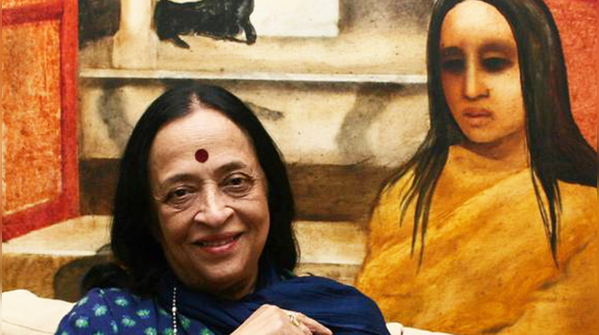
Anjolie Ela Menon
Anjolie Ela Menon carved out a distinct path with her haunting, fresco-like surfaces and contemplative figures. Inspired partly by Byzantine icons and European mural traditions, she developed a muted, layered style that felt timeless yet unmistakably modern.
Her subjects, nuns, women by windows, and anonymous city dwellers, often appear withdrawn, caught in moments of introspection. At a time when abstraction dominated elite art circles, Menon persisted with figurative storytelling, proving that narrative painting could still evolve formally. Her quiet emotional intensity influenced generations of artists who sought alternatives to loud spectacle.
Image credit: Aicon Gallery
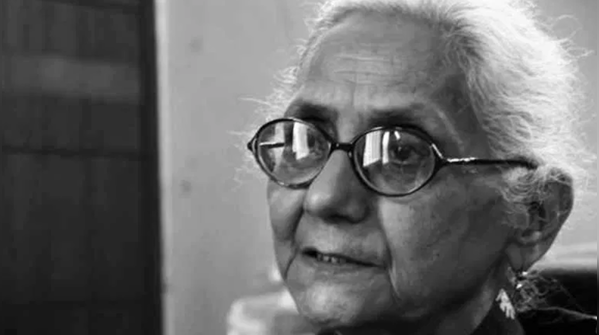
Gogi Saroj Pal
Gogi Saroj Pal’s work stands out for its bold engagement with female desire, rage, aging, and transformation, subjects rarely explored openly in Indian painting when she began in the 1970s. Drawing from mythology, she reimagined figures like Kamadhenu or Kinnari as emblems of autonomy rather than obedience.
Her muscular brushwork and surreal hybrids favored complexity over sentimentality, placing women’s inner lives at the centre of modern Indian visual culture. Pal’s legacy rests not only in what she painted but also in the space she carved out for women artists to speak about the body, identity, and power on their own terms.
Image credit: JNAF
Featured In lifestyle

MORE FROM ETIMES
life & style