Trending
This story is from November 2, 2019
Will female comedians ever have the last laugh?
'Who is funnier: men or women?' - this was the title of a recent survey by researchers from Aberystwyth University and the University of North Carolina, that eventually concluded - with a little scientific basis - that '63% of men were funnier than the average woman'. The study has sparked outrage, with several people questioning the methods behind it - a random selection of people, rather than professional comedians, being asked to rate men and women's humour, without knowing their gender beforehand.

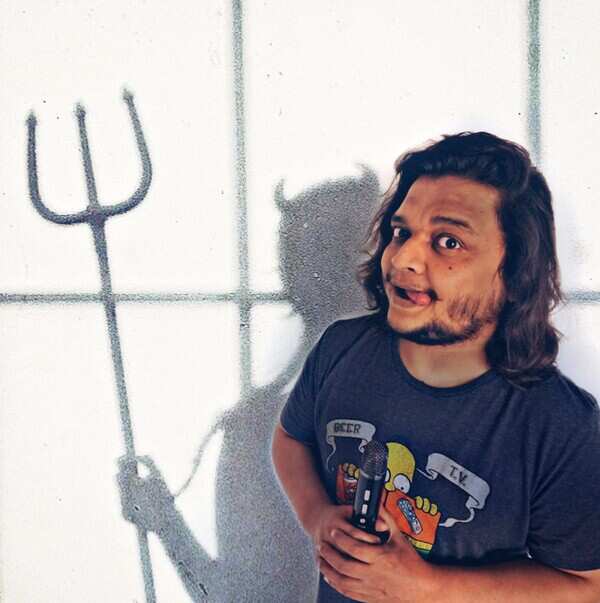
In fact, city-based comedian Sudhanshu Ramteke dismissed the survey itself as a joke.

However, another reason for the outrage is the fact that the question - 'which gender is funnier?' - is still being asked in 2019, and the stereotype 'men are funnier than women' refuses to die.
Here in India, artists like Aditi Mittal, Bharati Singh, Kaneez Surka, Radhika Vaz, Sugandha Mishra, Sumukhi Suresh, Neeti Palta, Vasu Primlani, Mallika Dua, Urooj Ashfaq, and Anu Menon have successfully secured a place for themselves on stage, besides TV and the webs. Yet, they continue to encounter unfunny cliches, such as 'women can’t crack jokes' and 'female comedians can’t pull the crowd'. Why?
'WOMEN START FROM ZERO, WHILE PEOPLE ARE MORE WILLING TO GIVE MEN A CHANCE'
"I think men are funnier than women," says female comic Vasu Primlani in her usual sarcastic style. "Here is the evidence: men think they are superior to women, men invented the nuclear bomb, men are taken care of by women all their lives, and expect to be taken care of their entire lives like babies. In addition to this, men make sure women don’t get educated, don’t go out, don’t speak, don’t go out at night, and don’t perform. They don’t let female comedians come up, and then conclude that they are funnier than women.”
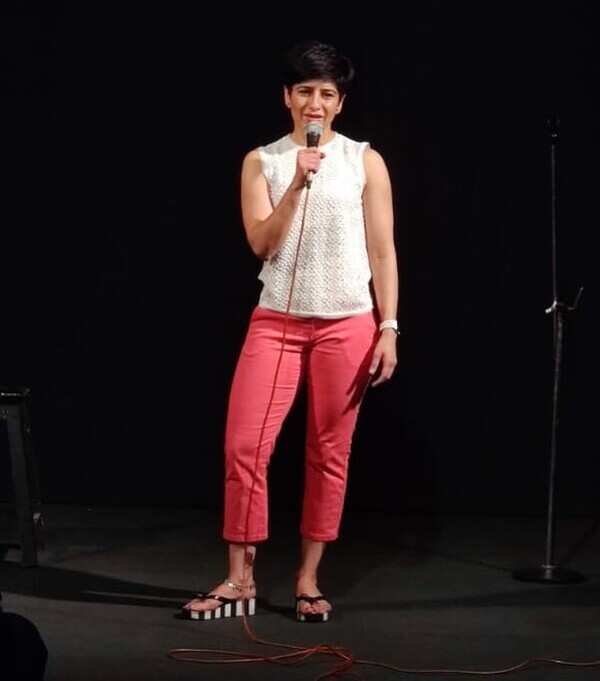
Adding to this, Neeti Palta, stand-up comedian and writer, who has been a part of the comedy scene since it's inception in India, says, “When I started out about a decade ago, I was the only woman doing comedy in Delhi, while Aditi was there in Mumbai. I had to start from the grassroots level - from zero, literally. It was easier for guys to start, as people were more willing to give them a chance. To the men, they would say, “Chalo dekhte hain, yeh kar sakta hai ki nahin”. However, when I would approach them, their reaction would be, 'Yeh?!'"
“Not just comedy, in most scenarios, the default perception is that 'a man can' and 'a woman can’t'. In the same way, a man is assumed to be 'funny', and his journey goes from being funny to funnier. On the other hand, a woman is assumed to be 'not funny' and her maximum efforts are spent in trying to change that perception. Therefore, such stereotypes are just a reflection of our society’s regressive thinking and not any gender’s creative abilities,” says Sudhanshu.
'EVEN TODAY, PROMOTERS TELLS US 'LOG MALE COMICS KE LIYE AATE HAIN'
And the stereotypes continue to hurt women. According to Neeti, though there is not much pay parity in comedy - as the money one earns is mostly based on experience and popularity - after all these years, she still comes across people who are hesitant to put their money on her. “If you observe, just a handful of us (female comedians) have solo acts or solo touring shows. Even today, promoters tell us 'Log aate hain male comics ke liye, so let’s present you as a variety act'. While male comics get solo posters and solo shows, you’ll find three or four female comics put together in one show. Although, I’m not sure if that attracts people more than just one female performing,” jokes Neeti.
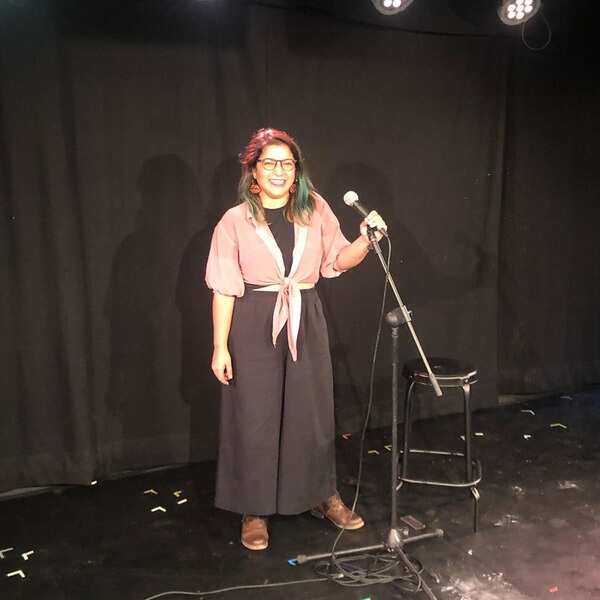
The bias continues on OTT platforms as well. In 2017, when an OTT platform had signed comics for their special shows, there wasn't a single women comic on the list. Soon after, Aditi pointed out during a round table discussion, "Let's not act like there is no problem. There is a lack of investment in young female comedians. I am not the only female comedian right now. Even when we talk about making this a business, using this as a place where you can earn money from and put out a business card stating that you are stand-up comedian, is hard. These guys (male comics) have been making money for years now, but that happened to me probably a year ago, properly."
However, the comics feel the lack of support from the audience as well. “I did an experiment once. Just before a show in Mumbai, I stood near the ticket counter and told everyone who came in to buy those tickets that the headliner today is a female comedian. All of them responded with a - 'Really?' Some even regretted paying money for the tickets and wanted to go back," says Vasu the recipient of the Nari Shakti Puraskar
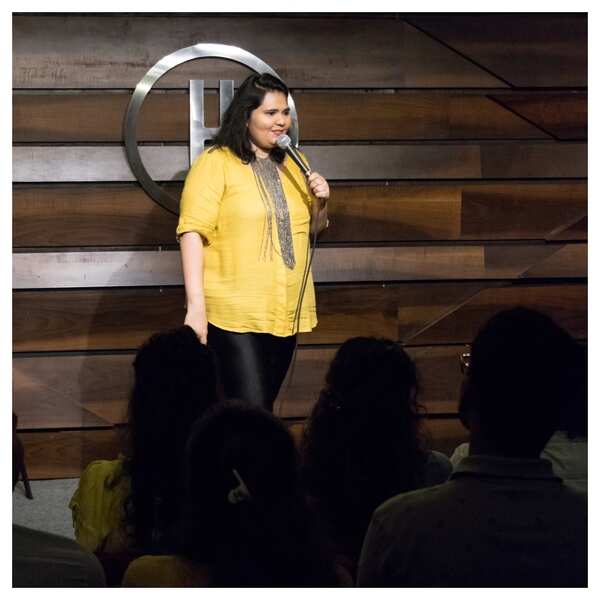
Aayushi points out that there is a lack of support from women too when a female comic is performing. "Men show up to watch other men perform, while women don't show up in the same numbers for women. In my opinion, it's a little unfair to compare the two situations because the men have had, at least, a five-year head start, so it is quite obviously going to take some time. Having an all-female comedy show and equal participation in competitions are, what seemed to me, to be damage control moves. It takes more time and effort than that to truly create opportunities for comics regardless of their gender," she points out.
'MEN GET CALLED FUNNY, WE GET COMPLIMENTS FOR OUR HAIR'
Apart from 'funny', female comics say they receive a variety of compliments that have nothing to do with the words 'funny' or comedy'. For example, Neeti tells us, “I hadn’t even uttered the any of the cuss words or used profanity in one of my acts. However, once it got over, a lady came and hugged me, and said, 'You were very bold'. On the other hand, she kept complimenting the male comic for being really funny. I get that a lot. People will either call me cute or bold, but not funny. But I take these stereotypes positively.”
Anu Menon, aka Lola Kutty, too has spoken about facing similar such incidents. “While the male comics get comments that they are so funny, I get 'What lovely curls you have!', 'How do you maintain that waistline having a five year old', 'Where did you get this dress from?' All these compliments are good, but mere jokes bare mein bhi kuch bolo na!” she had said in an interview.

It's hard for many female comics to be taken seriously beyond their looks. Objectification, they say, has become a part of the job. “For the longest time I was told not to project myself as ‘too feminine’. You have to desexualise yourself as much as possible because you don’t want to be viewed as a sexual creature, you want to be viewed as funny,” Aditi had once said. “Men don’t find us funny because they too are busy ogling, to actually hear the words coming out of our mouths. Jab sunenge nahin toh pata kaise chalega funny hai ki nahin?” adds Neeti.
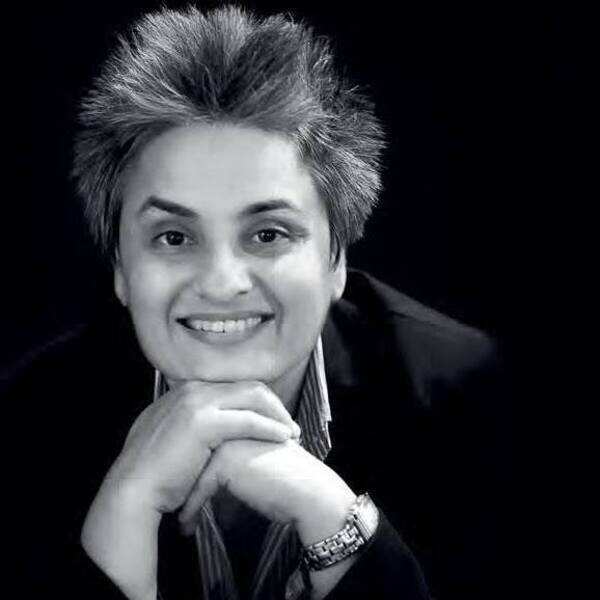
At the same time, jokes cracked by or related to women are still viewed with skepticism. Vasu recalls, "Once I invited a dear friend of mine to an all-women comedy show and before the show he was like, ‘They are just going to do women jokes. I won’t get anything. I don’t even understand my wife half of the time. However, after the show, he goes like, ‘Oh my God! It is 4 am now and I still can’t stop laughing'. Patriarchy in India is very heavy.”
'THERE IS MORE SPACE FOR WOMEN NOW. HOPEFULLY, IT WILL GET BIGGER'
The #MeToo movement did put comedians under scanner with respect to sexist jokes. Treating the stage as a platform to bash girlfriends, wives or women kind in general began being frowned upon.
As Neeti, puts it, “The #MeToo movement has helped in sensitising the comedy scene, but there's a long way to go. Having said that, I don’t mean that all male comics are a****les - at least, I’ve never come across the sexist ones. However, there’s no denying that we are all a byproduct of patriarchy. Thankfully, times are changing for the better and people will take time to get acclimated to this whole shift.”
However, Pune-based young comedian Aayushi Jagad says she is positive about the future of comedy for women in India. "Being a woman in comedy is like being a woman anywhere else, there is some resistance to new ideas and strong opinions, but in time everything seems to fall into place because at least for me, it becomes about the jokes. I care less about external factors and try to focus on the work. The main challenge I face is lack of inclusion in bigger projects but hopefully, with time, that'll change too."
Speaking of the changes that she's observed over the years, she says, "There is more space for women now, which is amazing, and hopefully, that space gets even bigger and more collaborative."
End of Article
FOLLOW US ON SOCIAL MEDIA








Photostories
lifestyle videos
Featured In Lifestyle

Popular Categories
Entertainment NewsBollywood NewsTollywood NewsKollywood NewsMollywood NewsMovie ReviewsLatest Hindi MoviesLatest Tamil MoviesMX PlayerParenting TipsHome RemediesWeight LossBeauty TipsParenting TipsHindi VideosHindi Video SongsBhojpuri Music VideosLatest Telugu MoviesBhojpuri Music VideoHindi TV News
Trending in Entertainment
Latest MoviesBollywood MoviesHollywood MoviesTamil Movies 2024Telugu Movies 2024Malayalam Movies 2024Kannada Movies 2024Marathi Movies 2024Bengali Movies 2024Top Rated Movies 2024Best Hindi MoviesBest English MoviesBest Telugu MoviesBest Tamil MoviesBest Malayalam MoviesBest Kannada MoviesBest Bengali MoviesUpcoming Hindi MoviesBest Movies Of All TimeBest Hindi Movies of All Time
Trending in Etimes
Horoscope TodayNumerology Predictions TodayMoon DengHelicopter Crash NewsKamala HarrisJimmy KimmelBelly FatSean Diddy CombsSunita WilliamsDepression RiskBelly Fat LossMexican Mayor MurderToxic FriendshipDonald TrumpElon MuskOzempic SubstituteLake Michigan DiscoveryWeight Loss WalkCovid XEC Variant Symptoms
Trending in TV
Trending in Lifestyle
Trending in Regional
Movie Reviews
Binny And Family ReviewLove, Sitara ReviewWill & Harper ReviewWolfs ReviewYudhra ReviewJo Tera Hai Woh Mera Hai ReviewKahan Shuru Kahan Khatam ReviewHis Three Daughters ReviewNever Let Go ReviewDancing Village: The Curse Begins ReviewTransformers One ReviewFirst Love ReviewBerlin ReviewThe Buckingham Murders Review
Upcoming Hindi Movies
Upcoming Regional Movies
Latest News
Ambala Cantt Assembly Election Result 2024: BJP's big gun Anil Vij leading in early trendsAquarius, Daily Horoscope Today, October 08, 2024: . You are likely to receive recognitionNavratri as Spiritual Detox: 9 days to cleanse your mind, body and soul5 must follow rules of Ayurveda to lose 5kg in 30 daysUniversity of East Anglia Introduces £4,000 Scholarship for Indian Students: Explore Courses, Eligibility, and BenefitsTodd Phillips explains SHOCKING CLIMAX of 'Joker: Folie à Deux', reveals Arthur Fleck acceptance of his true identityAlia Bhatt just cannot keep calm on watching 'Singham Again' trailer, says 'all the dynamite in one frame' for the big multi-starrer led by Ajay DevgnNCERT to triple textbook production, aims to print 150 million books this year: Edu ministerMonetary policy committee meet: RBI moving closer to rate cutFrom spending habits to hiding reality: What each zodiac sign is likely to lie about'I own a Glock and yes, I’ve fired It,' says Kamala on 60 Minutes; rules out solo talks with PutinKathua (SC) Assembly Election Result 2024: BJP's Dr Bharat Bhushan leads with 6,845 votes against BSP's Sandeep MajotraHappy Durga Puja 2024: Best Messages, Quotes, Wishes, and Images to Share on Durga Puja'Hopeful assembly elections results will be in our favour': Union Minister Chirag Paswan3 killed after an Air Evacuation helicopter crashes in Owen County"We do it every day in practice”: Kansas City Chiefs Head Coach Andy Reid Confirms Travis Kelce’s 3rd And 22 Lateral Play Was PlannedHoroscope Today, October 8, 2024: Read your today's astrological predictions for all zodiac signsWhat Each Zodiac Sign Complains About
Other Group Sites -
ETimes is an Entertainment, TV & Lifestyle industrys promotional website and carries advertorials and native advertising.