Trending
This story is from March 3, 2011
The great debater
Get to know the soft side of Tim Sebastian, who is accustomed to taking on hard subjects...
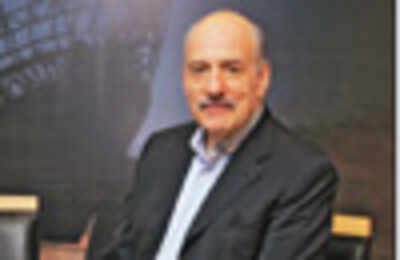
Author, talk-show host, moderator, journalist par excellence, he wears many crowns, but he will always be remembered for the unique style he uses to martial his argument, Tim Sebastian made his maiden visit to Chennai recently, where he moderated a debate and must we say, gave the debaters a really hard time.
Talking to us after the debate, Tim said he had the most fun. “Several serious issues were dealt with, but it was so much fun. What I enjoyed the most was the energy of people here,” he says.
Having spent a few days in the city, he says that he feels compelled to understand the people of the city better. “I’m not much into sight seeing. So, I’ve been talking to people. And, what I really like is the buzz in the city, it’s so vibrant. There’s so much getting done. There’s more happening on one street here than you have in the Middle East.”
Known for having asked some of the toughest questions to those in power, Tim says, that was what he always believed was his job. “I always take the opposite point of view of the person I’m interviewing. I see my role as of the prosecution - to cross-examine on the basis of facts. As an interview on TV, I see my position as a privileged one, where it is my duty to pose questions on behalf of millions of people.” And, with all the hard talk happening, he’s asked his fare share of stupid questions, got some stupid answers and some harsh reactions too. “I had a British minister, Mo Mowlam, kick me under the table when things got heated. I asked her why she did that and she said, ‘because you’re a bastard.’ I laughed, she laughed, it wasn’t that serious. Most people know it’s just business and nothing personal; they come on the show knowing they are going to be given a tough time.”
Then, there is cheap journalism. “Many sections of the media are taking the easy way out - too much of the common man’s opinions are aired. Opinions are two a penny; there’s too much of opinion out there and very little fact. We need more stories that make a lasting impact,” he says.
Having kicked off the debating process in the Middle East, he says he’s happy that young people there have embraced the concept. “People in this region haven’t done much debating in the last 1400 years. But, they have taken to it like ducks to water. At debates, when I see a light bulb go on in the heads of many, I know that they see things in a new light. That’s what I find most gratifying.”
Having spent much of his time in this region where freedom of speech is stifled, he says he’s always treasured the freedom he’s enjoyed. “For 35 years that I have been in journalism, no one has ever told me what I could and couldn’t say. That freedom has been worth having. My job has been very exciting, I would have done the same job whether I was being paid for it or not,” he signs off.
Follow us on Twitter for more stories
Talking to us after the debate, Tim said he had the most fun.
Having spent a few days in the city, he says that he feels compelled to understand the people of the city better. “I’m not much into sight seeing. So, I’ve been talking to people. And, what I really like is the buzz in the city, it’s so vibrant. There’s so much getting done. There’s more happening on one street here than you have in the Middle East.”
Known for having asked some of the toughest questions to those in power, Tim says, that was what he always believed was his job. “I always take the opposite point of view of the person I’m interviewing. I see my role as of the prosecution - to cross-examine on the basis of facts. As an interview on TV, I see my position as a privileged one, where it is my duty to pose questions on behalf of millions of people.” And, with all the hard talk happening, he’s asked his fare share of stupid questions, got some stupid answers and some harsh reactions too. “I had a British minister, Mo Mowlam, kick me under the table when things got heated. I asked her why she did that and she said, ‘because you’re a bastard.’ I laughed, she laughed, it wasn’t that serious. Most people know it’s just business and nothing personal; they come on the show knowing they are going to be given a tough time.”
With the dictates of 24-hour news changing the face of media, Tim is a little distressed. “Judgment has gone out the window. No more is a story judged on whether it is new, important, compelling or if it will change people’s lives. The priority of editors is to fill 24-hours that stretches into all the 24-hour cycles after that. So, any old nonsense gets onto the air. During my days, we had to fight for our stories to get out. What we see on TV are pictures of people going in and out of doors and getting in and out of cars. We are more caught up with ‘notice board journalism’,” he laments.
Then, there is cheap journalism. “Many sections of the media are taking the easy way out - too much of the common man’s opinions are aired. Opinions are two a penny; there’s too much of opinion out there and very little fact. We need more stories that make a lasting impact,” he says.
Having kicked off the debating process in the Middle East, he says he’s happy that young people there have embraced the concept. “People in this region haven’t done much debating in the last 1400 years. But, they have taken to it like ducks to water. At debates, when I see a light bulb go on in the heads of many, I know that they see things in a new light. That’s what I find most gratifying.”
Having spent much of his time in this region where freedom of speech is stifled, he says he’s always treasured the freedom he’s enjoyed. “For 35 years that I have been in journalism, no one has ever told me what I could and couldn’t say. That freedom has been worth having. My job has been very exciting, I would have done the same job whether I was being paid for it or not,” he signs off.
Follow us on Twitter for more stories
End of Article
FOLLOW US ON SOCIAL MEDIA







Featured In Lifestyle

Popular Categories
Entertainment NewsBollywood NewsTollywood NewsKollywood NewsMollywood NewsMovie ReviewsLatest Hindi MoviesLatest Tamil MoviesMX PlayerParenting TipsHome RemediesWeight LossBeauty TipsParenting TipsHindi VideosHindi Video SongsBhojpuri Music VideosLatest Telugu MoviesBhojpuri Music VideoHindi TV News
Trending in Entertainment
Latest MoviesBollywood MoviesHollywood MoviesTamil Movies 2024Telugu Movies 2024Malayalam Movies 2024Kannada Movies 2024Marathi Movies 2024Bengali Movies 2024Top Rated Movies 2024Best Hindi MoviesBest English MoviesBest Telugu MoviesBest Tamil MoviesBest Malayalam MoviesBest Kannada MoviesBest Bengali MoviesUpcoming Hindi MoviesBest Movies Of All TimeBest Hindi Movies of All Time
Trending in Etimes
Horoscope TodayNumerology Predictions TodayProject 2025Taylor SwiftUS Presidential Debate Key TakeawaysSpringfield Eating PetsMelania TrumpJoe WilsonVice Presidential DebateMeghan MarkleKamala HarrisDonald TrumpPatriot Day 2024Diabetes RiskHappy Mindfulness Day 2024Trump Vs HarrisJoe JonasNational Day of Encouragement 2024Dave Bautista
Trending in TV
Trending in Lifestyle
Trending in Regional
Movie Reviews
Visfot ReviewThalapathy Is The G.O.A.T ReviewRebel Ridge ReviewDetective Conan vs. Kid the Phantom Thief ReviewBeetlejuice Beetlejuice ReviewPad Gaye Pange ReviewA Wedding Story ReviewThe Diary Of West Bengal ReviewTikdam ReviewKinds Of Kindness ReviewAfraid ReviewThe Deliverance ReviewBlue Lock: Episode Nagi ReviewDaddio Review
Upcoming Hindi Movies
Upcoming Regional Movies
Latest News
Manju Warrier expresses gratitude for birthday wishes: "Forever humbled and grateful"Jiiva and wife escape with minor injuries after a road accidentThe Zodiac Signs Most Naturally Inclined to HealingWhy Banyan trees survive for centuries and spread indefinitely?Telangana government pushes for increased flood relief from CentreShilpa Shetty and Raj Kundra spotted at the Siddhivinayak Temple; video insideNBA 2K25 locker codes September 2024: Locker codes revealed and know how to reveal themDonald Trump and Kamala Harris shake hands as they meet for first time on debate stage: Watch the 'awkward' momentBRS pushes for disqualification of turncoat MLAs after High Court rulingKamala may have won debate. But election is still too close to callPrince William’s commitment to a lasting marriage with KateVarun Dhawan shares unfiltered reaction to Janhvi Kapoor's 'Daavudi' song from 'Devara: Part 1': 'So freaking good...''On basis of fairness and equality': Bangladesh seeks good relations with India, says YunusJr NTR starrer 'Devara: Part 1' completes censorship formalities; receives UA certificateJalen Ramsey demands action against Miami Police following Tyreek Hill's pulled from car49ers RB Christian McCaffrey misses win over JetsWWE Superstar Blames the Company for Failing to Utilize Omos’ PotentialArbaaz Khan spotted outside Malaika Arora's house along with police after the tragic news of her father's demise by alleged suicide - WATCH VIDEO
Other Group Sites -
ETimes is an Entertainment, TV & Lifestyle industrys promotional website and carries advertorials and native advertising.