Trending
This story is from September 25, 2021
Relief from cooker whistles and unmuting shenanigansStand-up comics rejoice getting back to the stage
With COVID-19 restrictions being eased after the second wave of the pandemic, stand-up comedians are finally back on stage and doing what they do best
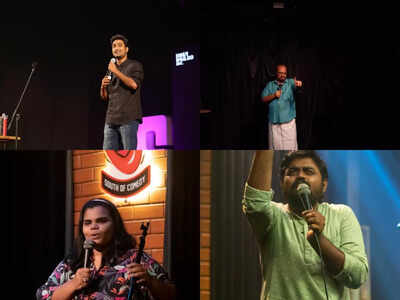
Stand-up comics can breathe easy as it is time to bid adieu (at least for the most part) to pressure cooker whistles and blank stares from their muted and unmuted Zoom audiences. With COVID-19 restrictions being eased after the second wave of the pandemic, stand-up comedians are finally back on stage and doing what they do best — making a room light up with laughter, live.
Getting audiences to crack up
It feels surreal to be cracking up people in the live set-up, says comedian Praveen Kumar, who did a live show last week, after almost six months of doing virtual shows. “For the past seven months, we have been performing for a small window of a screen. All our actions got restricted to that small space. But now, suddenly the whole stage is yours. I have been doing comedy for so many years now, but these seven months made such a huge difference,” he notes.
While the virtual medium helped comics like himself keep their art alive, the end result was only 50-60 per cent of the live set-up, he notes. “I am not complaining, because we at least got to do this in the virtual space, when the entire world stopped. But people specialising in body-language humour might find it restrictive to perform virtually. Instead of actions being louder than words, your words should in turn be louder than your actions,” he smiles.
Getting audiences rolling in the aisles through a screen is harder than it looks, comics say. Stand-up comedian Jagan Krishnan notes, “It took us a significant amount of time to even understand the medium and rework our stuff accordingly. We were already used to blank stares from audience members during a performance but getting accustomed to flush sounds and cooker whistles, in the middle of performance, was definitely new.”
‘The vibe of the stage is unmatched’
The pandemic has definitely thrown up time for writing new jokes and polishing old ones. But the vibe of the stage is unmatched, says comedian Karthigeyan Durai, who is looking forward to doing a live show in Pondicherry in a few days. “The applause and roar that you hear from audiences backstage, just moments before stepping onto the stage, is such a rush. My last live show was just before the second wave,” he recalls with a smile, adding that as with any occupation, stand-up comedy, too, comes with its own occupational hazard.
“Every profession has an occupational hazard. Similarly, here, when a joke lands virtually, the entire essence or emotion of it does not reach the audience. For instance, just when you are about to crack your punchline, someone from the audience will scream, ‘andha stove ah niruthu’ at home (laughs). That ends up spoiling the mood. But the live show audience are much more focused. The vibe of the audience reflects in the comedian as well, so that energy conversion is important,” explains Karthigeyan.
The internet and bandwidth pose huge challenges, points out fellow stand-up comic Syama Harini. “People not wanting to switch on their videos is another huge challenge that I faced with Zoom shows. If I can’t see or hear people laugh, how will I know whether I am doing a good show?” she asks.
‘Important to make audiences feel safe’
The restrictions may have eased, but the responsibilities shouldn’t, comics note. No comedy show is more important than the health and safety of the audiences, says Jagan, adding, “Post the second wave, most of us got a bit more cautious and prepared, I believe. Even the popular crowd-pulling comics have restricted themselves to perform for minimal crowds with social distancing, as we still don’t have a clear picture of how the situation will be.”
Praveen adds, “We want them to be relaxed and safe so that they are able to laugh and have a good time. Make sure that temperature checks and social distancing are followed and that everybody wears a mask. The only person not wearing a mask will be me, and I am double vaccinated and will further be away from the crowd.”
Getting audiences to crack up
It feels surreal to be cracking up people in the live set-up, says comedian Praveen Kumar, who did a live show last week, after almost six months of doing virtual shows. “For the past seven months, we have been performing for a small window of a screen. All our actions got restricted to that small space. But now, suddenly the whole stage is yours. I have been doing comedy for so many years now, but these seven months made such a huge difference,” he notes.
While the virtual medium helped comics like himself keep their art alive, the end result was only 50-60 per cent of the live set-up, he notes. “I am not complaining, because we at least got to do this in the virtual space, when the entire world stopped. But people specialising in body-language humour might find it restrictive to perform virtually. Instead of actions being louder than words, your words should in turn be louder than your actions,” he smiles.
Getting audiences rolling in the aisles through a screen is harder than it looks, comics say. Stand-up comedian Jagan Krishnan notes, “It took us a significant amount of time to even understand the medium and rework our stuff accordingly. We were already used to blank stares from audience members during a performance but getting accustomed to flush sounds and cooker whistles, in the middle of performance, was definitely new.”
‘The vibe of the stage is unmatched’
The pandemic has definitely thrown up time for writing new jokes and polishing old ones. But the vibe of the stage is unmatched, says comedian Karthigeyan Durai, who is looking forward to doing a live show in Pondicherry in a few days. “The applause and roar that you hear from audiences backstage, just moments before stepping onto the stage, is such a rush. My last live show was just before the second wave,” he recalls with a smile, adding that as with any occupation, stand-up comedy, too, comes with its own occupational hazard.
“Every profession has an occupational hazard. Similarly, here, when a joke lands virtually, the entire essence or emotion of it does not reach the audience. For instance, just when you are about to crack your punchline, someone from the audience will scream, ‘andha stove ah niruthu’ at home (laughs). That ends up spoiling the mood. But the live show audience are much more focused. The vibe of the audience reflects in the comedian as well, so that energy conversion is important,” explains Karthigeyan.
The internet and bandwidth pose huge challenges, points out fellow stand-up comic Syama Harini. “People not wanting to switch on their videos is another huge challenge that I faced with Zoom shows. If I can’t see or hear people laugh, how will I know whether I am doing a good show?” she asks.
‘Important to make audiences feel safe’
The restrictions may have eased, but the responsibilities shouldn’t, comics note. No comedy show is more important than the health and safety of the audiences, says Jagan, adding, “Post the second wave, most of us got a bit more cautious and prepared, I believe. Even the popular crowd-pulling comics have restricted themselves to perform for minimal crowds with social distancing, as we still don’t have a clear picture of how the situation will be.”
Praveen adds, “We want them to be relaxed and safe so that they are able to laugh and have a good time. Make sure that temperature checks and social distancing are followed and that everybody wears a mask. The only person not wearing a mask will be me, and I am double vaccinated and will further be away from the crowd.”
End of Article
FOLLOW US ON SOCIAL MEDIA








Featured In Lifestyle

MORE FROM ETIMES
life & stylePopular Categories
Entertainment NewsBollywood NewsTollywood NewsKollywood NewsMollywood NewsMovie ReviewsLatest Hindi MoviesLatest Tamil MoviesMX PlayerParenting TipsHome RemediesWeight LossBeauty TipsParenting TipsHindi VideosHindi Video SongsBhojpuri Music VideosLatest Telugu MoviesBhojpuri Music VideoHindi TV News
Trending in Entertainment
Latest MoviesBollywood MoviesHollywood MoviesTamil Movies 2024Telugu Movies 2024Malayalam Movies 2024Kannada Movies 2024Marathi Movies 2024Bengali Movies 2024Top Rated Movies 2024Best Hindi MoviesBest English MoviesBest Telugu MoviesBest Tamil MoviesBest Malayalam MoviesBest Kannada MoviesBest Bengali MoviesUpcoming Hindi MoviesBest Movies Of All TimeBest Hindi Movies of All Time
Trending in Etimes
Horoscope TodayNumerology Predictions TodayKamala HarrisRobert F Kennedy JrBarron TrumpElon MuskAnna Paulina LunaJustin TrudeauTrump Town Hall Key TakeawaysInternational Day of PeaceDonald TrumpSNL 50 SeasonKamala HarrisSituationship TipsUsha UthupRelationship TipsSean Diddy CombsMiley CyrusJennifer Lopez
Trending in TV
Trending in Lifestyle
Trending in Regional
Movie Reviews
Yudhra ReviewJo Tera Hai Woh Mera Hai ReviewKahan Shuru Kahan Khatam ReviewHis Three Daughters ReviewNever Let Go ReviewDancing Village: The Curse Begins ReviewTransformers One ReviewFirst Love ReviewBerlin ReviewThe Buckingham Murders ReviewSpeak No Evil ReviewVisfot ReviewThalapathy Is The G.O.A.T ReviewRebel Ridge Review
Upcoming Hindi Movies
Upcoming Regional Movies
Latest News
The truth about sugar substitutes: Safe alternative or hidden health risk?18-year-old woman arrested after crushing man under wheels of his own Porsche, see videoMP: BJP worker accused of sexually assaulting minorTapCoin daily bounty cards for September 22, 2024: Earn tokens, exclusive rewards and more'Trump made Robinson...': Harris' campaign aims to shift voters in NC amid scandalOh no to ONOE but we do need electoral reformUPI payments reach this ‘milestone’ in April-August monthsIran unveils Jihad missile, advanced drone at military parade amid rising tensionsNot taking EY to court, says dead CA's fatherEncounter breaks out between security forces and terrorists in J&K's KishtwarBombay HC strikes down Centre's fact check unitGemini, Daily Horoscope Today, September 22, 2024: Be mindful of diet and mental well-beingAuto driver to juice shop owner, they’re taking on bulldozer rajMan thought he had runny nose; actually his brain was leakingTyreek Hill's Net Worth 2024, Current Salary, Personal Life and More'Dummy CM ... new Manomohan Singh': BJP reacts to Atishi becoming Delhi CM'Seen him work so hard for it': Shubman Gill hails Rishabh Pant's grit after remarkable Test returnAndhra Deputy CM Pawan Kalyan to undertake 11-day penance to propitiate Lord Venkateswara
Other Group Sites -
ETimes is an Entertainment, TV & Lifestyle industrys promotional website and carries advertorials and native advertising.