Trending
This story is from February 19, 2010
‘I ask the form which medium it wants'
At 84, veteran artist Satish Gujral continues to experiment. His latest show of paintings, drawings and sculptures explores the conflicts between modernity and tradition
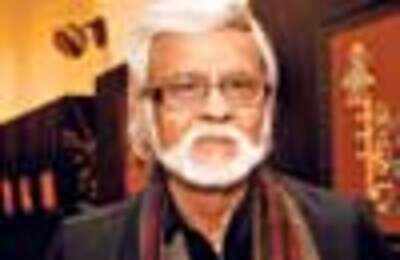
At 84, veteran artist Satish Gujral continues to experiment. His latest show of paintings, drawings and sculptures explores the conflicts between modernity and traditions
Nineteen forty eight. That’s the year Satish Gujral first dipped his brush into paint. 2010, half a decade and more later, he’s still at it. What’s more, over the years he’s experimented with different mediums ranging from painting to drawing to sculptures, even architecture. He’s explored diverse themes, as he bluntly puts it, “If I have nothing new to say, I won’t say anything, I won’t hold a show for years.” Now, again, the veteran artist has something different to share – his latest exhibition, Tryst with Modernity and Tradition, comprising paintings, drawings and sculptures, relates, through three varied mediums, the artist’s observations, experiences and thoughts about the marriage between tradition and technology.
His creative philosophy lies in experimentation. Change is the only constant with Gujral, be it in content, style or technique. Or else, he states, the medium becomes “stale”. It is this uncomfortable feeling of familiarity that draws him to find other identities time and again. “One can discover new things every day, everywhere. I once remember observing burning cinder as it turned from red to black. The colour and the texture of that transformation excited me, inspired me. Over the past decade, technology and new inventions have become an integral part of our lives. But at the same time, the roots of our cultures are still alive. While on the one hand we have new technologies and machines, on the other, we still have an image of God in our homes. This exhibition expresses this new language of the co-existence of tradition and modernity,” Gujral states. His message of ‘Evolve, but without letting your roots die’ carries forward into the world of art as well. “I like the new wave of young, experimental art that is taking over the Indian art scene. But one must not forget that only art which has national roots can become international and hence universal. New-age artists must not reject their traditional moorings.”
He’s left his mark in almost every conceivable medium; which one challenges and excites him the most? “It’s never one above the other. Today I feel like having vegetables, tomorrow I might feel like eating chicken! That does mean I prefer chicken to vegetables. It’s a feeling at that point in time. It’s not what I want, but what the form wants of me. I ask the form which medium it wants,” Gujral points out.
Age no bar, subject no bar, at 84 Gujral continues to be a pictorial storyteller. “God has given me so many years and I don’t want to be ungrateful for them,” he smiles and even as he promises to be back with more, he sticks to his conviction of constant experimentation. “Novelty challenges the mind, it forces you to think. If I knew what my next show will be about, I would start tomorrow. But I know there will never be a repetition.”
The exhibition is on at Jehangir art gallery till Feb 23 and will continue at Cymroza art gallery from Feb 24-March 31.
Nineteen forty eight. That’s the year Satish Gujral first dipped his brush into paint. 2010, half a decade and more later, he’s still at it. What’s more, over the years he’s experimented with different mediums ranging from painting to drawing to sculptures, even architecture.
His creative philosophy lies in experimentation. Change is the only constant with Gujral, be it in content, style or technique. Or else, he states, the medium becomes “stale”. It is this uncomfortable feeling of familiarity that draws him to find other identities time and again. “One can discover new things every day, everywhere. I once remember observing burning cinder as it turned from red to black. The colour and the texture of that transformation excited me, inspired me. Over the past decade, technology and new inventions have become an integral part of our lives. But at the same time, the roots of our cultures are still alive. While on the one hand we have new technologies and machines, on the other, we still have an image of God in our homes. This exhibition expresses this new language of the co-existence of tradition and modernity,” Gujral states. His message of ‘Evolve, but without letting your roots die’ carries forward into the world of art as well. “I like the new wave of young, experimental art that is taking over the Indian art scene. But one must not forget that only art which has national roots can become international and hence universal. New-age artists must not reject their traditional moorings.”
He’s left his mark in almost every conceivable medium; which one challenges and excites him the most? “It’s never one above the other. Today I feel like having vegetables, tomorrow I might feel like eating chicken! That does mean I prefer chicken to vegetables. It’s a feeling at that point in time. It’s not what I want, but what the form wants of me. I ask the form which medium it wants,” Gujral points out.
In different periods, varying concerns have driven the artist. Some offered relief, some stirred and provoked, others he questioned. But we sense a state of calm in this series, a mellow and meditative treatment; has the artist in him conquered the angst of the Partition-induced turmoil and reached a place of peace and self-acceptance? Gujral smiles, “The mind is in constant turmoil till I arrive at the soul of things. But at 84, after having seen so much, I now want to paint the other side of turmoil with the same force.”
Age no bar, subject no bar, at 84 Gujral continues to be a pictorial storyteller. “God has given me so many years and I don’t want to be ungrateful for them,” he smiles and even as he promises to be back with more, he sticks to his conviction of constant experimentation. “Novelty challenges the mind, it forces you to think. If I knew what my next show will be about, I would start tomorrow. But I know there will never be a repetition.”
The exhibition is on at Jehangir art gallery till Feb 23 and will continue at Cymroza art gallery from Feb 24-March 31.
End of Article
FOLLOW US ON SOCIAL MEDIA





Photostories
Featured In Lifestyle

Popular Categories
Entertainment NewsBollywood NewsTollywood NewsKollywood NewsMollywood NewsMovie ReviewsLatest Hindi MoviesLatest Tamil MoviesMX PlayerParenting TipsHome RemediesWeight LossBeauty TipsParenting TipsHindi VideosHindi Video SongsBhojpuri Music VideosLatest Telugu MoviesBhojpuri Music VideoHindi TV News
Trending in Entertainment
Latest MoviesBollywood MoviesHollywood MoviesTamil Movies 2024Telugu Movies 2024Malayalam Movies 2024Kannada Movies 2024Marathi Movies 2024Bengali Movies 2024Top Rated Movies 2024Best Hindi MoviesBest English MoviesBest Telugu MoviesBest Tamil MoviesBest Malayalam MoviesBest Kannada MoviesBest Bengali MoviesUpcoming Hindi MoviesBest Movies Of All TimeBest Hindi Movies of All Time
Trending in Etimes
Horoscope TodayNumerology Predictions TodayDinner With TrumpTim WalzIvanka TrumpJose LopezKristina JoksimovicJoe WilsonTrump Eating The Dogs SongGermany NewsKamala HarrisPrince HarryPatriot Day 2024Diabetes RiskHappy Mindfulness Day 2024Trump Vs HarrisJoe JonasPositive Thinking Day 2024Dave Bautista
Trending in TV
Trending in Lifestyle
Trending in Regional
Movie Reviews
Berlin ReviewThe Buckingham Murders ReviewSpeak No Evil ReviewVisfot ReviewThalapathy Is The G.O.A.T ReviewRebel Ridge ReviewDetective Conan vs. Kid the Phantom Thief ReviewBeetlejuice Beetlejuice ReviewPad Gaye Pange ReviewA Wedding Story ReviewThe Diary Of West Bengal ReviewTikdam ReviewKinds Of Kindness ReviewAfraid Review
Upcoming Hindi Movies
Upcoming Regional Movies
Latest News
Challenges won’t stop me from making films that matter: Aditya Kripalani3 Reasons Why Hell in a Cell Tag Team Match Between Cody Rhodes, Roman Reigns and The Bloodline 2.0 Would Be perfect for Bad Blood 2024Odisha to join Ayushman plan; Delhi, Bengal to be only holdoutsRobert's wild encounter with Henry, the world's oldest 124-year old crocodile; internet shocked | Watch videoHooda says Congress coming to power in Haryana, asks criminals to give up crime or leave state‘I Hate Taylor Swift!’: Donald Trump rages after singer endorses Kamala HarrisFather-son duo Eugene and Dan Levy's dazzling entrance at the EmmysBakuchiol: Nature’s answer to youthful skin radianceSaudi Arabia footballer Fahad Al-Muwallad hospitalized after fall from balcony'Will hug my kids extra tight tonight': JD Vance after Trump 'assassination attempt'Bengal govt blames junior docs for logjam but sends fresh offer for talksLodi-era mosque collapses in AgraVineet Kumar Singh calls Superboys of Malegaon standing ovation at TIFF a 'magical experience': 'I can still hear the clapping and whistling" - ExclusiveFoods to pair with dates for boosting immunityLast Lunar Eclipse of 2024: What it means for your zodiac signNeeraj Chopra misses second Diamond League title by an agonising 1 cm; finishes second behind AndersonKejriwal says he will quit as CM in 2 days, wants aam aadmi's 'honesty certificate'Jessica Gunning wins her 1st Primetime Emmy for 'Baby Reindeer'
Other Group Sites -
ETimes is an Entertainment, TV & Lifestyle industrys promotional website and carries advertorials and native advertising.