
8 legendary Indian mathematicians and their global contributions

8 legendary Indian mathematicians and their global contributions
India has a rich ancient history of great achievements in mathematics which has been disseminated in the world and has led many different civilisations globally. Since Indian mathematicians came up with the innovative ideas of zero and infinity as well as doing tremendous work in the fields of algebra, trigonometry and calculus, their contribution, up to date, still amazes and defines the world of science and technology. These are eight Indian mathematicians whose work was legendary and has made a significant impact throughout the world.
Image Credit: Wikipedia

Aryabhata (476–550 CE)
Aryabhata is considered one of the great mathematicians and astronomers of ancient India. He presented the concept of zero as a placeholder and developed a decimal system upon which modern arithmetic would eventually be built. Aryabhata also calculated the value of π (pi) with decent approximation and explained the movement of the Earth, thus influencing both Indian and Islamic mathematics.
Image Credit: Wikipedia
Brahmagupta (598–668 CE)
The mathematician and astronomer Brahmagupta is known for establishing rules for arithmetic operations involving zero and negative numbers. His Brahmasphutasiddhanta introduced the solution of quadratic equations as well as methods for computing square and cube roots; these influenced algebra in the medieval Islamic world.
Image Credit: Wikipedia
Bhaskara I (c. 600–680 CE)
Bhaskara I was a mathematician and astronomer who gave one of the earliest rational approximations of π and worked on sine tables. He also contributed to trigonometry and explained concepts of motion and planetary positions, building on Aryabhata’s work and influencing later Indian mathematics.
Image Credit: Pinterest
Bhaskara II (1114–1185 CE)
Also known as Bhaskaracharya, Bhaskara II authored Siddhanta Shiromani, a major work on arithmetic, algebra, and geometry. He made important contributions to indeterminate equations and explored concepts related to infinity. Bhaskara II also discussed early ideas about rates of change, often regarded as proto-calculus concepts.
Image Credit: Wikipedia
Madhava of Sangamagrama (c. 1340–1425 CE)
Madhava, the founder of the Kerala School of Mathematics, developed infinite series expansions for trigonometric functions such as sine, cosine, and arctangent. This was centuries before Europe's Newton and Leibniz, again bringing into the light the pioneering initiative of India in the various stages of the development of early calculus and analysis.
Image Credit: Pinterest
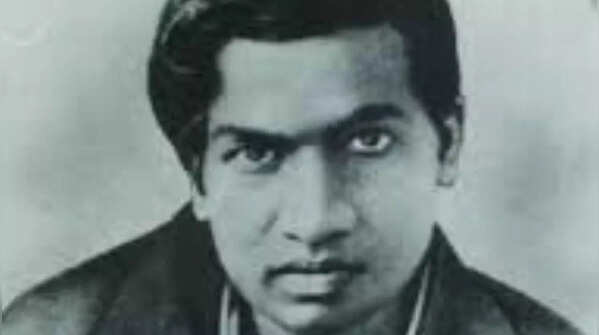
Srinivasa Ramanujan (1887–1920)
Ramanujan, an ingenious mathematical genius, was an autodidact who contributed immense knowledge on number theory, infinite series, and continued fractions. Further developments with G. H. Hardy in England led to various findings in the realm of partition theory, modular forms, and extremely influential formulas that inspire investigations into mathematics and physics today.
Image Credit: Wikipedia

C. R. Rao (1920–2023)
Calyampudi Radhakrishna Rao is one of the most influential statisticians of modern times. It is his immense contribution to statistical theory that changed the face of data analysis across the world. He developed two basic building blocks for statistical inference: the Cramér-Rao inequality and the Rao-Blackwell theorem. His work is applied in economics, medicine, engineering, and computer science globally.
Image Credit: Wikipedia
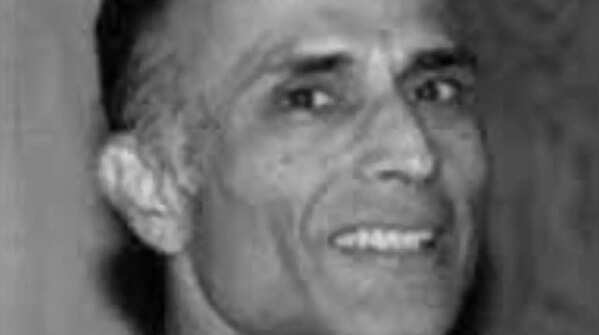
Harish-Chandra (1923–1983)
Harish-Chandra was an internationally recognised Indian mathematician. He reformed representation theory and harmonic analysis. The outstanding contributions in the theory of semisimple Lie groups have greatly influenced mathematics and theoretical physics in modern times. He did research work in the development of basic tools employed in quantum mechanics and number theory; that earned him great recognition all over the world.
Image Credit: Wikipedia
Featured In lifestyle

