Trending
This story is from March 14, 2022
250 cyclists, 25km: This early-morning ride was aimed at making cycling safe for women
Liberty Ride, a recent cycling event in the city, organised on the sidelines of International Women’s Day, aimed to blur the lines of the gender binary in cycling
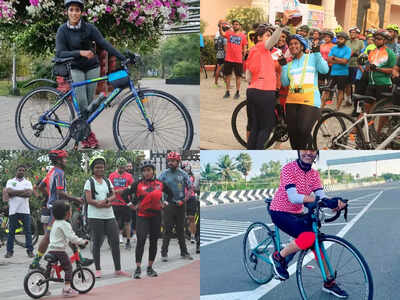

Organised by city-based We are Chennai cycling group, the event saw over 250 cyclists — mostly women—take part in a 25-km early morning ride, celebrating sisterhood and what it means to be a female cyclist in the city. Bicycling, for Deepa Chaithanyan, a healthcare consultant, is a form of emancipation. And the event served as one even for women who wanted to give cycling a try for the first time, she adds.
The event, which began at two points — in Anna Nagar and Velachery— concluded at Vivekananda House in Triplicane. “It was wonderful to see so many cyclists, especially male cyclists encouraging their female friends, spouses and colleagues while joining them. We saw at least 15-plus people who joined us as couples,” recalls Deepa.
Over the last few years, there has been a significant increase in the number of cyclists despite the not-so-cyclist-friendly infrastructure, she says. Priya Darshini, an avid cyclist, who is also one of the organisers of the OMR-ECR chapter of the cycling group, adds that female cyclists have come a long way not just as leisure cyclists, but also as livelihood cyclists. The fundamental problems, however, remain, she points out.
“We continue to face safety threats on the roads when we ride alone. Being molested, intimidated by cars, buses and bikes are some of the problems we face, regardless of whether we are a simple livelihood cyclist or a high-end speedster. I have personally been a victim of such incidents even in the recent past. We should not have to rely on someone else for our safety,” she says, adding that the gender divide continues to exist in a deep and subtle manner.
This apart, road and infrastructure safety continues to remain one of the biggest hurdles for cyclists, Deepa notes. “Our roads have little to no lighting during the early hours of the day. Moreover, tackling the menace of wrong-side drivers is also a major risk factor. We are representing our issues to the authorities, but we have a long way to go,” she says.
Felix John, the bicycle mayor of Chennai, notes that events like these will definitely push women to take up cycling with confidence. “Compared to say five years back, there has been a growth in women’s participation in cycling. But that has not been enough. If we want a more inclusive society, communities like these have to empower women with such activities. The recognition of women creates a big impact, especially among the ones who want to take up cycling as an activity,” he says.
Anuja Venkat, a homemaker who loves to cycle, adds that meeting fellow female cyclists who share the same passion as her was an amazing moment. “As a female cyclist, I still feel unsafe about doing early morning rides. Having said that, such events show us how capable women are, and are necessary to form a safe community for female cyclists,” she notes.
Priya, who is also a content writer, adds that such initiatives should go beyond just celebrating women for a day. “Emphasising gender equity is a continuous process, and cycling groups should ensure that members of all genders have a pleasant and safe experience on their routine rides. Events like these can be looked at as milestone markers in our journey to a gender-equitable society, but we have quite not reached the planned destination — an equitable space for cyclists of all genders,” she observes.
Ways to make cycling safer for women in Chennai
1.Enforcement by the police department, such as patrolling on empty stretches and unlit streets
2.State government can back initiatives and incentives to encourage female riders
3. Recognition of female vendors who use the cycle every day, such as the courier ladies
4.Efficient traffic management
5.Redesigning of busy junctions by making cyclists a priority
6. Introducing segregated bicycle lanes.
—Felix John
End of Article
FOLLOW US ON SOCIAL MEDIA






Photostories
Featured In Lifestyle

Popular Categories
Entertainment NewsBollywood NewsTollywood NewsKollywood NewsMollywood NewsMovie ReviewsLatest Hindi MoviesLatest Tamil MoviesMX PlayerParenting TipsHome RemediesWeight LossBeauty TipsParenting TipsHindi VideosHindi Video SongsBhojpuri Music VideosLatest Telugu MoviesBhojpuri Music VideoHindi TV News
Trending in Entertainment
Latest MoviesBollywood MoviesHollywood MoviesTamil Movies 2024Telugu Movies 2024Malayalam Movies 2024Kannada Movies 2024Marathi Movies 2024Bengali Movies 2024Top Rated Movies 2024Best Hindi MoviesBest English MoviesBest Telugu MoviesBest Tamil MoviesBest Malayalam MoviesBest Kannada MoviesBest Bengali MoviesUpcoming Hindi MoviesBest Movies Of All TimeBest Hindi Movies of All Time
Trending in Etimes
Horoscope TodayNumerology Predictions TodayAustria ElectionJoe BidenKamala HarrisPopulated Indian CitiesAlcohol Cancer RiskIsrael Beirut WarSunita WilliamsIsrael Hezbollah WarNepal FloodBarbra StreisandSnoring Prevention TipsDonald TrumpMagnesium DeficiencyRelationship TipsLake Michigan DiscoveryElon MuskEkadashi in October 2024
Trending in TV
Trending in Lifestyle
Trending in Regional
Movie Reviews
Binny And Family ReviewLove, Sitara ReviewWill & Harper ReviewWolfs ReviewYudhra ReviewJo Tera Hai Woh Mera Hai ReviewKahan Shuru Kahan Khatam ReviewHis Three Daughters ReviewNever Let Go ReviewDancing Village: The Curse Begins ReviewTransformers One ReviewFirst Love ReviewBerlin ReviewThe Buckingham Murders Review
Upcoming Hindi Movies
Upcoming Regional Movies
Latest News
Haircuts and colours to try out this PujoGovt proposes to bring motorcycles under ‘contract carriage’ by amending MV ActMaharashtra assembly polls: Deputy CM Ajit Pawar meets Union home minster Amit Shah amid Mahayuti tensions over NCP, seat-sharingNFL insider reveals Raiders’ asking price for star wide receiver Davante Adams amid trade speculationLibra, Daily Horoscope Today, October 02,2024: Patience will be your best tool todayAnanya Panday on being called the upcoming Alia Bhatt: I can't touch what she has doneWhy you must run in the morning on an empty stomachManipur CM Biren Sing bats for political talks to resolve crisis in stateSolar eclipse 2024 date and time: When is Surya Grahan in October? Will it be visible in India?Best anti-ageing workouts for strength and flexibilityAndhra Pradesh minister asks officials to prepare for election to water users' associationExclusive- Ishq Jabariya's Lakshay Khurana reveals how Mahatma Gandhi’s teachings helped him in tough times: Early in my career, I faced several rejections...Fans rave over Jr. NTR and Janhvi Kapoor's chemistry in 'Chuttamalle' from 'Devara: Part 1'; theater clips go viralDimpy aka Nishi Saxena to make an exit from Anupamaa ahead of the leap; REPORTSElection Commission bans release of exit polls for Haryana Assembly election until 6.30 pm on October 5NBA Star Damian Lillard expresses frustration over Raiders’ reported trade demands for Davante Adams'Exercised self-defense under Article 51 of the UN Charter': Iran vows to give stronger response if Israel retaliatesPPF Calculator: How to become a crorepati with Public Provident Fund? Explained
Other Group Sites -
ETimes is an Entertainment, TV & Lifestyle industrys promotional website and carries advertorials and native advertising.