
- News
- lifestyle
- soul-search
- Why Lord Krishna played the flute according to spiritual symbolism
Why Lord Krishna played the flute according to spiritual symbolism
Why Lord Krishna played the flute according to spiritual symbolism
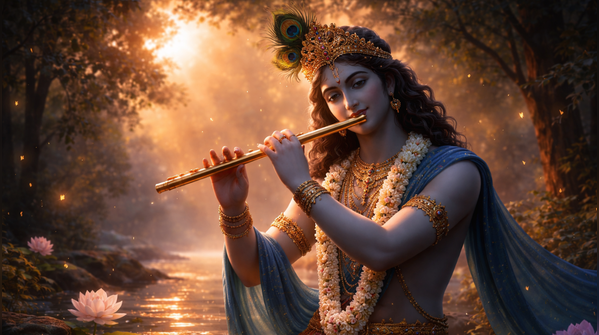
Across India’s spiritual imagination, few images are as enduring as that of Lord Krishna standing beneath a Kadamba tree in Vrindavan, flute resting lightly against his lips. The scene appears simple at first glance: a cowherd boy, a bamboo flute, the hush of dusk settling over the fields. Yet within the language of Indian spirituality, this image carries profound meaning. Krishna, a divine strategist and teacher, is rarely shown holding a weapon or royal emblem in these moments. Instead, he holds a hollow flute. For generations of saints and philosophers, that choice has never been incidental. The flute becomes a quiet metaphor: a reminder that divine music flows only through a heart that has become completely empty of ego. Scroll down to read more..
The flute as the empty self
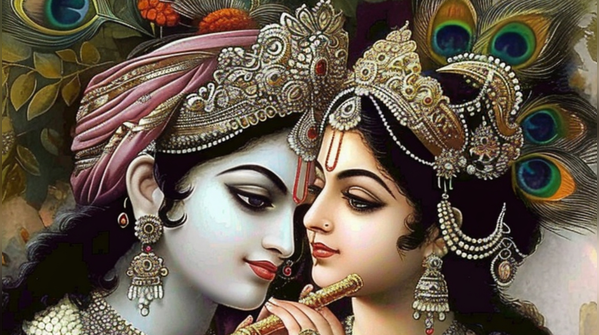
The first thing one notices about a flute is what it lacks. It is hollow. In spiritual symbolism, that emptiness represents the state a human being must reach to experience divine grace. Ego, pride, jealousy, and attachment clog the inner channels of the heart the way dust clogs a flute. When the instrument is blocked, the music stops. Krishna’s flute reminds devotees of a simple truth: the divine flows most freely through those who are empty of ego.
The bamboo flute has no voice of its own. It does not try to create its own melody. It simply allows the breath of the musician to pass through it. In the same way, many bhakti traditions teach that the highest spiritual state is not control, but surrender, becoming an instrument through which the divine expresses itself. The devotee becomes the flute. Krishna becomes the musician.
The divine call the soul cannot ignore
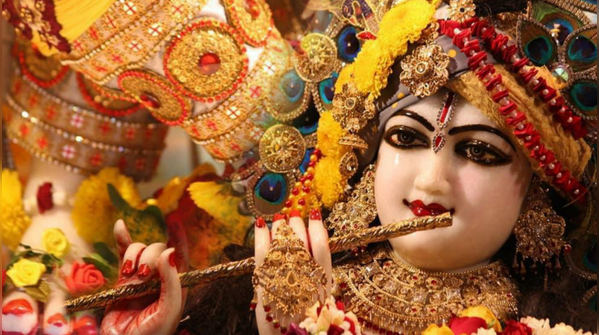
In devotional stories, whenever Krishna begins to play, something extraordinary happens. The cows stop grazing. The river seems to pause. Birds fall silent as if listening. And the gopis, the cowherd women of Vrindavan, leave everything behind and follow the sound into the forest. On the surface, it reads like romance. In spiritual interpretation, however, it is something far deeper. The flute is often seen as the divine calling gently to the human soul. Beneath the noise of daily life, work, ambitions, and anxieties, there still remains a quiet longing to reconnect with something eternal.
Krishna’s flute symbolises the moment that yearning awakens, the gopis running toward the sound are not simply characters in a pastoral story. They represent the human soul recognising the voice of the divine and moving toward it with irresistible longing.
Love instead of authority
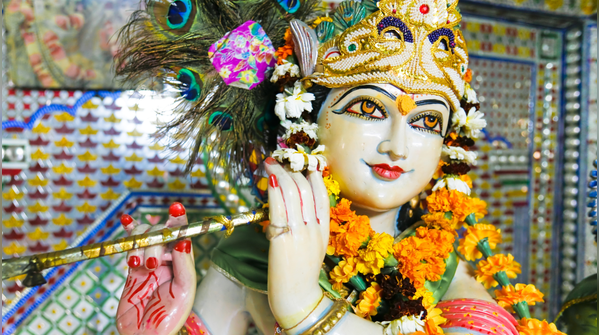
Another remarkable aspect of Krishna’s flute is the way it reveals the nature of divine power in Hindu thought. Gods in many traditions assert authority through thunder, commandments, or displays of power. Krishna does something very different, he attracts rather than commands.
He plays music. The symbolizm here is subtle but profound. The divine does not always arrive through fear or discipline; sometimes it arrives through beauty.
Devotion, in the bhakti tradition, is not forced obedience but a response to divine charm, the flute’s melody represents that charm, the gentle pull of divine love that draws the heart without coercion. It is not an order. It is an invitation.
Breath as the life force of the universe
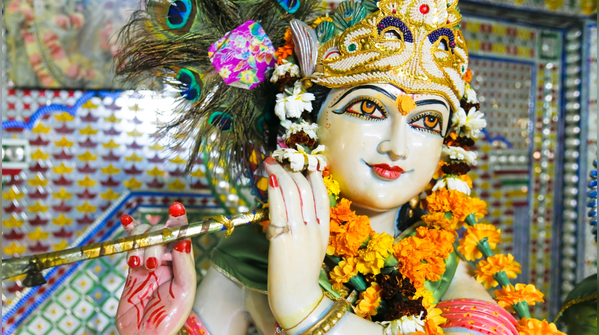
There is another layer of symbolism hidden in the way a flute produces sound. Music emerges when breath moves through hollow bamboo. In Indian spiritual philosophy, breath is closely linked with prana, the life force that sustains existence. Without breath, the body becomes still. Without prana, the universe itself would cease to function
Why the flute is made of bamboo
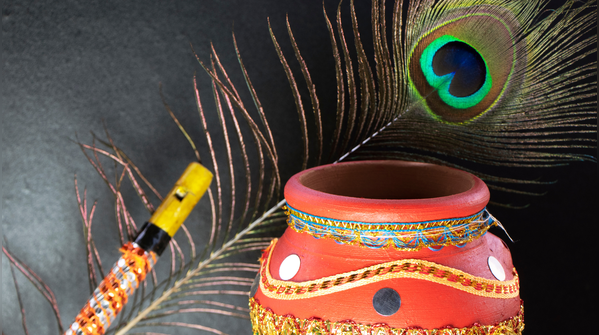
Even the material of Krishna’s flute carries meaning. Bamboo grows quietly, without demanding attention. It is simple, flexible, and hollow. Saints often say the flute had to be bamboo because it symbolises humility. It does not resist being carved. It does not protest being hollowed, it allows itself to be shaped for a higher purpose.
A melody that echoes
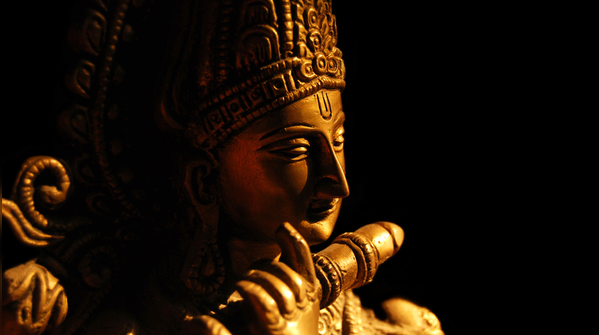
Perhaps the most beautiful aspect of Krishna’s flute is that it remains one of the most enduring spiritual symbols in Indian culture. Temples, paintings, poems, and devotional songs continue to return to that image of the flute player of Vrindavan. It captures something deeply human: the idea that the universe is not merely mechanical or silent but filled with meaning, music, and relationship. Krishna’s flute is not just an instrument in mythology. It is a spiritual reminder. Become empty like the flute. Let go of the noise of ego. And when the divine breath finally moves through the heart, life itself begins to sound like music.
Paratha (11)
Featured In lifestyle

MORE FROM ETIMES
life & style