
- News
- lifestyle
- soul-search
- What is ‘energy protection' and why is everyone suddenly talking about it?
What is ‘energy protection' and why is everyone suddenly talking about it?
What is ‘energy protection' and why is everyone suddenly talking about it?
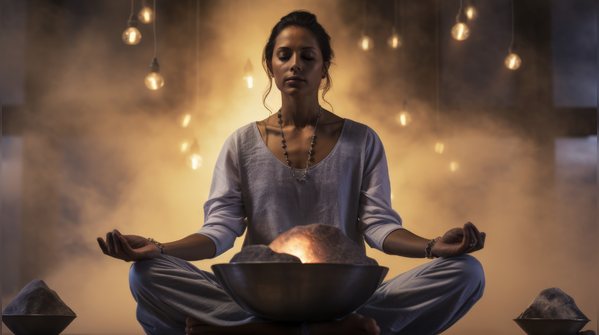
Not long ago, the phrase “protect your energy” belonged mostly to yoga studios, spiritual retreats and the occasional self-help book. Today, it appears everywhere whispered in therapy conversations, written into Instagram captions, printed on jewellery charms, and repeated like quiet advice between friends navigating modern exhaustion. What changed is not just language but the way people understand wellbeing itself. Energy protection, once mystical, has become oddly practical, a cultural shorthand for survival in an overstimulated world. At its simplest, energy protection refers to consciously guarding one’s emotional, mental, and psychological state, deciding what deserves attention, what drains it, and what must be kept at a distance. The “energy” in question is rarely scientific electricity or spiritual aura alone; it is the felt experience of being mentally depleted, emotionally overwhelmed, or socially exhausted. In other words, it is less about crystals and more about boundaries, though, increasingly, the two coexist. But why are people guarding their energy now? Scroll down to find out.
The rise of an invisible vocabulary
Language often evolves before behaviour does. Over the past few years, wellness culture has shifted away from productivity and optimisation toward emotional preservation. Instead of asking, 'How can I do more?' People are asking, "How do I feel less drained?"
Psychologists and wellness experts point to a simple explanation: modern life demands constant attention. Notifications, endless scrolling, and comparison-driven social media environments create emotional fatigue even when we are physically resting. Many people report finishing a casual scroll session feeling inexplicably tired or anxious, a reaction linked to information overload and social comparison triggers online.
In this context, “protecting your energy” becomes a modern coping mechanism, a way to describe digital burnout without clinical jargon.
The phrase also carries emotional permission. Saying I need to protect my energy sounds gentler than "I need distance," yet it communicates the same boundary.
Where spirituality enters the conversation
While psychology explains part of the trend, spirituality gives it symbolism.
Astrology, manifestation culture, and energy healing practices have surged globally, particularly among younger audiences seeking meaning beyond traditional institutions. Spiritual discourse increasingly frames personal growth as an alignment with “higher energy", encouraging emotional maturity, self-awareness and intentional living rather than constant positivity.
Practices associated with energy protection range widely: meditation, visualisation exercises, grounding rituals, or carrying symbolic objects believed to offer protection. Even ancient symbols like the evil eye, once cultural talismans against misfortune, have reappeared as fashionable accessories blending heritage with modern wellness identity.
For believers, these rituals provide a sense of control in uncertain times. For sceptics, they function psychologically as rituals that create pause, reflection and emotional regulation. Either way, the outcome is similar: people feel steadier.
A reaction to collective exhaustion
Trends rarely emerge in isolation. The popularity of energy protection mirrors broader social fatigue following years marked by global uncertainty, economic pressure and digital hyper-connection. Wellness conversations have shifted from ambition to preservation, from chasing happiness to preventing burnout.
Health writers increasingly link emotional exhaustion to chronic stress responses in the body, where persistent anxiety keeps the nervous system in a heightened state of alert. Over time, this constant activation contributes to feelings of being “wired but tired”, a sensation many recognise instinctively even without medical vocabulary.
Energy protection, then, becomes less mystical and more preventative, a personal strategy to reduce overstimulation. It explains why boundaries, once viewed as cold or antisocial, are now framed as self-respect.

The social media effect
Ironically, the trend owes much of its popularity to the very platforms people are trying to shield themselves from.
Online culture rewards emotional visibility. Short phrases travel faster than complex ideas, and “protect your energy” compresses therapy language, spiritual philosophy and lifestyle advice into three easily shareable words. Influencers, therapists and wellness creators use the phrase to discuss everything from limiting toxic relationships to curating digital feeds.
But experts also warn that wellness content online can oversimplify complex emotional realities, sometimes promoting quick fixes or vague spiritual claims without nuance.
The phrase’s power lies precisely in its ambiguity; it can mean meditation to one person, muting notifications to another, or simply saying no without guilt.
Why it resonates now
Perhaps the real reason energy protection resonates is that it reframes rest as responsibility rather than indulgence.
In earlier decades, resilience meant enduring discomfort. Today, resilience increasingly means recognising limits. To protect one’s energy is to acknowledge that attention is finite, that emotional bandwidth, like time, must be budgeted carefully. It signals a cultural shift away from constant availability toward intentional presence. Whether expressed through spiritual rituals or practical boundaries, the trend reveals something deep: people are searching for ways to feel less scattered in a world that never stops asking for more.
And maybe that is why the phrase endures. Beneath the aesthetics and algorithms, energy protection is not really about invisible forces. It is about learning quietly, sometimes reluctantly, that peace requires participation.
Featured In lifestyle

MORE FROM ETIMES
life & style