
- News
- lifestyle
- soul-search
- Ancient Indian wisdom in modern life: Lessons from the Bhagavad Gita
Ancient Indian wisdom in modern life: Lessons from the Bhagavad Gita

Ancient Indian wisdom in modern life: Lessons from the Bhagavad Gita
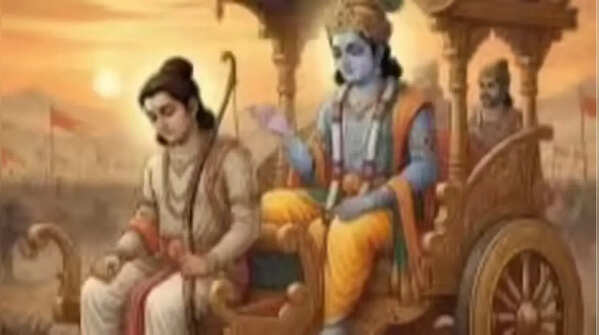
In a world dominated by haste, striving, and chaos, many individuals are in pursuit of clarity, harmony and meaning. Moreover, solutions to some of the challenges that plague the contemporary world can be found in ancient literature. An exemplary piece of literature from the past that holds invaluable wisdom is the Bhagavad Gita. Composed in the form of a conversation on the battlefield of Kurukshetra, the text discusses the philosophy of life through an exchange between Arjuna and Lord Krishna in the epic Mahabharata.

Dharma or the path of one’s duty
The concept of Dharma plays a crucial role in the Bhagavad Gita. Arjuna, who was hesitant about going to battle with his kinsmen, is urged to realize his duty in life by Lord Krishna. In the current era, it means being dedicated to one’s duties even when things get emotionally tough. It suggests that a purpose is not only about enthusiasm but also about being responsible and righteous.

Prioritize the process over the end product
Perhaps the most popular philosophy of the Gita is the following: “Karmanye vadhikaraste, ma phaleshu kadachana” you are entitled to your actions, but you are not entitled to the outcomes of your actions. People usually concentrate on the results of their efforts raises, good grades, awards, and other external recognition. They become anxious and scared of failing because they feel too much pressure. According to the Bhagavad Gita, the solution to this problem is to work hard and not be concerned with the consequences.
Emotional stability: sustaining equilibrium amid ups and downs
The core principle of Gita is to remain equable while experiencing happiness and sadness, success or failure. In today's competitive world, where success is measured on comparisons and immediate results, maintaining stability emotionally becomes difficult. Developing an ability to maintain composure irrespective of what happens around provides us stability, which can withstand all kinds of criticism and pressures from the environment.

Controlling the mind
Throughout Gita, Krishna emphasizes again and again how the mind can be both the greatest friend and enemy. A person who cannot keep his mind stable suffers from confusion, impulsiveness, and unnecessary stress. From the contemporary perspective, the same applies to the significance of mental stability and mindfulness. Different ways of controlling the mind have been discussed in Gita.

Detachment without apathy
One of the main teachings of The Bhagavad Gita is detachment; however, it does not mean being indifferent to what is going on around you. You may become fully engaged with life and at the same time be independent of its results. This lesson is highly important in our relationships and careers nowadays, since you can put all your heart into doing something and yet preserve your independence inside.

Self understanding beyond job titles
An essential part of the lessons learned from The Gita is that of the Atman or eternal self. Modern people tend to identify themselves with their jobs, titles and even achievements. This teaching can help a lot in reducing such feelings as insecurity, fear of judgment and constant desire to prove oneself.

Conquering fear and doubt
Like Arjuna, today’s individual struggles with overthinking because of indecision and fears regarding their future paths. In such times, Krishna helps them find confidence by following their actions. In times when most people hesitate to take a decision due to their fear, they need to realise that growth lies in taking a step further without thinking about consequences.
Featured In lifestyle

