
- News
- lifestyle
- soul-search
- 5 powerful types of daan in Hinduism believed to improve your karma
5 powerful types of daan in Hinduism believed to improve your karma
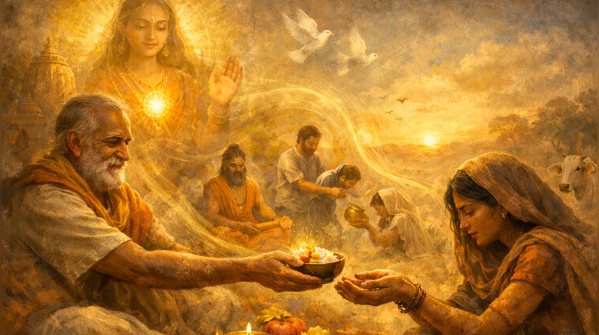
5 powerful types of daan in Hinduism believed to improve your karma
In Hindu tradition, daan is more than charity. It is an offering made with humility, often without expectation of return, and carried by the belief that giving lightens the self. The idea is simple but profound: what is shared with sincerity does not diminish the giver. It expands both the receiver’s life and the moral weight of the giver’s own actions. Across scriptures, festival rituals, and everyday household practice, daan appears as a quiet force of balance. It is not meant to be loud, performative, or transactional. The real value lies in intention, timing, and the spirit in which something is given. Some forms of daan are especially revered because they are believed to purify karma, reduce selfishness, and create a more generous inner life. Here are five powerful types of daan that continue to hold deep meaning in Hindu belief.
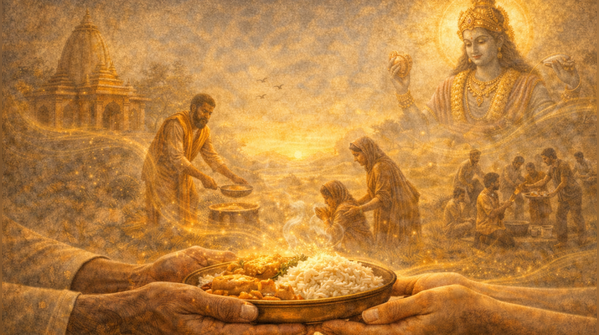
Anna daan
Among all forms of giving, anna daan, or the donation of food, is often regarded as one of the highest. To feed someone is to meet a basic human need in the most immediate way. Hunger strips life down to its simplest truth, and food restores dignity, strength, and calm.
That is why anna daan is seen as especially meritorious. Temples, community kitchens, and family rituals have long placed food at the center of giving. Whether it is a meal shared with a stranger, grain offered to the needy, or food distributed during a religious occasion, the act carries a powerful symbolic weight. It says that life is to be sustained, not hoarded.
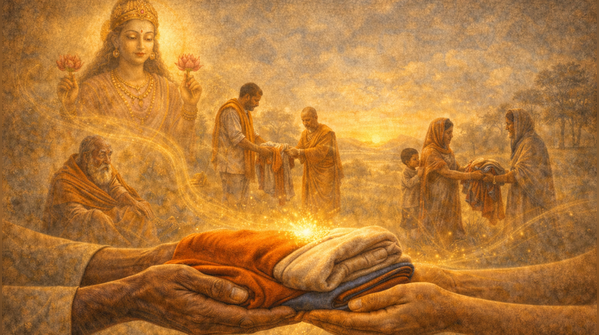
Vastra daan
Vastra daan, the gifting of clothes, is another deeply respected form of charity. Clothing is not only practical; it is tied to comfort, dignity, and social belonging. To give someone clothes is to help them meet the world with a little more ease and protection.
In Hindu thought, this kind of giving is often associated with compassion and respect. It is especially meaningful during colder months, religious festivals, or periods of hardship. Even a simple garment can become a meaningful offering when it is given without judgment. Vastra daan reminds us to realise that dignity is not a luxury. It is part of a humane life.
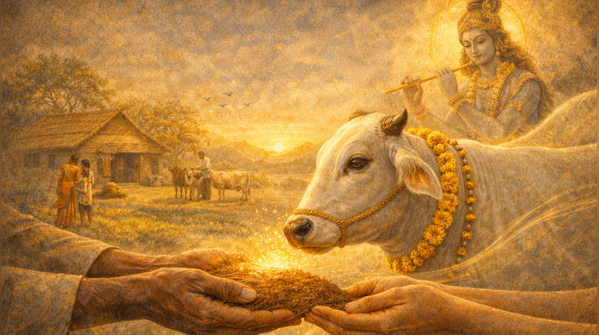
Go daan
Go daan, or the donation of a cow, carries enormous significance in Hindu tradition. The cow has long been revered as a symbol of nourishment, abundance, and gentleness. In earlier times, donating a cow was seen as one of the most auspicious gifts because a cow supported a household with milk, ghee, dung for fuel, and more.
Ancient Hindu scriptures and village traditions often describe the cow as a giver of sustenance and stability. By donating a cow, a person was believed to share prosperity itself, ensuring that another family could sustain daily life with dignity and security.
Today, the literal practice may be less common, but the spiritual idea remains powerful. Go daan represents a gift that supports life at its root. It is associated with protection, gratitude, and the wish to sustain another family’s future. In many communities, the symbolism of go daan continues to stand for giving that is both generous and life-giving.
Bhumi daan
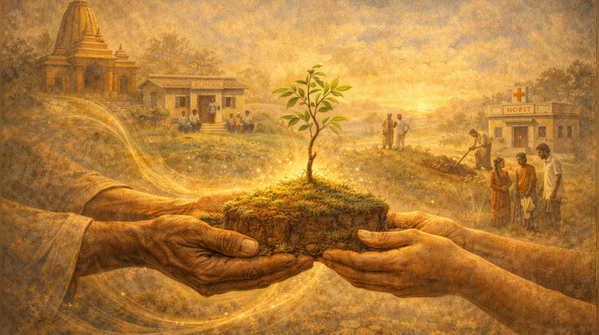
Bhumi daan, or the donation of land, is one of the most consequential forms of giving. Land in Indian tradition is not just property. It is livelihood, shelter, and legacy. To give land is to hand over the possibility of stability and growth.
Historically, bhumi daan was associated with kings, temple endowments, and acts of public welfare. In modern life, it may appear in the form of land donated for schools, hospitals, worship spaces, or community use. Because land carries long-term value, bhumi daan is often seen as an especially noble act. It reflects trust in the future and detachment from possession.

Vidya daan
Vidya daan, the gift of knowledge, is often described as one of the most lasting forms of charity. Unlike material gifts, knowledge can keep growing. It can be shared, deepened, and passed on. A book offered to a child, tuition supported for a student, or even the patient teaching of a useful skill can all be forms of vidya daan.
This kind of giving is powerful because it changes futures. Hindu philosophy has long valued learning as a path to clarity and self-mastery. Vidya daan reflects that belief beautifully. When knowledge is given freely, it does not just help one person. It can lift entire families and communities.
Featured In lifestyle

MORE FROM ETIMES
life & style