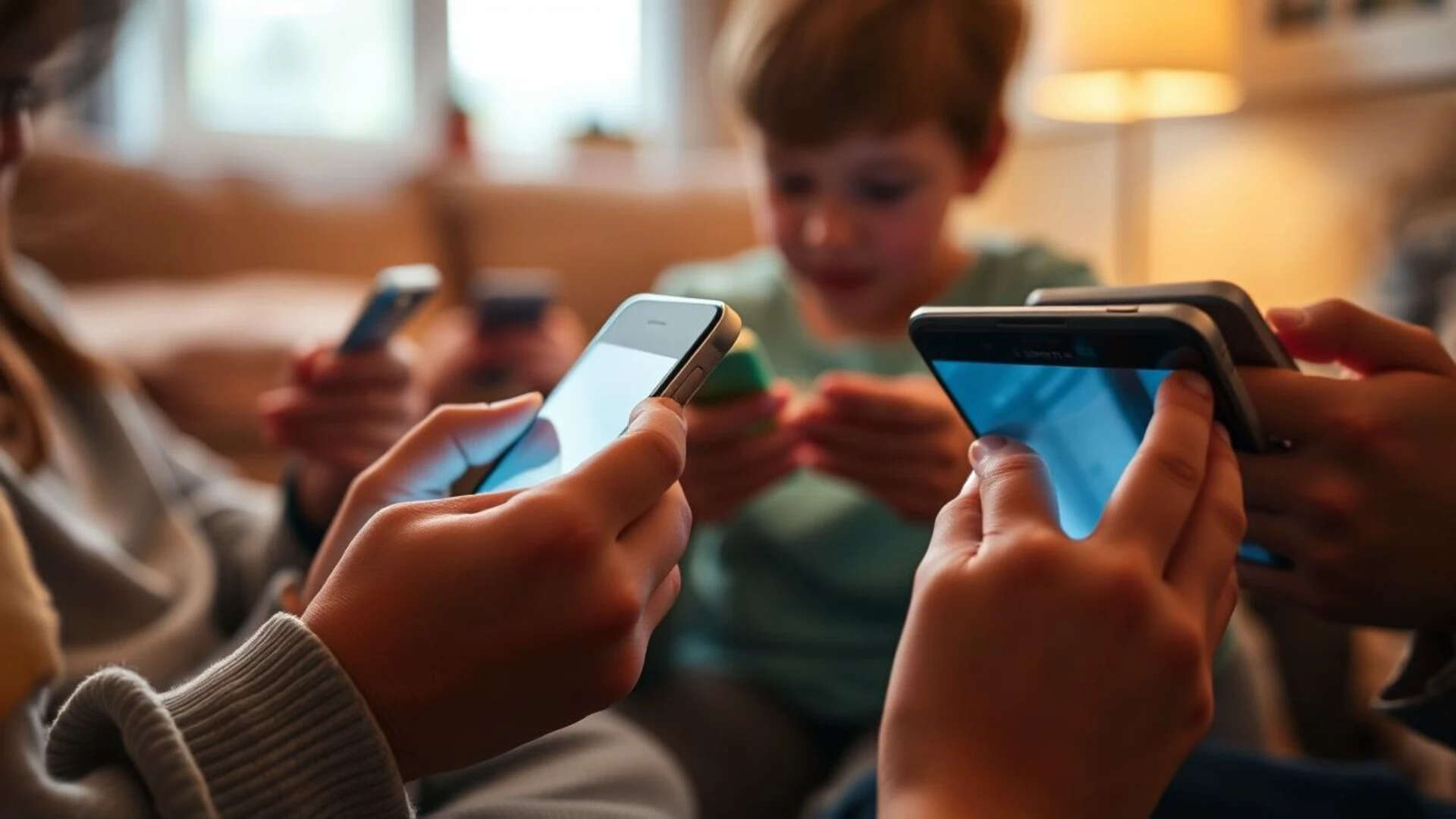
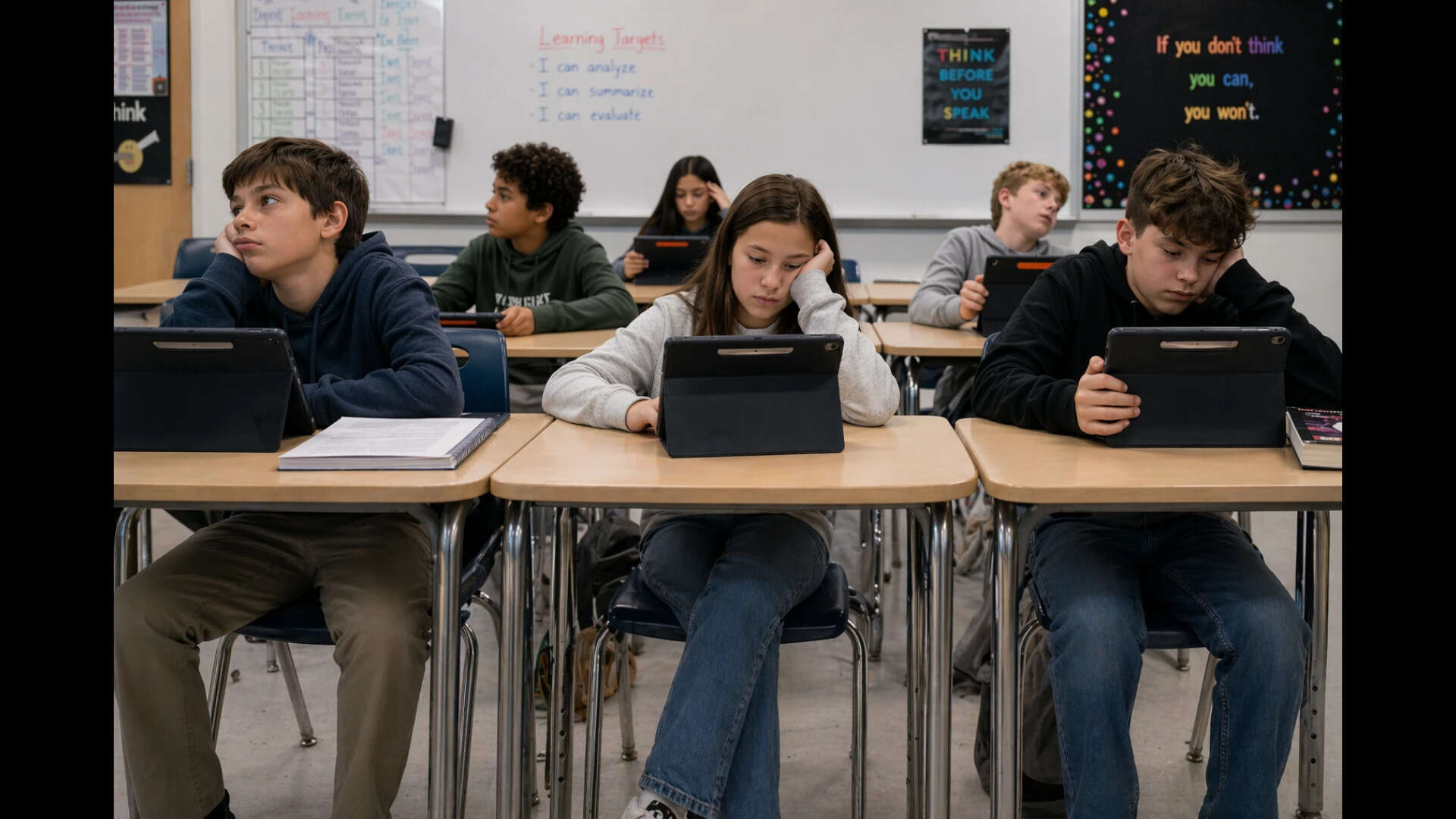
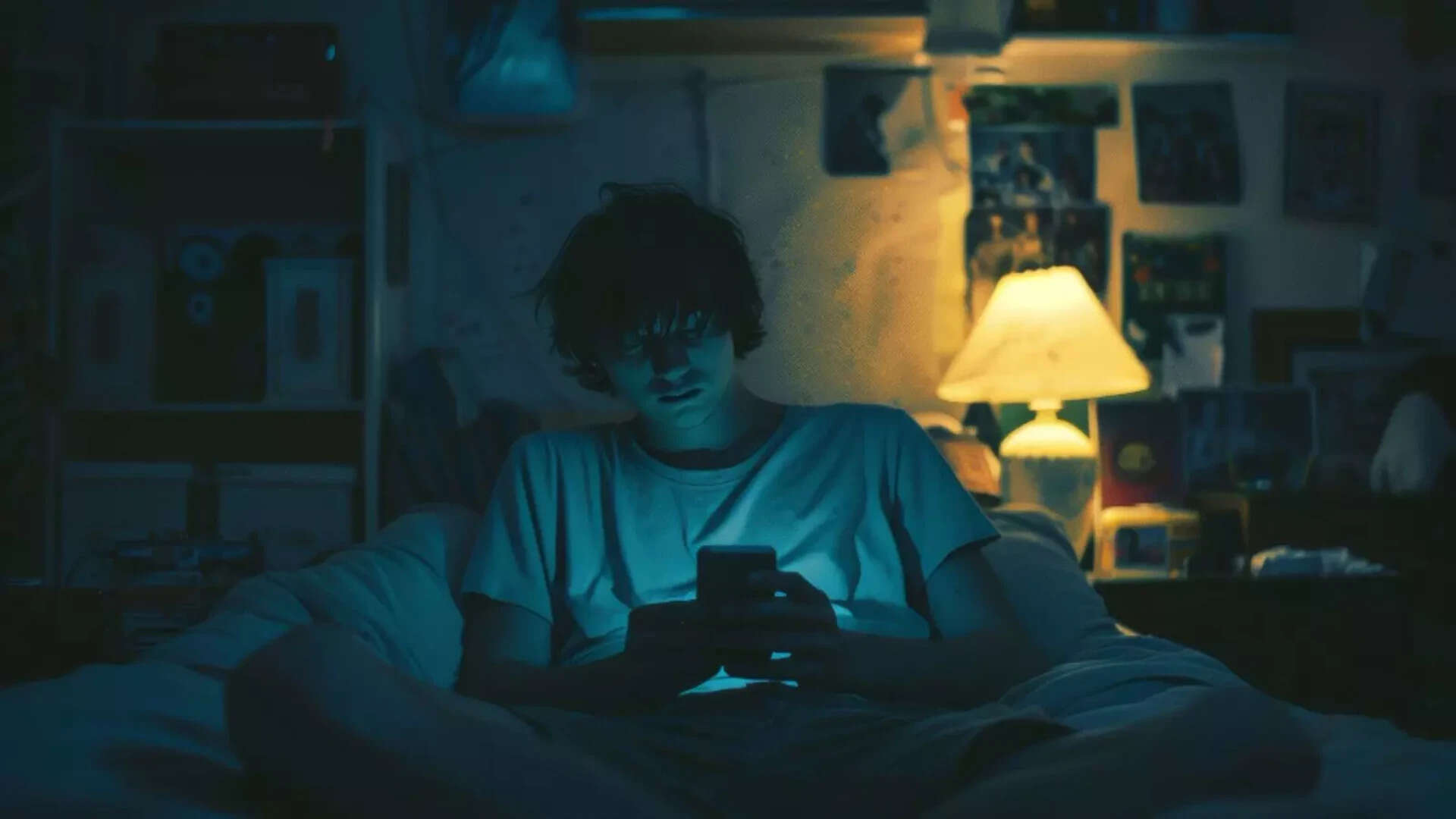
In the history of civilisation, all advancement, be it medical, technological or social, has followed a linear path. Sure, there were criticisms and backlashes; but the path never bent or turned. Progress has historically and civilisationally always moved in a straight line. But things are changing. A quarter into the 21st century, we are taking a U-turn. According to social scientists, who saw this coming for the last two decades, we are standing at a "hinge" moment. Or on a precipice. We may all fall down.
Technological and social advancement, which were supposed to be progressive, have turned out to be quite the opposite: a steady regression of our cognitive abilities, a steadfast erosion of social interactions and human connections, a global pandemic of loneliness and isolation, and a complete restructuring of the human mind. And nowhere is this upheaval more visible than in children and young adults growing up in this century.

The clearest sign of how our brains are changing comes from the rise of short-form video (SFV) platforms like TikTok, Instagram Reels, and YouTube Shorts. These platforms use algorithms to constantly feed us quick, high-energy content, training our brains to prefer instant gratification over longer, focused thinking.
A recent study at Zhejiang University, China, showed that children and teens today have far weaker brain control signals than previous generations. The researchers pointed out that this regression has not happened overnight; it has been a steady decline since gadgets took over learning in schools, and smartphones led to short-video habits among young adults.
The study tested 48 young adults with questionnaires on short-video addiction and self-control, then tracked their brain waves with EEG. The result was unambiguous: high short-video addiction scores correlated with reduced brain focus and impulse control. Nothing that we were not already aware of in our digital world.
This is one among many studies of late on the same subject. But with each study, the ill effects of growing up in a "smart" world have risen manifold - to the extent that many countries are making sweeping policy changes to deal with short attention spans and rising anxiety and rage among young people, which are having a catastrophic effect on society.
The Zhejiang University findings were shared widely by Nicholas Fabiano, researcher and psychiatry resident at the University of Ottawa, Canada, on X, and drew sharp reactions ranging from alarm over kids' screen time to scepticism over study methods. There is a rising tension all around about apps that captivate billions while eroding their physical and mental health. Fabiano's post on X has 2.7 million views so far.
This "hinge point" in cognitive history is defined by a tension between two competing forces: the efficiency of digital information systems and the biological constraints of the human brain. The clearest sign of how our brains are changing comes from the rise of short-form video (SFV) platforms like TikTok, Instagram Reels, and
YouTube Shorts. These platforms use algorithms to constantly feed us quick, high-energy content, training our brains to prefer instant gratification over longer, focused thinking.
Further research on addiction to short videos has been conducted using a brain-imaging method called functional Near-Infrared Spectroscopy (fNIRS), and the results are alarming. The findings revealed that individuals with short-video addiction exhibited the same neurological patterns as people with substance abuse disorders, where the brain's reward system becomes overstimulated. As a result, people tend to act more impulsively and make quicker decisions, especially in risky situations.
This is a major reason why we are seeing a rise in anxiety and aggression among young adults, even as their social skills have degenerated on a daily basis. The instant gratification of reels is what this generation now expects from a normal conversation with friends, parents, or anyone in the physical world. Since the digital instant reward-system has become a default pattern in their minds, sociological skills among young adults are declining rapidly.
Social psychologist Jonathan Haidt argues that the transition from a "play-based childhood" to a "phone-based childhood" since 2010 has caused an epidemic of mental illness. He describes Gen Z as the first generation to go through puberty with a "portal in their pockets" that calls them away from real-world interactions into an addictive, unstable alternate universe. Haidt notes that while the reward-seeking parts of the brain mature early, the frontal cortex—essential for self-control and delay of gratification—is not fully functional until the mid-20s, making preteens uniquely vulnerable to the "cuckoo bird" effect of smartphones, which push out all other valuable real-life experiences.
Social psychologist Jonathan Haidt argues that the transition from a "play-based childhood" to a "phone-based childhood" since 2010 has caused an epidemic of mental illness. He describes Gen Z as the first generation to go through puberty with a "portal in their pockets" that calls them away from real-world interactions.
Dr Priyanka Banokar Pande, consultant and onco-psychiatrist, Medicover Hospitals, Navi Mumbai, says prolonged exposure to short-form video content is measurably disrupting children's neurobehavioural development. "The rapid stimulation these platforms deliver conditions the brain to demand constant novelty, resulting in diminished attention spans, emotional dysregulation, and reduced frustration tolerance. Clinically, affected children often present symptoms like irritability, impulsivity, social withdrawal, and resistance to cognitively demanding tasks such as reading or studying. Their threshold for delayed gratification drops significantly, impairing academic performance and interpersonal development."
The impact of short-video addiction on social skills does not exist in isolation. It is mediated by broader lifestyle factors. Another study of 978 Chinese adolescents found that digital saturation often leads to "sleep procrastination," where the blue light from screens suppresses melatonin levels and the addictive nature of content delays sleep onset. The same study also identified ways to mitigate such problems – among them adequate physical activity and regular eight-hour sleep free of digital disruptions.
"Frequent short-video use may not just impact the child’s cognitive health, attention, or self-control but also overall well-being. A large number of parents are coming to the OPD with their children with common complaints, such as headaches, eye strain, poor sleep, irritability, and reduced concentration. Children who spend long hours on fast-paced digital content also sacrifice sleep and meals just to watch more videos. In time, they may suffer from obesity, acidity, joint and muscle pain," says Dr. Jagdish Kathwate, consultant neonatologist & paediatrician, Motherhood Hospital, Kharadi, Pune.
Individuals with short-video addiction exhibited the same neurological patterns as people with substance abuse disorders, where the brain's reward system becomes overstimulated. As a result, people tend to act more impulsively and make quicker decisions, especially, in risky situations.
From linear thought to superficial skimming
Dr Maryanne Wolf, a leading cognitive neuroscientist, argues that the human brain was never "born" to read. Instead, reading is an act of "neural recycling," where brain areas evolved for vision and language are repurposed through intense training to form a "reading circuit." This circuit is currently being reshaped by the shift from print to digital media. Wolf should know. An advocate for children and literacy around the world, she has written extensively about the decline in cognitive skills in our era in two books:
Tales of Literacy for the 21st Century and
Reader Come Home: The Reading Brain in a Digital World. One of the primary ways children and young adults develop critical thinking is to read – and then reflect on what they have read.
Indeed, deep reading—a thoroughly pre-21st century idea—is how children and young adults learn to engage with the world, build their reasoning powers, and develop empathy. The digital environment, by contrast, fosters "hyperattention." Nicholas Carr, in his seminal work,
The Shallows, uses the analogy of a "scuba diver" versus a "jet skier" to describe this transition: where we once dove deep into the "sea of words," we now zip across the surface, picking up fragments of information but losing the ability to synthesise them into mindful knowledge.
Wolf also speaks of the "Matthew Effect" in reading, in which the "word-rich" get richer and the "word-poor" get poorer with time. Those who have read widely and deeply carry a vast background knowledge—what she calls the Matthew-Emerson Effect—and are far better placed to make faster inferences and deductions. For those raised in a digital-first environment, however, this internal library is often empty, leaving them vulnerable to misinformation and unable to develop independent thought and judgement.
Dr Pande adds: "Equally concerning, perpetual stimulation eliminates boredom – a neurologically essential state that activates the brain areas fostering creativity, imagination, and independent thought. When everything is instantly accessible, children lose the cognitive space needed to explore, reflect, and self-direct."
Psychologist and psychotherapist Dhara Ghuntla, affiliated with Seven Hills Hospital, says: "A child will avoid doing tasks that require effort, like studying or reading. Young adults will show no interest in playing outdoors, become introverted, and avoid socialising. They will have difficulty following instructions and become dependent on electronic gadgets like smartphones. The comfort of the screen makes face-to-face conversation feel difficult and undesirable. Children may also get easily distracted in classrooms and show lower tolerance for delayed rewards – and this can significantly impact their learning and growth."
French neuroscientist Michel Desmurget puts it starkly: early exposure to screens can permanently affect human interaction, language, and concentration, creating a generation that is "less cognitively capable than their parents." In his book,
The Digital Cretin Factory, he calls screen time "stolen time" from a child's development. By the age of 18, the average adolescent spends the equivalent of 30 full school years on recreational screens. This is particularly dangerous because cognitive development depends on the brain's plasticity during early "critical periods" – windows that, once closed, cannot be reopened.
The human brain was never "born" to read. Instead, reading is an act of "neural recycling," where brain areas evolved for vision and language are repurposed through intense training to form a "reading circuit." This circuit is currently being reshaped by the shift from print to digital media. (AI generated)
Neurosurgeon Dr Sunil Kutty, from NewEra Hospital, Navi Mumbai, says, "Constantly watching short videos can impact the child’s brain. The prefrontal cortex, which helps in decision-making, focus, and self-regulation, is still developing in children. Constant rapid stimulation from short videos tends to overload these circuits, and the parents can notice signs and symptoms such as reduced focus, impulsiveness, disrupted sleep, and irritability. The child can also become aggressive, frustrated, and restless. These signs and symptoms can affect the child’s growth, development, and learning."
This scientific concern finds an echo in philosophy. Byung-Chul Han, philosopher, Catholic theologian and cultural theorist, argues that modern society is no longer shaped by external control but by internal pressure. We have moved beyond Michel Foucault's "disciplinary world" of institutions into an "achievement society," where individuals constantly push themselves to perform, optimize, and stay visible. The result is not freedom, but a quieter form of exhaustion – burnout driven by endless self-exploitation, much of it mediated through digital life.
Jean Baudrillard takes this further, describing a world where screens do not merely reflect reality – they replace it. His idea of the "simulacrum" explains how digital images become more real than reality itself, creating what he calls the "hyperreal." In this state, reality dissolves into a constant stream of content, and the screen can never go blank. Silence becomes unbearable. The outcome is a kind of universal sameness, where people are everywhere and nowhere at once, losing the ability to imagine, focus, or form deep, grounded connections.
These are no longer abstract theories – they are now visible in classrooms, behaviour patterns, and even government policy. Across the world, declining attention spans and learning outcomes are forcing countries to rethink their relationship with screens.
French neuroscientist Michel Desmurget says in his book, The Digital Cretin Factory, screen time is "stolen time" from a child's development. By the age of 18, the average adolescent spends the equivalent of 30 full school years on recreational screens. This is particularly dangerous because cognitive development depends on the brain's plasticity during early "critical periods" -- windows that, once closed, cannot be reopened.
, once a pioneer of digital classrooms, has begun reversing its approach after a drop in reading and test scores. The government is investing over €104 million to bring back textbooks and handwriting. Education Minister Lotta Edholm has emphasised the need for printed books, a position supported by the Karolinska Institute, which found that digital tools can hinder learning.
Denmark is taking an even stricter approach, announcing a ban on smartphones in schools from 2026-27 after data showed children spending hours daily on social media from a very young age. Education Minister Mattias Tesfaye has said schools must return to being spaces for focus and reflection, not distraction.
Similarly, France has already implemented a nationwide school phone ban, and the Netherlands followed with similar restrictions in 2024. Early results from the Netherlands show improved concentration in 75% of schools and a 59% boost in social interaction after encouraging offline engagement.
In India, however, the challenge is more complex. While access to smartphones has expanded rapidly, overuse is emerging as a serious public health concern. The Economic Survey 2025-26 warns that digital addiction is already affecting concentration, sleep, and academic performance. Children under five are spending about 2.2 hours a day on screen —twice the limit recommended by the World Health Organisation and the Indian Academy of Paediatrics—with long-term risks ranging from lower employability to impulsive financial behaviour.
Taken together, the science, the philosophy, and the policy shifts point to the same conclusion: this is not just a debate about technology, but about the future of human attention itself. The question is no longer whether screens are changing us – they already have. The real question is whether we can still reclaim the parts of the mind that require slowness, silence, and sustained thought, before those capacities quietly disappear.