
Trending
‘Mummy, will you go bald?’ How this cancer survivor spoke to her kids about the Big C
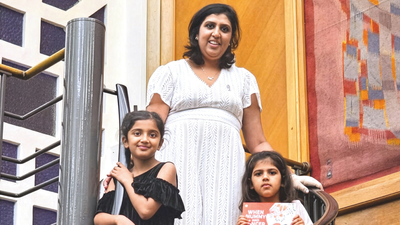
From storybooks to chemo-room visits, Priyanka Pandya-Bhatt chose honesty and openness
“We were all crying in the front room. I thought my kids wouldn’t notice as they were so happy to see their cousins. But they did. They still remember and ask, ‘Mummy, why were you crying, why was everybody crying?’ I tell them that it was the time we found out I had cancer and we were all sad about it,” she says.Breaking the news with storiesThe kids thought it would be their usual ‘story time’, tucked in bed, when Bhatt and her husband brought out a book sent by the hospital for reading to kids. For Shriyana, it was. But not for Keya. As the ‘story’ progressed, detailing what happens to the body when you have cancer, she grew silent. “Keya usually had a question about anything and everything. But that day, after reading the book, when we asked her if she wanted to know anything more, she said no. That really shocked us,” recalls Priyanka.But the questions came pouring out at lunchtime. What is cancer? Will I get cancer? What will the strong medicine do? Why and how will they do the surgery? Keya’s main concern was the hair loss. “Mummy, I don’t want you to lose your hair,” she had said. It was a difficult moment, for Priyanka couldn’t promise her that as she didn’t know how she would react to chemotherapy. She sat Keya down and explained that the doctors needed to remove the cancer by taking it out. Keya instantly came up with her own analogy: “They’ll use scissors to cut you, and with a spoon they’ll scoop out the cancer, and then they’ll glue you back up again.”Keeping kids in the loopThe couple made sure to keep their daughters up to speed with every stage of cancer treatment, whether it was the chemo, the surgery, or radiotherapy. Keya was told she could ask them any question she had and they would find out the answer for her. “She came up with questions we couldn’t even answer. So I took them back to the breast-care nurses,” Priyanka says.The hospital was still following Covid protocol so no one was allowed in. But the doctor made an exception and let Keya in to watch one of the chemo sessions. That put the child slightly at ease. She gushed about how the nurses gave her biscuits. But there were far too many changes going on in Keya’s life. “We had just shifted home a few months back. Before that, she would spend the week with my parents. So, having to deal with a new home, a new nursery setting, my cancer and how my body changed because of that, all this was a lot more than the little four-year-old could handle.” To make matters worse, when she transitioned to kindergarten and looked for solace in her teacher, she was given sundry chores instead.Bhatt was used to other parents asking her for advice on how to deal with behavioural changes in their kids. Now that she found herself in the same shoes, she didn’t know what to do. She reached out to several cancer support groups but none offered services for kids whose parents were going through cancer treatment. Eventually, they enrolled Keya in another school with better support services. ‘Hard to see mummy like that’After six rounds of chemo, Bhatt went for a mastectomy and reconstructive surgery. “The gruelling 10-hour surgery left me completely drained. My kids couldn’t give me the big cuddles they were used to as I was doubled up in pain. For the reconstruction, they took fat and tissue from my abdomen so I couldn’t even bend for a while. It was hard for them to see mummy like that,” she says. But once she started feeling better, they were up and about again. By this time, it was Christmas, and they did a lot of Christmassy things (going to the theatre, having parties at home) so they could forget what had happened. But of course, it was already etched in their young minds. “I had lied to them, saying I’m going to work while I went in for surgery as I didn’t want them to panic. But they were too clever. No matter how much you try to cover up, they pick up on conversations. They knew exactly where I was,” says Bhatt.Post-surgery, she went through 15 rounds of radiotherapy and oral chemo. By then, it was Easter again. The kids used to sit at the cancer centre across the road, eating biscuits and playing with Lego, while Bhatt had her radiotherapy sessions. They finally found a support centre that works with kids. Her children still go for therapy there and are currently working with horses (equine therapy) as a calming exercise. “Now, the girls confidently speak to adults they have just met about my cancer diagnosis and often start a conversation with ‘my mummy had cancer’. Talking about our experience is their way of healing. It makes them feel, seen, heard, their feelings validated.”Start the conversationWhen we hear the word cancer, we automatically think it means death. But science and technology have come such a long way that we needn’t think that way. Bhatt strongly feels children should be made a part of cancer discourse and decision making. They too are part of the family and have every right to know. We need to change the narrative set by previous generations, who remained silent and dealt with problems alone. Bhatt penned her experience and shared insights for parents in her book ‘When Mummy had Cancer’ to help parents start the conversation. “As the saying goes, a problem shared is a problem halved. I cried in front of Keya because I knew how hard she found it to be. We both cried, allowing us to be vulnerable together,” she says. Every child at some point is going to come across a parent, a grandparent, a friend, a sibling having the disease. “So, why are we hiding?” says Bhatt, adding that the point of talking to kids about cancer is not to scare them but rather to help them understand the disease and give them tools to cope.
End of Article
Follow Us On Social Media
Health +
Tired of too many ads?go ad free now
lifestyle videos
Featured In Parenting

Tired of too many ads?go ad free now



MORE FROM ETIMES
life & styleHot on the Web
Rajpal YadavPlato QuoteAssi ReviewSalim KhanJana NayaganDelhi MetroFunky OTT RelesaeAmitabh BachchanVijay DeverakondaToxic TeaserRaj KundraThe 50 WinnerR MadhavanKiku ShardaHouse Of The Dragon 3 TeaserSalman KhanNeena Gupta'O'Romeo' Box Office CollectionFyodor Dostoevsky QuoteRajinikanth HouseSocrates QuoteRaakshasaRanveer SinghImmanuel KantKuno National ParkEnid BlytonThe 50Border 2 Movie ReviewMichael Douglas QuoteTu Yaa Main Movie ReviewToday Gold Rate in ChennaiDelhi Weather TodayDelhi AQI TodayMumbai AQI TodayMaharashtra Public Holidays 2026Vivo V70 Elite Vs Oneplus 15RAsha SharmaSteve JobsSridhar VembuBill GatesGemini Prompts To Improve Photo Quality
Trending Topics
Latest MoviesBollywood MoviesHollywood MoviesTamil Movies 2026Telugu Movies 2026Malayalam Movies 2026Kannada MoviesMarathi MoviesBengali Movies 2026Top Rated Movies 2026Best Hindi MoviesBest English MoviesBest Telugu MoviesBest Tamil MoviesBest Malayalam MoviesBest Kannada MoviesBest Bengali MoviesUpcoming Hindi MoviesBest Movies Of All TimeBest Hindi Movies of All TimeLatest English MoviesLatest Malayalam MoviesEnglish TV NewsTamil TV NewsTelugu TV NewsMalayalam TV NewsKannada TV NewsMovie ReviewsBhojpuri Cinema NewsGujarati Cinema News
Popular Categories
Viral NewsK Pop NewsWeb Series NewsAnime NewsUpcoming English MoviesUpcoming Tamil MoviesUpcoming Telugu MoviesUpcoming Malayalam MoviesUpcoming Kannada MoviesFashion TipsTravel NewsEntertainment NewsBollywood NewsTollywood NewsKollywood NewsMollywood NewsFood NewsLatest Hindi MoviesLatest Tamil MoviesParenting TipsHome RemediesWeight LossBeauty TipsParenting TipsHindi VideosHindi Video SongsBhojpuri Music VideosLatest Telugu MoviesBhojpuri Music VideoHindi TV News
Latest News
America's new cybersecurity rules for defence industry do not go well with small suppliers'Drop the items!' Tense final warning before agents shot armed intruder at Trump's Mar-a-Lago resortTyreek Hill net worth in 2026: Inside the NFL star income, deals, contracts and moreJohnny Gaudreau's Son Celebrates Second Birthday as Family Watches USA in Gold Medal Game'Return it to its original faith': Indian-origin entrepreneur offers $20m Vermont college free for Catholic missionWho is Aesha Mukherji, Shikhar Dhawan's first wife?'This is shocking': Gautam Gambhir faces heat after Axar Patel sits out IND vs SA T20 World Cup Super 8 matchMarc Marquez looks ahead to Thailand MotoGP, blames test crashes on “lack of concentration, stomach issues”Saline water influx, land conversion stir Azossim-Mandur gram sabhaINS Aridhaman unleashed: All about Navy's 7,000-ton nuclear stealth giant armed with K-4 SLBMsCM launches Davem–Sanvordem bridge projectWhat is Dawn Staley’s net worth? Breaking down South Carolina coach’s earningsMilwaukee Bucks vs. Toronto Raptors (02-22-2026) game preview: When and where to watch, expected lineup, injury report, prediction, and moreNEET MDS 2026 registration to begin soon at natboard.edu.in: Check who can apply online'Played poor shots': Sri Lanka captain blasts batters after Super 8 defeat against England in T20 World CupAmid mimicking Salman Khan, Aamir Khan, Sunil Grover reacts to celebs safeguarding personality rights: ‘Jab tak mere pe case nahi aata’Shraddha Arya Shares Holiday Excitement as She Travels With Her Kids; Says, “Excitement Over Sleep”Indian-origin Deepa Mathew slams Australian Premier over immigration remarks: ‘Didn’t come here to wipe bums’